Note: costs mentioned below are given in US dollars as a general point of reference — actual prices vary by country, currency, and local market.
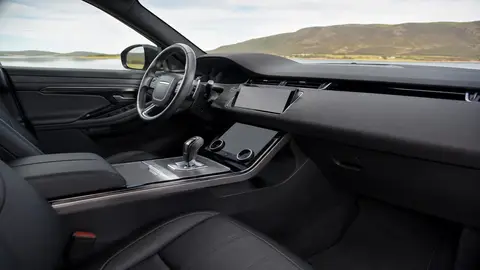
Bluetooth OBD2 scanners cost $15-$40 for a basic code-reading dongle and $50-$120 for advanced units that stream live sensor data and support manufacturer-specific codes. Any vehicle sold in the US from 1996 onward (and most other markets by the early-to-mid 2000s) has an OBD2 port, typically under the dashboard near the steering column. Match the adapter to a well-reviewed companion app, since cheap dongles are often let down by poor software.
At a glance
| Factor | Typical range / note |
|---|---|
| Price (basic Bluetooth dongle) | $15-$40 |
| Price (advanced/live data) | $50-$120 |
| OBD2-required vehicles | US: 1996+; most global markets by early-mid 2000s |
| Protocol | Bluetooth (Android-friendly); Wi-Fi/BLE for iPhone-compatible models |
| Common uses | Read/clear check engine codes, live sensor data, freeze-frame data |
Bluetooth vs. Wi-Fi vs. BLE adapters
Classic Bluetooth (SPP) adapters are the cheapest and work well with most Android phones, but standard Bluetooth isn't supported by iPhone apps for OBD2 communication — iPhone users need a Wi-Fi or Bluetooth Low Energy (BLE) adapter specifically labeled iOS-compatible. Check your phone's OS before buying, since this is the single most common return reason for cheap OBD2 dongles.
What a basic scanner can and can't do
Entry-level scanners read and clear generic (P0xxx) powertrain codes and turn off the check engine light — useful for a quick "what triggered this" check. They generally don't reset more advanced systems (ABS, airbag, TPMS relearn) or read manufacturer-specific (P1xxx) codes, which require a more advanced scanner or dealer-level tool.
Live data and freeze-frame
Mid-range and higher scanners can stream live sensor data — RPM, coolant temperature, fuel trims, oxygen sensor readings — which is far more useful for actually diagnosing an intermittent problem than just reading the stored code. Freeze-frame data captures the exact conditions (speed, load, temperature) at the moment a code was triggered, which helps narrow down an intermittent fault.
Choosing a companion app
- Look for apps with active recent reviews/updates — many cheap dongles are abandoned by their software after a year or two
- Confirm the app supports your specific make for manufacturer-specific codes if that matters to you
- Check whether the app works offline for code lookups, or requires an account/subscription for full features
Clearing a code doesn't fix the underlying problem — if it's a real fault, the check engine light will return once the vehicle's computer re-detects the issue during normal driving.
Who it suits
An OBD2 Bluetooth scanner is a smart, low-cost tool for any owner who wants a first read on a check engine light before deciding whether it needs a shop visit. It won't replace a full diagnostic at a dealer or independent shop for complex or intermittent issues, but it often clarifies whether a light is minor (like a loose gas cap code) or worth immediate attention.
Frequently asked questions
Does my car have an OBD2 port?
Will an OBD2 scanner work with an iPhone?
Can clearing a code make a problem worse?
Do I need an expensive scanner to read a check engine code?
Sources & further reading
Figures, prices and policy details were current at the last-updated date above. Automotive pricing, incentives and regulations change frequently — verify time-sensitive details with the linked primary sources. Read our editorial policy and fact-checking standards.