Note: costs mentioned below are given in US dollars as a general point of reference — actual prices vary by country, currency, and local market.
Pet barriers for SUVs cost $30-$150. Mesh/nylon barriers ($30-$60) are the cheapest and most portable but offer the least protection in a crash. Powder-coated steel barriers ($70-$150) that mount to cargo hooks or seat frames are the sturdiest and are what most vehicle-specific 'cargo divider' accessories use. No aftermarket pet barrier is independently crash-tested to the same standard as a certified travel crate, so treat any barrier as containment for normal driving, not certified crash protection.
At a glance
| Barrier type | Typical price | Trade-off |
|---|---|---|
| Mesh/nylon barrier | $30-$60 | Cheap and portable, least rigid in a stop |
| Metal mesh/bar barrier | $60-$110 | Sturdier, semi-universal fit |
| Vehicle-specific steel divider | $80-$150 | Best fit and rigidity, less portable across vehicles |
Why a barrier at all
An unrestrained dog in an SUV's cargo area can become a projectile during hard braking or a collision, and can also distract the driver by climbing into the front seat. A barrier keeps the dog contained to the cargo area, which most auto insurers and pet-safety organizations consider the safer default over a dog riding loose anywhere in the cabin.
Comparing the main types
Mesh and nylon barriers
These stretch across the cargo opening using tension straps or suction-cup mounts. They're the most affordable and easiest to remove for regular cargo use, but they flex significantly under force and are the least protective option in anything beyond normal stop-and-go driving.
Metal bar or wire-mesh barriers
Semi-universal designs that wedge or strap between the cargo area's side panels. More rigid than mesh, and better at containing larger or more athletic dogs that could push through fabric.
Vehicle-specific steel dividers
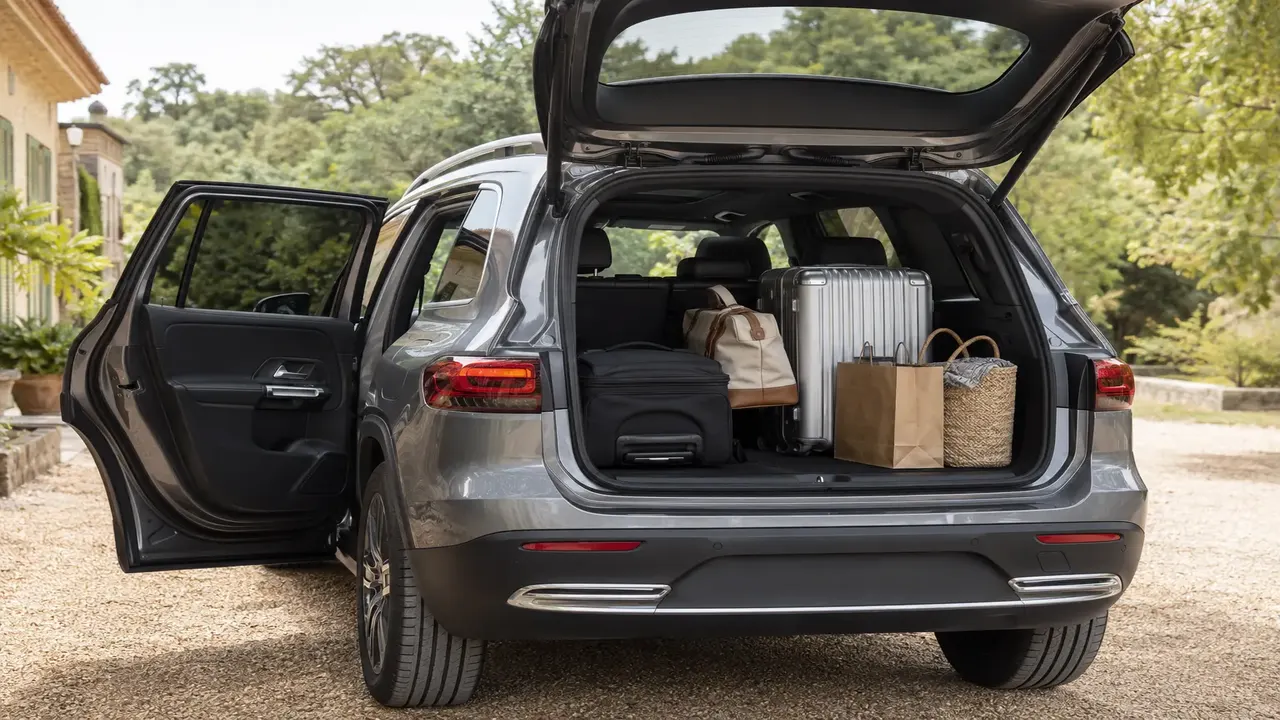
Built to a specific SUV model's interior dimensions and mounting points (often the factory cargo tie-down hooks or seat-frame bolts). These fit tightly with minimal gaps and are the sturdiest option, though they don't transfer to a different vehicle.
What to check before buying
- Mounting points — tension-only barriers can pop loose under sudden force; hook- or bolt-mounted barriers stay put better.
- Gap size — small dogs can squeeze through wide-spaced bars or stretched mesh; check the barrier's gap dimensions against your dog's size.
- Visibility — full-width solid barriers can block the rearview mirror; open mesh or bar designs preserve sightlines.
- Compatibility with folding seats — some barriers block the ability to fold rear seats flat, which matters if you need that cargo flexibility.
A barrier is not a substitute for a properly secured crate or harness for dogs that are anxious, prone to jumping, or riding in a vehicle with a hatchback design where the barrier sits closer to the rear glass. Combining a barrier with a cargo-area seatbelt harness adds meaningful extra security for larger dogs.
Installation basics
- Identify your SUV's cargo tie-down points or seat-frame bolts if using a mounted barrier rather than tension-only.
- Measure the cargo opening width and height before ordering — universal barriers have an adjustable range, not infinite fit.
- Test the barrier's rigidity by pushing firmly from the cargo side before trusting it with the dog loose.
- Recheck tension straps or bolts periodically, since vibration from regular driving can loosen them over time.
Frequently asked questions
Are mesh pet barriers safe for SUVs?
Will a pet barrier fit any SUV?
Can I use a barrier and a dog harness together?
Do pet barriers block the rearview mirror?
Sources & further reading
- American Veterinary Medical Association — Pet Travel Safety
- Center for Pet Safety — Crash Test Program Overview
Figures, prices and policy details were current at the last-updated date above. Automotive pricing, incentives and regulations change frequently — verify time-sensitive details with the linked primary sources. Read our editorial policy and fact-checking standards.