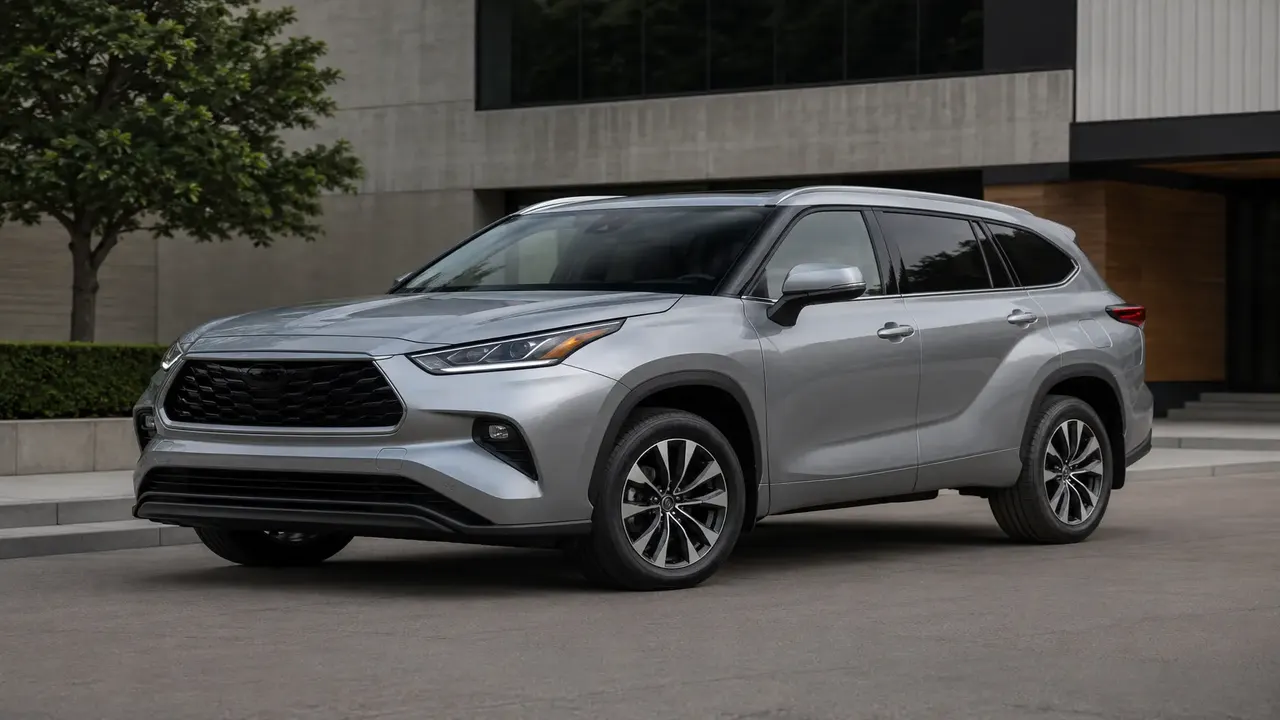
For small trailers, teardrop campers, jet skis or a single-axle boat trailer (roughly 2,000-5,000 lbs / 900-2,300 kg), body-on-frame SUVs such as the Toyota 4Runner, Jeep Grand Cherokee, Ford Explorer (RWD-based) and Toyota Fortuner/Land Cruiser Prado (UK/India/global markets) offer the strongest and most consistent towing figures. Three-row crossovers like the Kia Telluride, Hyundai Palisade and Chevrolet Traverse with the factory tow package typically manage 3,500-5,000 lbs (1,600-2,300 kg), which covers most small campers and boats, but check the exact trim and engine — towing capacity can vary by more than 1,000 lbs between engine options on the same model.
At a glance: SUV towing for small trailers
| SUV type | Examples | Typical max tow rating | Best matched to |
|---|---|---|---|
| Body-on-frame midsize | Toyota 4Runner, Jeep Wrangler/Grand Cherokee | 5,000-6,000 lbs (2,300-2,700 kg) | Small boats, off-road trailers, campers |
| Three-row crossover (tow package) | Kia Telluride, Hyundai Palisade, Chevrolet Traverse | 3,500-5,000 lbs (1,600-2,300 kg) | Pop-up campers, jet skis, utility trailers |
| Global midsize SUV (diesel) | Toyota Fortuner, Land Rover Discovery Sport | up to 6,600 lbs (3,000 kg) | Caravans and horse trailers (UK/India/Australia) |
| Standard crossover, no package | Base Honda CR-V, Toyota RAV4 | 1,500-2,000 lbs (680-900 kg) | Small single-axle utility trailers only |
Why towing capacity varies so much between SUVs
Towing capacity depends on frame construction, engine torque, transmission cooling, brake size and suspension tuning — not just the vehicle's overall size. A body-on-frame SUV built on a truck platform, like the 4Runner (shared with the Tacoma) or the Fortuner (shared with the Hilux globally), inherits a stiffer chassis and stronger drivetrain components than a unibody crossover of similar size, which is why it tows more despite sometimes being lighter.
Within a single model line, the towing figure often changes significantly with the engine and optional tow package. A four-cylinder crossover might be rated at 1,500 lbs, while the same body with a V6 and a factory tow package (upgraded cooling, wiring harness, hitch receiver) can be rated at 5,000 lbs or more. Always check the specific trim and engine, not just the model name.
Matching the SUV to the trailer
Most small trailer needs fall into a few clear categories, each with a sensible SUV match:
| Trailer type | Typical loaded weight | Suitable SUV class |
|---|---|---|
| Utility/box trailer | 1,000-2,500 lbs (450-1,100 kg) | Any midsize crossover with a tow hitch |
| Jet ski or single kayak trailer | 1,200-2,000 lbs (550-900 kg) | Standard crossover with tow package |
| Small camper/teardrop | 2,500-4,000 lbs (1,100-1,800 kg) | Three-row crossover with tow package or body-on-frame SUV |
| Small boat (16-18 ft) | 3,000-5,000 lbs (1,400-2,300 kg) | Body-on-frame SUV (4Runner, Grand Cherokee, Fortuner) |
The 80% rule
A widely used rule of thumb among towing guides is to stay comfortably under an SUV's maximum rated capacity — loading a trailer to 80% or less of the stated max leaves margin for cargo, passengers and hills, and keeps braking distances and stability closer to normal. A vehicle rated at 5,000 lbs towing a fully loaded 4,800 lb trailer will feel and stop very differently from the same vehicle towing 3,500 lbs.
Real-world considerations beyond the tow rating
- Tongue weight capacity (usually 10-15% of trailer weight) is a separate, often overlooked spec that limits what you can safely tow even if the trailer itself is under the max rating.
- Payload capacity is reduced by passengers and cargo, and towing eats into it — a fully loaded SUV with passengers may have less remaining capacity than the brochure implies.
- Factory tow packages typically add a transmission cooler and heavier-duty alternator, which matters for reliability on long tows, not just the headline weight figure.
- Trailer sway control and rear self-leveling suspension, standard on many three-row crossovers now, meaningfully improve stability with a loaded trailer.
Manufacturer-quoted maximum towing figures are usually measured with a lightly optioned, driver-only vehicle. Adding passengers, cargo and factory options can reduce your real available towing margin by several hundred pounds — check the vehicle's specific payload and tongue weight limits, not just the headline tow rating.
Buying used for towing duty
When shopping used, ask whether the SUV was ordered with the factory tow package — retrofitted hitches without the matching cooling and electrical upgrades can overheat a transmission under load. Inspect the hitch receiver and wiring for corrosion or damage, and ask for maintenance records showing transmission fluid changes, since heavy towing accelerates fluid breakdown.
Frequently asked questions
What SUV can tow a small camper?
How much can a standard crossover tow without a tow package?
Is it safe to tow at an SUV's maximum rated capacity?
Do I need a factory tow package or can I add one after purchase?
Which body-on-frame SUVs are best for towing boats?
Sources & further reading
- Edmunds — Truck and SUV towing capacity guides
- Cars.com — SUV research and towing specifications
- Kelley Blue Book — SUV and truck reviews
Figures, prices and policy details were current at the last-updated date above. Automotive pricing, incentives and regulations change frequently — verify time-sensitive details with the linked primary sources. Read our editorial policy and fact-checking standards.