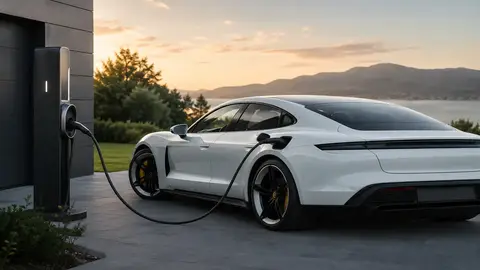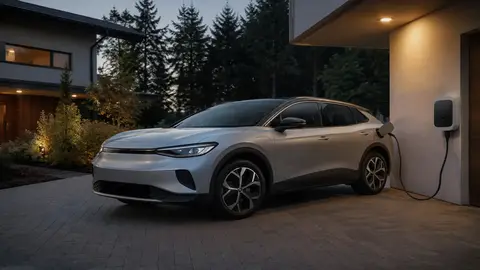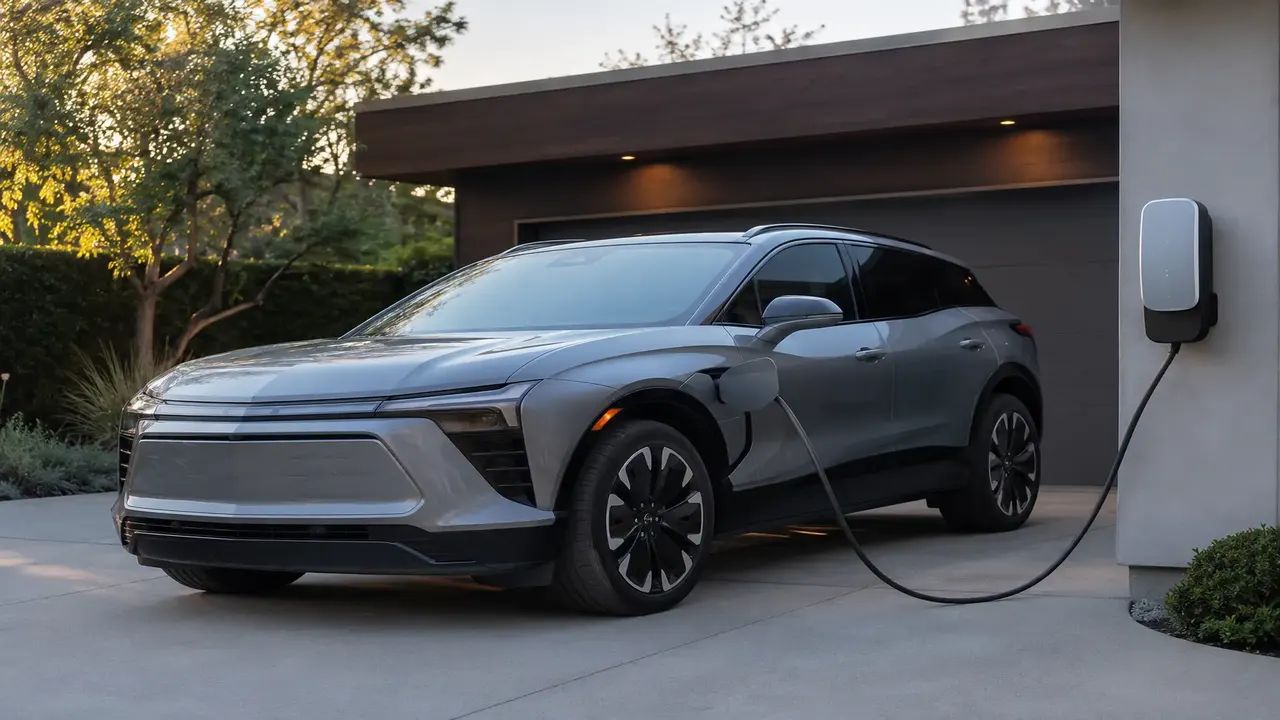
EV-specific and renewable tariffs reward you for charging when electricity is cheap and clean — usually overnight. In the UK, smart EV tariffs like Intelligent Octopus Go offer deep off-peak rates: from April 2026 the off-peak rate falls to around 5.49p/kWh (a 39% cut), and customers on the fixed tariff saved roughly £771 a year versus the standard variable rate. The savings come from time-of-use pricing plus smart charging that automatically schedules charging for the cheapest, often greenest, hours. In the US, utility time-of-use (TOU) plans do the same job; in India, TOU is mostly limited to commercial users, but smart chargers can still target cheaper night rates.
EV tariff essentials
| Feature | What it does | Benefit |
|---|---|---|
| Time-of-use pricing | Cheaper rate in off-peak hours | Lower charging cost |
| Smart charging | Auto-schedules to cheap/green hours | Hands-off savings |
| Renewable backing | Supply matched to renewables | Lower carbon charging |
| UK off-peak (Apr 2026) | ~5.49p/kWh on Intelligent Octopus Go | Very cheap overnight charging |
| Typical UK saving | ~£771/yr vs standard variable | Big running-cost reduction |
Why your tariff matters so much for an EV
For a petrol car, the fuel price is roughly fixed at the pump. For an EV, you choose when to buy your fuel — and electricity prices vary enormously across the day. Charging on a standard flat rate means paying the same high price whenever you plug in. Charging on the right tariff means filling up overnight at a fraction of the cost, when demand is low and the grid is often at its cleanest. The tariff is the single biggest lever on your charging costs.
Time-of-use tariffs: the core idea
Time-of-use (TOU) tariffs charge different prices at different times — a low off-peak rate (typically overnight) and a higher peak rate during the day. For an EV owner who can charge while the car sleeps, this is transformative: the overwhelming majority of charging happens at the cheap rate, dragging your effective cost per mile right down.
Smart EV tariffs and automatic charging
The newest tariffs go further by combining cheap off-peak rates with smart charging. You plug in and tell the system how much charge you need and by when; it then schedules the charging itself for the cheapest — and often greenest — hours, using live signals from the wholesale market. You don't have to set timers or remember anything; the car simply fills up at the best moments.
From 1 April 2026, the off-peak rate on Intelligent Octopus Go falls to around 5.49p/kWh — a 39% reduction, among the lowest overnight EV rates the UK market has seen. Over May 2025–April 2026, customers on the fixed version of the tariff typically saved around £771 compared with the standard variable tariff. The service smart-charges eligible cars automatically, scheduling charging for cheap, often greener hours.
Renewable backing: the carbon angle
Beyond cost, many EV and green tariffs are backed by renewable generation, meaning the supplier matches your consumption with renewable energy. Combined with smart charging that targets times when the grid carries more wind and solar, this lets you genuinely lower the carbon footprint of your driving — not just the cost. For an EV owner, charging cheap and charging clean often go hand in hand, because off-peak overnight periods tend to be both.
How to choose an EV tariff
- Check you can charge off-peak — a home charger and somewhere to park overnight are the key requirements.
- Compare off-peak rates and hours — look at the price and the length of the cheap window.
- Check smart-charging compatibility — some tariffs require a supported car or charger to unlock the best rate.
- Weigh peak rates too — a low off-peak rate sometimes comes with a higher daytime rate; make sure your overall usage benefits.
- Look for renewable backing if cutting carbon matters to you, and check any exit fees on fixed tariffs.
Regional picture
| Region | Availability | Notes |
|---|---|---|
| UK | Strong — many dedicated EV tariffs | Deep off-peak rates; smart charging common |
| US | Utility time-of-use plans widely available | Varies by utility; EV-specific rates in many states |
| India | TOU mostly for commercial users | Residential TOU limited; smart chargers can still target night rates |
Mistakes to avoid
- Staying on a flat rate while charging an EV at home — you're leaving substantial savings on the table.
- Charging at peak times out of habit when an off-peak window is available.
- Ignoring peak rates — a great off-peak rate paired with an expensive daytime rate may not suit a high daytime user.
- Assuming you need solar — you don't; a TOU/EV tariff delivers most of the saving on its own, though solar adds to it.
The bottom line
If you can charge an EV at home overnight, the right tariff is the difference between expensive and remarkably cheap motoring. Smart EV tariffs with deep off-peak rates — like the UK's sub-6p overnight rates from 2026 — can cut hundreds of pounds a year off charging costs while letting you fill up on cleaner, greener electricity. Match the tariff to when you can actually charge, enable smart charging if your car supports it, and you turn the EV's biggest running cost into one of its biggest advantages.
Frequently asked questions
What is an EV tariff?
How much can an EV tariff save me?
What is smart charging?
Do I need solar panels to benefit?
Are EV tariffs available outside the UK?
Sources & further reading
- Octopus Energy — Intelligent Octopus Go EV tariff
- Infinity Energy — Octopus Energy slashes EV charging rates from April 2026
Figures, prices and policy details were current at the last-updated date above. Automotive pricing, incentives and regulations change frequently — verify time-sensitive details with the linked primary sources. Read our editorial policy and fact-checking standards.