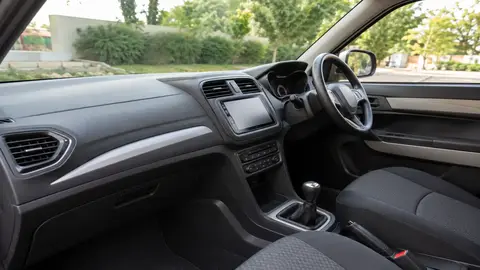
Start from the IRDAI insurance depreciation schedule as a baseline (a car loses roughly 5% of value in the first six months, 40–50% by year four, then about 5% a year after that), then adjust up or down for kilometres driven, number of owners, accident history and service record. Cross-check against 3–5 live listings for the same make, model, year and fuel type in your city before setting a final asking price.
IRDAI-style depreciation guide by vehicle age
| Vehicle age | Typical depreciation from new |
|---|---|
| Under 6 months | 5% |
| 6 months – 1 year | 15% |
| 1–2 years | 20% |
| 2–3 years | 30% |
| 3–4 years | 40% |
| 4–5 years | 50% |
| Over 5 years | ~5% further per year, by agreement |
Start with a depreciation baseline
Insurers in India use a standardised depreciation schedule to value cars for policy purposes, and it's a reasonable starting point for a resale price too. A car roughly halves in book value by the four-to-five-year mark, with the steepest drop in the first year. This gives you a defensible floor and ceiling before you factor in real-world condition.
Adjust for the things a depreciation table can't see
- Kilometres driven — a 3-year-old car with 20,000 km is worth noticeably more than one with 60,000 km.
- Number of owners — a single-owner car commands a premium over a car that's changed hands two or three times.
- Accident and repair history — any structural repair or major panel replacement should reduce the asking price and must be disclosed.
- Service history — a full service record from an authorised centre reassures buyers and supports a higher price.
- Fuel type demand — diesel resale values have softened in many cities as buyers shift toward petrol and CNG/EV options; factor in local demand.
- Tyre and battery condition — replacing worn tyres or an aging battery before listing can lift the achievable price by more than the cost of replacement.
Cross-check with live market listings
Search classifieds and dealer listings for the same make, model, variant, year and city. Look at asking prices, not just the first result, and note how long similar cars have been listed — cars priced above the market tend to sit unsold for months, which itself erodes value as the car ages further.
Using online valuation tools sensibly
Instant online valuation tools (from marketplaces, dealer chains and insurers) are useful for a quick ballpark, but they rely on averages and can miss condition-specific detail. Treat their number as a starting range, then adjust using the factors above rather than treating it as final.
Getting an independent inspection before pricing
A paid pre-sale inspection (typically a modest fee at a garage or through a car-check service) that verifies engine health, suspension, electricals and paint-thickness for accident detection gives you (and eventually the buyer) an objective condition report. Selling with this report in hand often speeds up negotiation because it removes buyer uncertainty.
Instant "cash purchase" offers from some used-car buying services are typically 5–15% below what you'd get selling directly to a private buyer or through a listing, because they price in their own resale margin and convenience. Compare at least one direct-sale estimate before accepting an instant offer.
Setting your final asking price
Price a little above your realistic minimum to leave room for negotiation — Indian used-car buyers expect to haggle. Be ready to justify the number with your depreciation baseline, kilometre reading, service record and comparable listings; sellers who can explain their price close deals faster than those who simply quote a round number.
Frequently asked questions
What is the standard depreciation rate for cars in India?
Do online car valuation tools give accurate prices?
Does the number of previous owners affect resale value?
Is diesel or petrol worth more on resale in India?
Should I get my car inspected before selling it?
Sources & further reading
- Insurance Regulatory and Development Authority of India (IRDAI)
- Parivahan Sewa — vehicle records and services
Figures, prices and policy details were current at the last-updated date above. Automotive pricing, incentives and regulations change frequently — verify time-sensitive details with the linked primary sources. Read our editorial policy and fact-checking standards.