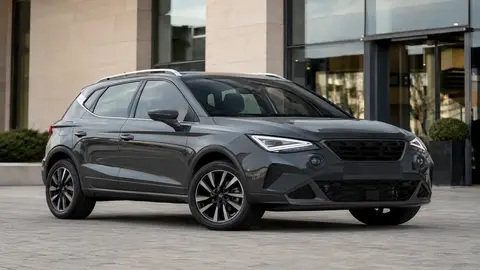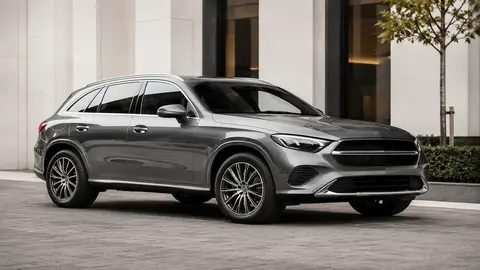
Parking assistance has progressed through three broad generations: ultrasonic sensors that beep as you get close to an obstacle; camera-based surround-view systems giving a top-down view of the vehicle; and semi-automated or remote parking that steers (and in some cases fully controls) the vehicle into a space, sometimes operable from a phone outside the car. Automated valet parking — where the vehicle parks itself in a mapped garage with no driver present at all — remains a limited, geofenced pilot technology in select locations rather than a widely available consumer feature as of 2026, since it requires Level 4-type automation and site-specific infrastructure.
At a glance
| Generation | How it works | Availability |
|---|---|---|
| Ultrasonic proximity sensors | Beeps faster as you approach an obstacle | Widespread, decades-old technology |
| Surround-view camera | Stitches multiple cameras into a top-down view | Common on mid-range and above trims |
| Semi-automated parking | Car steers itself into a space; driver controls pedals or a phone app | Available on many new vehicles as an option |
| Automated valet parking | Vehicle parks itself with no driver present, in a mapped facility | Limited pilots only, not widely available |
From beeping sensors to full sensor fusion
The earliest parking aids were simple: ultrasonic sensors in the bumper that beeped with increasing urgency as the car approached an obstacle. That technology is still standard on most vehicles today because it's cheap and reliable at close range, but it's now typically paired with camera-based surround-view systems that stitch feeds from multiple cameras into a single top-down image of the vehicle and its surroundings, giving a far clearer picture than sensors alone, especially for spotting low obstacles like curbs or bollards that ultrasonic sensors can miss.
Semi-automated and remote parking
The next step lets the car handle the steering into a space while the driver (or, in some implementations, a phone app operated from outside the vehicle) controls when to start and stop. Remote parking is particularly useful in tight spaces where opening a door isn't practical — the driver exits first, then guides the car in from outside using a smartphone app or key fob. This requires the vehicle to have already mapped the space using its cameras and sensors and is typically limited to low speeds and short distances.
What limits wider remote/automated parking today
- Regulatory approval varies by country for operating a vehicle with no one in the driver's seat, even at walking pace
- Reliability requirements are high — a parking maneuver happens in tight quarters with pedestrians and other vehicles nearby
- Infrastructure dependency — automated valet parking needs the facility itself to be mapped and, in many pilots, equipped with supporting sensors
Automated valet parking: further out than it looks
Automated valet parking — dropping your car at a garage entrance and letting it find and enter a space entirely on its own, then summon itself back — has been demonstrated in pilot programs at specific facilities for several years, but remains far from a standard consumer feature. It typically requires close cooperation between the automaker and the facility operator to map and instrument the garage, plus regulatory sign-off for driverless low-speed operation, which has kept it limited to a small number of demonstration sites rather than broad rollout.
Remote parking features typically require the driver to remain very close to the vehicle and hold down a control the entire time. They are not the same as automated valet parking and won't work from a distance.
Where this is headed
Expect surround-view and semi-automated parking to keep trickling down into mainstream trims as camera costs fall, while automated valet parking stays a pilot-and-partnership technology for the next few years rather than a broadly available feature, since it depends on infrastructure investment as much as vehicle capability.
Frequently asked questions
What's the difference between remote parking and automated valet parking?
Is automated valet parking available to consumers?
Do surround-view cameras replace ultrasonic parking sensors?
Can I operate remote parking from far away using my phone?
Why hasn't automated valet parking rolled out more widely?
Sources & further reading
Figures, prices and policy details were current at the last-updated date above. Automotive pricing, incentives and regulations change frequently — verify time-sensitive details with the linked primary sources. Read our editorial policy and fact-checking standards.