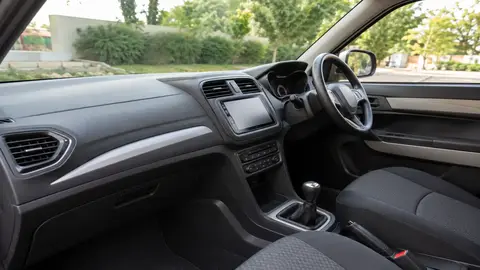
The most-installed US aftermarket accessories are dash cams ($50-$300), all-weather floor liners ($120-$250), remote starters ($200-$500 installed), running boards/side steps ($300-$900), and tonneau covers for trucks ($250-$1,200). Wheels, exhausts and suspension mods cost more ($800-$4,000+) and can affect your warranty and insurance rate. Stick to accessories rather than modifications if you want to avoid warranty disputes.
At a glance
| Accessory | Typical installed cost |
|---|---|
| Dash cam (front only) | $50-$150 |
| Dash cam (front + rear) | $150-$300 |
| All-weather floor liners | $120-$250 |
| Remote starter | $200-$500 |
| Running boards / side steps | $300-$900 |
| Tonneau bed cover (trucks) | $250-$1,200 |
| Aftermarket wheels (set of 4) | $800-$2,500 |
| Cat-back exhaust | $500-$1,800 |
The accessories most US owners actually buy
Dealers and online retailers report the same handful of add-ons dominate sales: protective accessories (floor liners, seat covers, paint sealant), convenience accessories (remote start, dash cams, phone mounts, cargo organizers), and appearance/performance parts (wheels, tint, exhausts, lift or lowering kits). Protective and convenience items are the safest bets — they add real day-to-day value without touching the drivetrain or safety systems.
Protective accessories
- All-weather floor liners (WeatherTech, Husky) trap salt, mud and snow melt — $120-$250 for a front-and-rear set.
- Paint protection film (PPF) on the front bumper and hood runs $600-$1,800 and prevents rock chips.
- Seat covers for pets or work vehicles, $80-$300.
- Bed liners (spray-in or drop-in) for pickups, $300-$550.
Convenience and safety tech
- Dash cams are the fastest-growing category — useful for insurance claims and increasingly required by some insurers for accident-forgiveness discounts. Budget models start at $50; dual front/rear units with parking-mode recording run $150-$300.
- Remote starters ($200-$500 installed) are popular in cold-weather states; check your state's idling laws first (some municipalities restrict unattended remote-start idling).
- Phone mounts and wireless charging pads, $20-$80.
- Cargo organizers and cargo liners, $40-$150.
Appearance and performance mods — read the fine print first
Wheels, exhausts, suspension lowering/lift kits and tuning chips change how a car performs, and that has consequences most first-time buyers of these parts don't anticipate.
| Mod | Cost range | Watch-out |
|---|---|---|
| Aftermarket wheels | $800-$2,500 | Wrong offset can rub fenders or throw off ABS/TPMS sensors |
| Cat-back exhaust | $500-$1,800 | Can trigger check-engine codes; check state emissions rules |
| Lowering springs | $300-$800 + labor | May fail state inspection ride-height rules |
| Window tint | $150-$500 | Most states cap front-window darkness (commonly 35-50% VLT) |
| ECU tune/chip | $300-$1,500 | Often voids powertrain warranty; may violate EPA tampering rules if it defeats emissions controls |
The federal Magnuson-Moss Warranty Act prevents a dealer from voiding your entire warranty just because you added an aftermarket part. But they can deny a specific claim if they show the accessory caused the failure — e.g., a tune that fried a transmission. Keep receipts and installation records to defend a claim.
Insurance and resale considerations
Report material modifications to your insurer. Standard policies often exclude aftermarket parts above a small dollar threshold (commonly $1,000-$2,000) unless you add a modified-parts or stated-value endorsement. On resale, tasteful protective accessories (liners, PPF, bed liners) tend to help; loud exhausts, big lift kits and non-factory tunes narrow your buyer pool and can hurt trade-in value at a franchise dealer.
Installation: DIY vs professional
Floor liners, phone mounts and seat covers are DIY-friendly. Remote starters, backup cameras and anything wired into the CAN bus are worth paying a professional installer for — a botched wiring job can disable safety systems or drain the battery. Expect $75-$150/hour for installation labor at an audio/accessory shop.
Common mistakes to avoid
- Buying wheels/tires without checking load rating and speed rating match the vehicle's original spec.
- Skipping the state tint-law check before installing dark film.
- Installing a tune or exhaust right before an emissions inspection.
- Not telling your insurer about accessories worth more than the policy's stock threshold.
Frequently asked questions
Do aftermarket accessories void my car's warranty?
Which aftermarket accessory adds the most resale value?
Is window tint legal in every state?
Does my insurance cover stolen aftermarket parts?
Two of the most-searched upgrades get full guides of their own: the best wireless Android Auto adapters and aftermarket head-up displays.
Sources & further reading
Figures, prices and policy details were current at the last-updated date above. Automotive pricing, incentives and regulations change frequently — verify time-sensitive details with the linked primary sources. Read our editorial policy and fact-checking standards.