📚 Retrospective analysis. Historical figures drawn from period sources; modern figures from published instrumented tests and manufacturer data, attributed where applicable.
The comparison that sounds impossible
A 1992 Ferrari 512TR — a genuine supercar, flat-12 engine, poster-worthy, and among the fastest road cars of its era — accelerated to 60 mph in roughly 4.8 seconds.
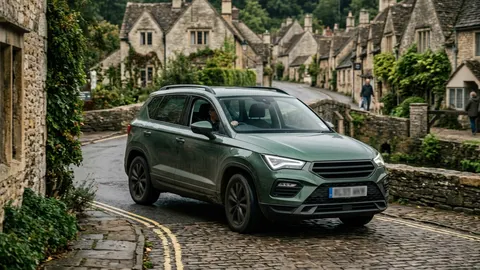
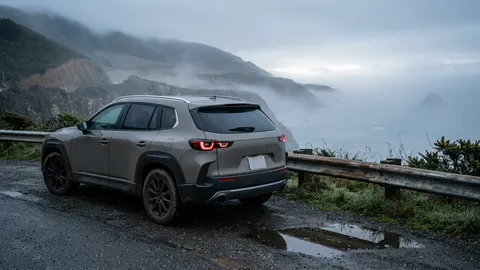
A 2026 Rivian R2 Performance, a mid-size family electric SUV costing around $58,000, does it in 3.6 seconds.
A Hyundai Ioniq 9, a three-row family EV designed to carry seven people and their luggage, offers up to 422 hp.
The family SUV is comfortably quicker than the supercar, and this isn't a curiosity — it's the defining performance story of the last decade, and it has broken one of motoring's most cited numbers.
How this happened
1. Electric drivetrains changed the physics of launching. An electric motor delivers maximum torque from zero rpm, with no turbo lag, no gearchanges and no clutch. A combustion car has to build revs, manage boost and shift gears; an EV simply goes. The 0–60 sprint is precisely the scenario electric motors are best at.
2. All-wheel drive removed the traction limit. At the sharp end, launch performance is governed by how much grip the tyres can find in the first sixty feet. Dual and quad-motor EVs put power to all four wheels with millisecond-precise control — traction that a rear-drive 1990s supercar simply couldn't match.
3. Power became cheap. Adding an electric motor is a straightforward way to add hundreds of horsepower. Adding 200 hp to a combustion engine is an engineering project; adding it to an EV is a specification decision.
4. Launch control automated the hard part. In 1992, a fast standing start required genuine skill. Modern launch control removes the driver from the equation entirely.
5. Battery weight is offset by torque. EVs are heavy, but the torque advantage more than compensates over 60 mph.
Why the number stopped meaning anything
Our performance-data section makes this argument directly in our quickest-cars ranking, and the archive comparison proves it:
1. The chart has compressed. When a 4,811-pound convertible does 2.5 seconds (our AMG SL63 test), and a family SUV does 3.6, and a hypercar does 2.7 — the differences have become imperceptible. Two tenths is a margin no human reliably feels, and one that varies more with surface temperature and tyre condition than between cars.
2. Traction, not power, sets the limit. Our ranking found the 1,258 hp rear-drive McLaren W1 sits below an 805 hp all-wheel-drive AMG SL63 — purely because it drives two wheels rather than four. A number that ranks a hypercar below a convertible isn't measuring what people think it measures.
3. It measures a scenario nobody experiences. A standing-start, full-throttle launch with launch control engaged on a prepared surface is not driving. Rolling acceleration (50–75 mph) is what you actually use to overtake, and the rankings look quite different by that measure.
4. It says nothing about whether a car is good. Our clearest example: the older, lighter F90 M5 CS (2.6 sec) is quicker than its heavier PHEV successor (3.0 sec) despite 90 fewer horsepower. Which is the better car depends on refinement, agility, running costs and electric range — none of which appears in a 0–60 figure.
What was actually impressive about the 512TR
This matters, because "the family SUV is quicker" invites the wrong conclusion.
The 512TR's 4.8 seconds came from a naturally-aspirated flat-12, driving two wheels, through a gated manual gearbox, with no launch control and no electronic assistance. Achieving it required skill. The experience — the noise, the response, the mechanical involvement, the sense of managing something — is entirely absent from a modern EV's silent, effortless, automated launch.
Speed and thrill are different things, and the archive comparison demonstrates it perfectly. The Ferrari is slower and vastly more exciting. Nobody has ever been thrilled by a family SUV's launch control twice.
What we'd rather you measured
Our performance-data section argues for these instead, and the archive comparison reinforces why:
Braking (70–0 mph). Unlike 0–60, braking distances have not converged — the spread remains wide, genuinely consequential, and heavy EVs deserve particular scrutiny. A 2,400 kg EV carries roughly 60% more kinetic energy at 70 mph than a 1,500 kg hatchback.
Rolling acceleration (50–75 mph). The overtaking measurement you actually use.
Repeated-run consistency. One heroic launch means little; five consistent ones reveal thermal management. Measure the fifth run.
Weight. Increasingly the most revealing single figure in modern motoring.
The bottom line
A family SUV out-accelerating a 1990s Ferrari is genuinely remarkable, and it happened because electric drivetrains are extraordinarily good at exactly the thing 0–60 measures: instant torque, all-wheel traction, no gearchanges, and automated launches.
But the achievement has destroyed the metric. The chart has compressed into imperceptible differences, traction rather than power sets the limit, it measures a scenario nobody encounters, and it ranks a 1,258 hp hypercar below a convertible.
Most tellingly, it tells you nothing about whether a car is any good. The 512TR is slower than a Rivian R2 and immeasurably more exciting. The M5 CS is quicker than its own successor.
Speed has been commoditised. Thrill hasn't — and the archive comparison is the clearest possible demonstration of the difference.
Key takeaways
- A 1992 Ferrari 512TR did 0–60 in ~4.8 sec; a 2026 Rivian R2 Performance family SUV does 3.6 — and it isn't close
- The cause is electric drivetrains: instant torque, all-wheel traction, no gearchanges, and automated launch control
- The achievement destroyed the metric: differences are now imperceptible, and traction rather than power sets the limit
- Our ranking found the 1,258 hp rear-drive McLaren W1 below an 805 hp AWD convertible — a number that does that isn't measuring what people think
- Speed has been commoditised; thrill hasn't. The Ferrari is slower and vastly more exciting, and that distinction is the whole point
Sources & further reading
- Period performance data
- True Motion Auto instrumented testing
- manufacturer specifications. Retrospective analysis. Verified July 2026.
Figures, prices and policy details were current at the last-updated date above. Automotive pricing, incentives and regulations change frequently — verify time-sensitive details against the primary sources listed below. Read our editorial policy and fact-checking standards.