🏆 BUYING GUIDE. General principles and categories rather than specific listings, since availability and pricing vary constantly. Always inspect before buying.
⭐ The principle
As our depreciation investigation established, depreciation is usually the largest cost of car ownership — routinely exceeding fuel.
Buying used means someone else paid it. That's the entire proposition, and it's a strong one.
The trade is certainty. As our new-versus-used comparison put it, the deciding question is brutally simple:
"If this car needed a £3,000 repair next month, what would happen?"
If that's a serious problem, buy the newest, simplest thing you can. If it isn't, this budget rewards you generously.
⭐ What's genuinely undervalued at this money
From our used-car column, these are the categories where the market is kindest:
1. Sedans and estates.
Buying against fashion is when the used market rewards you most. As our sedan coverage argued, they're more efficient, better to drive, usually cheaper and adequately spacious — and they cost less used precisely because everyone wants an SUV.
2. Manual transmissions.
A smaller pool of buyers suppresses prices on otherwise identical cars. As our Used-Car Whisperer column put it: whether manuals should die is irrelevant to the used buyer — what matters is that fewer people want them.
3. Unfashionable colours.
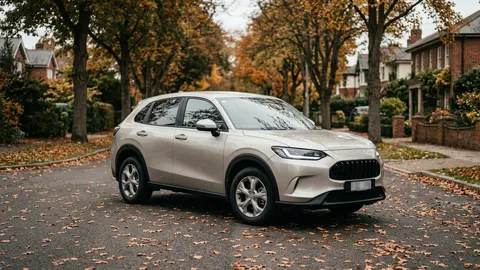
Silver, beige and grey cost less than the same car in black or white. The paint doesn't affect how it drives.
4. Boringly-specced versions of cars usually sold in high trim.
Fewer things to break, lower price. As our options ledger noted, larger wheels cost more to replace — so the modest-spec car is cheaper to run as well as to buy.
5. Late examples of discontinued nameplates.
Demand dropped; the car didn't get worse.
⚠️ What to avoid at this budget
1. Complex premium cars.
This is the most important warning at this price. As our new-versus-used comparison established, modern premium vehicles carry air suspension, dual-clutch transmissions, multiple ECUs, turbochargers and complex infotainment — each an expensive out-of-warranty failure point.
A £9,000 car with a £4,000 repair is a £13,000 car, and at this budget that's frequently unaffordable.
2. Anything without a service history.
As our odometer investigation found, the service history is the single most valuable document a used car carries — it's how mileage fraud gets caught, and its absence is the clearest warning available.
3. Recorded write-offs you haven't had inspected.
As our write-off explainer set out: Cat S is structural damage, and the structure is the safety system. Cat N does not mean minor.
4. Flood cars.
As our salvage investigation documented, the damage is progressive, electronic and frequently invisible — and it attacks safety systems. Silt in seat rails, moisture in light units, corrosion in odd places, and a musty smell under heavy air freshener.
5. Anything where the paperwork doesn't match.
⭐ The three checks that prevent almost everything
If you do nothing else:
1. Full service history, with mileage recorded at each entry in a sequence that makes sense. As our odometer coverage argued, an illogical jump is the clearest evidence of rollback.
2. An independent inspection by someone you chose — and tell them what you're worried about. Telling an inspector you suspect flood damage changes what they check.
3. A history check from more than one provider — and remember, a clean check means nothing was recorded, not that nothing happened.
Plus, in the UK: MOT history is publicly checkable and free. As our MOT coverage argued, repeated identical advisories across years reveal an owner who ignored them.
What about a used EV?
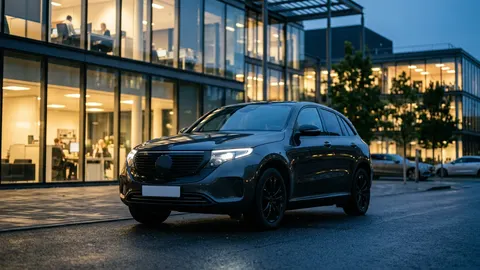
⭐ As our used-car column argued, a used EV is currently the strongest value in motoring — provided you can charge at home and get a battery health report (non-negotiable).
EV residuals fell hard, as our depreciation investigation documented. Somebody absorbed that loss.
At this budget you'll be looking at earlier, shorter-range examples — which is fine for urban use, and check the 10–80% charging time, because an older EV charging at 50 kW is a fundamentally different experience from one at 150 kW.
And note: battery warranties are typically long (8 years or more) and transfer to subsequent owners — so check what remains.
⭐ What to prioritise
1. Safety. Don't trade crash protection for savings — and note that safety standards improved enormously over the period this budget covers, so a slightly newer car may protect you considerably better.
2. Simplicity. Fewer complex systems means fewer expensive failures.
3. Service history above condition. A tidy car with no history is riskier than a scruffy one with a full file.
4. Parts availability and running costs. A car with cheap, available parts is dramatically easier to own at this budget.
The bottom line
At £10,000 someone else has already paid the biggest cost. That's a strong position — and the trade is certainty.
Shop against fashion: sedans, estates, manuals, unfashionable colours and modest specs are all cheaper for reasons that don't affect how the car drives.
⚠️ Avoid complex premium cars at this budget — one major failure can exceed the purchase price.
⭐ And do the three checks: full service history with logical mileage, an independent inspection by someone you chose, and multiple history providers.
They cost an hour and a small fee, and they prevent almost every expensive mistake on this page.
Key takeaways
- Someone else already paid the largest cost — depreciation. The trade is certainty, and the deciding question is what a £3,000 repair would do to you
- Shop against fashion: sedans, estates, manuals, unfashionable colours and modest specs cost less for reasons that don't affect how they drive
- ⚠️ Avoid complex premium cars at this budget — air suspension, dual-clutch transmissions and multiple ECUs are expensive failure points
- ⭐ The three checks: full service history with logical mileage, an independent inspection by someone you chose, and multiple history providers
- A used EV can be excellent value — if you charge at home, get a battery health report, and check the 10–80% charging time