🏆 BUYER-SITUATION GUIDE. General principles. For back or mobility conditions, seek medical advice — this covers what to check, not what will help a specific condition.
⭐ The test that actually matters
A showroom test drive tells you almost nothing about comfort over hours.
Twenty minutes in a car with a supportive seat and one with a poor one feel broadly similar. The difference appears at hour two, and by hour four it's the only thing you're thinking about.
⭐ Insist on the longest test drive you can get — ideally overnight, and ideally on roads you actually use. Any dealer refusing an extended drive on a car you'll spend years in is telling you something.
And drive the exact specification you'll buy, because seats differ between trim levels, and larger wheels genuinely change ride quality.
For tall drivers
What to check, in order:
⭐ 1. Seat travel and headroom together.
The trap: a car with generous seat travel but limited headroom forces you to choose between legroom and clearance.
Sit with the seat fully back and lowered. Check headroom with the seat where you'd actually drive it, not where it starts.
⚠️ 2. Panoramic roofs cost headroom.
This appears in every trim guide we've written, and for tall drivers it's decisive. A sunroof can remove several centimetres — enough to make an otherwise suitable car unsuitable.
Check the same model with and without.
3. Steering reach adjustment, not just rake. Many cars adjust up and down but not in and out, which matters enormously for long arms.
4. Pedal spacing and dead-pedal position.
5. Rear headroom if you carry adults — and coupe-SUV rooflines are the obvious hazard, as our BE 6 and XEV 9e reviews noted.
6. A-pillar and mirror positions, which can create blind spots at different seating heights.
For shorter drivers
⭐ 1. Seat height adjustment and forward visibility.
The critical question: can you see the road immediately ahead of the bonnet?
As our crossover-size opinion piece argued, modern vehicles have grown tall and blunt — largely because of pedestrian impact regulation, which is genuinely good rule-making. But it means high bonnet lines, and for shorter drivers that can create a substantial forward blind spot.
2. Pedal reach with a safe distance from the airbag.
⚠️ This matters and it's under-discussed. Sitting very close to reach the pedals puts you closer to the steering wheel airbag than is ideal.
Adjustable pedals, where offered, genuinely help. Otherwise check whether comfortable pedal reach leaves adequate clearance.
3. Steering wheel adjustment range.
4. Over-shoulder visibility and whether the mirrors and camera compensate.
5. Ease of entry and exit, particularly with high sills.
For back problems
⚠️ First: this is medical territory, and we're not medical advisers. Seek advice about your specific condition.
What to check in a car:
⭐ 1. Lumbar support — and whether it's adjustable.
Fixed lumbar support that doesn't match your spine is worse than none. Adjustable, and ideally multi-way, is genuinely valuable.
2. Seat base length and angle. A base that's too short leaves thighs unsupported; too long presses behind the knee.
3. Ride quality — and this is where wheels matter.
⭐ As every trim guide we have published has argued, larger wheels ride worse. For a bad back, that's not a minor preference — it's the difference between comfortable and painful.
Test the exact wheel size you'll buy.
4. Seat height for entry and exit. Many people find a higher hip point easier — one of the genuine, non-fashion reasons for SUV popularity, as our sedan feature acknowledged.
5. Heated seats, which some people find genuinely helpful for muscle comfort.
6. Boot load lip height, if you lift things.
⭐ What to do at the dealership
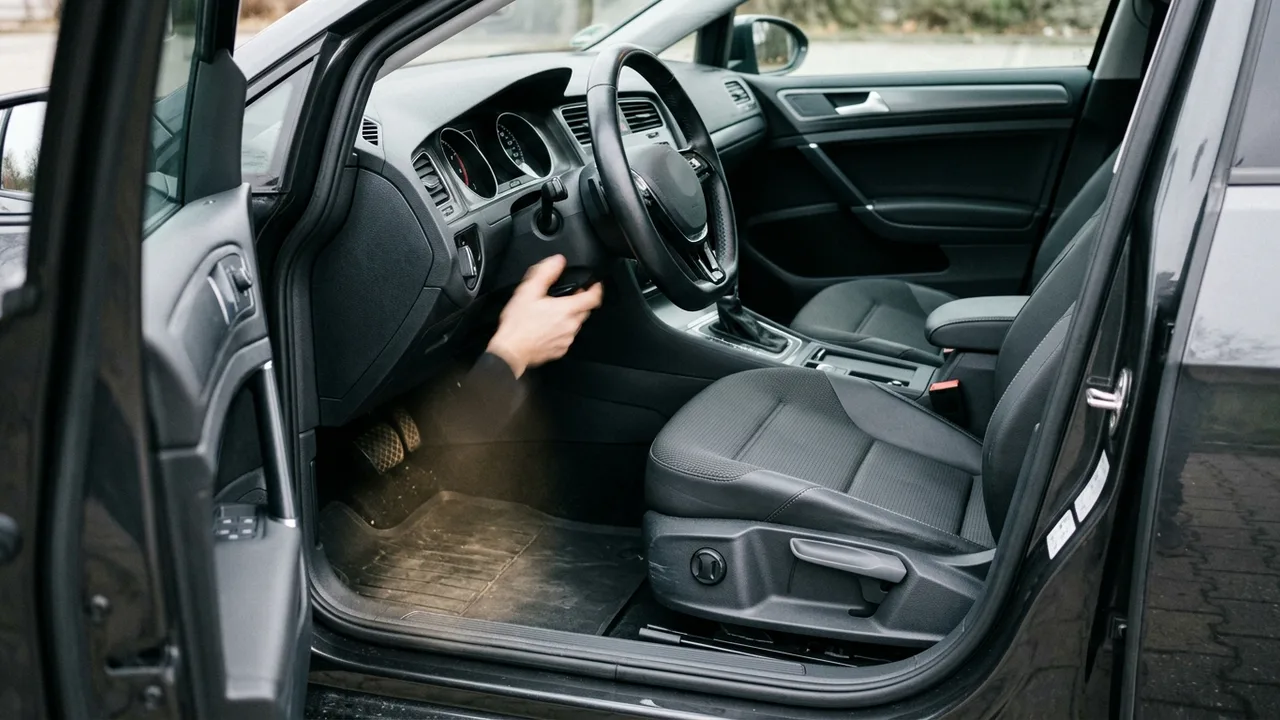
1. Adjust everything before deciding anything. Seat, wheel, mirrors. Take five minutes.
2. Drive for as long as you can — and push for longer.
3. Drive the exact trim and wheel size you intend to buy.
4. Check with the seat where you'd actually have it, not where it starts.
5. Test entry and exit repeatedly, because you'll do it thousands of times.
6. If a car nearly fits, check whether a different seat option exists — some manufacturers offer sports or comfort seats with genuinely different dimensions.
The bottom line
Comfort over hours is invisible in a twenty-minute test drive, and it's the thing that determines whether you enjoy a car for years.
⭐ Insist on the longest drive you can get, in the exact specification you'll buy.
Tall drivers: check headroom and legroom together, and remember panoramic roofs cost clearance.
Shorter drivers: check forward visibility over a modern high bonnet, and pedal reach against safe airbag distance.
Bad backs: adjustable lumbar support, and take the smaller wheels — because ride quality is not a preference here.
Key takeaways
- ⭐ A twenty-minute test drive tells you nothing about comfort over hours — insist on the longest drive you can get, in the exact specification
- Tall drivers: check headroom and legroom together, and note that panoramic roofs cost several centimetres of clearance
- Shorter drivers: check forward visibility over a modern high bonnet, and whether comfortable pedal reach leaves safe airbag clearance
- Bad backs: adjustable lumbar support matters, and fixed support that doesn't match your spine is worse than none
- ⭐ Take the smaller wheels — for a bad back, ride quality isn't a preference, and this is the clearest case in the project