The free checks most buyers skip
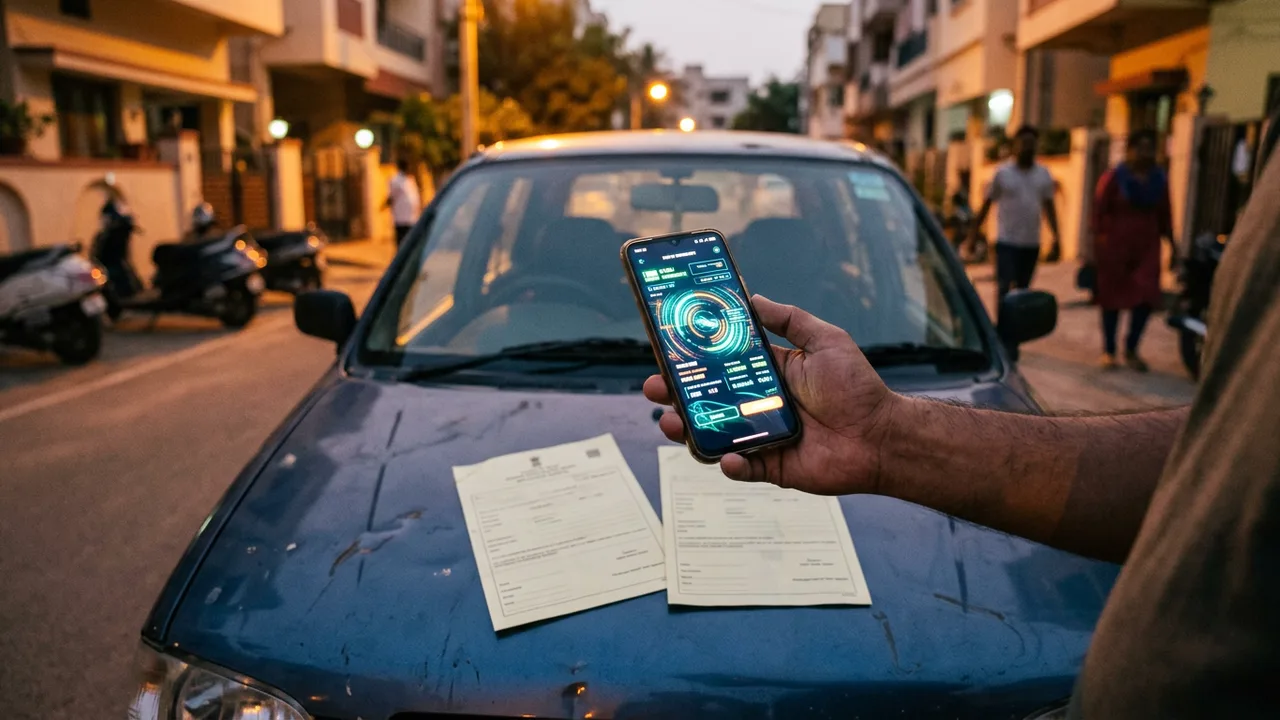
India's vehicle records went digital years ago; most used-car buyers still rely on the seller's word. The VAHAN database (via the Parivahan portal and mParivahan app) returns, from just the registration number: registered owner details (masked), ownership serial count, registration and fitness validity, insurance validity, PUCC status, hypothecation (loan) status, and blacklist/theft flags. Five minutes, zero rupees, and it settles half the questions that matter.
Complete the sweep with the e-challan portal (outstanding fines follow the vehicle in practice — settle before transfer), and cross-check insurance on the insurer's/IIB records where possible. If a seller resists you running the registration number, the negotiation has already told you its secret.
Reading what you find
Hypothecation showing an active lender means the loan isn't closed: insist on the bank NOC and Form 35 hypothecation-termination before money moves, or the RC transfer will wall you in later. Owner count matters to resale more than mechanics — but a serial-number jump with short gaps flags a trader chain worth probing. Fitness/registration validity matters acutely in NCR, where the 10-year-diesel/15-year-petrol rules cap a car's usable life — a bargain Delhi diesel with three years left isn't a bargain. Blacklist flags (theft, court, tax) are walk-aways until formally cleared.
Then the paper originals: the RC (match VIN and engine number physically against the plate stampings), valid insurance, PUCC, and for the transfer itself Forms 29/30 (plus 28-NOC for inter-state moves). The seller's identity should match the RC — buying from "my friend who's abroad" is how stolen and disputed cars change hands.
What the databases can't tell you
Accident history has no consolidated Indian public database: insurance claims stay private, cash repairs invisible. The compensating controls are physical — paint-depth consistency, panel gaps, airbag-light behaviour on ignition, a trusted mechanic's lift inspection — and behavioural: service records at the authorised network (dealers can often pull the car's service history by VIN if you ask nicely with the RC copy). Odometer trust in India is earned the same way: service-invoice mileage trail or it didn't happen.
The questions buyers actually ask
Does mParivahan show the owner's name? Partially masked for privacy — enough to match against the seller's documents.
Who pays old challans? Legally the offence's driver; practically, unpaid challans complicate transfer. Make settlement a written condition of sale.
Is a dealer's "certified" report enough? Treat it as a lead, then run the free official checks yourself — they cost nothing and answer to nobody.
Key takeaways
- VAHAN/mParivahan free check: owners, insurance, fitness, loan, blacklist
- Active hypothecation = no deal until bank NOC + Form 35 close it
- Sweep e-challans and make settlement a sale condition
- NCR age caps make remaining registration life part of the price
- No accident database exists — physical inspection and service-trail fill the gap
Sources & further reading
- Parivahan/VAHAN and e-challan portal documentation
- RTO transfer-form requirements
- NCR age-cap rulings
Figures, prices and policy details were current at the last-updated date above. Automotive pricing, incentives and regulations change frequently — verify time-sensitive details against the primary sources listed below. Read our editorial policy and fact-checking standards.