How the branding works
When an insurer totals a car, the title is branded salvage — not road-legal to drive. If it's repaired and passes the state's inspection, it re-emerges as rebuilt (or "reconstructed," "prior salvage" — vocabulary varies by state, which matters because thresholds vary too: some states brand at 75% of value damaged, others differently, and that variance is the engine behind title-washing schemes). The brand is permanent and follows the VIN through NMVTIS, the federal database built to stop clean-state laundering.
The market prices the scar: rebuilt cars typically trade 20–40% below clean-title equivalents. That's the whole proposition — a real discount for provable risk.
Where deals live and where they die
The rational buys: cosmetic-damage totals on older cars (economics, not carnage, totalled them — hail cars are the classic), theft recoveries totalled for missing wheels and interiors, and rebuilds by documented, reputable rebuilders with photo trails of the repair. The irrational buys: flood cars — corrosion in harnesses and modules surfaces for years and no inspection clears it — airbag-deployed cars without invoice proof of proper replacement (deleted airbags are a criminal-grade shortcut), and any car whose "rebuilder" can't produce parts receipts.
Practicalities before money moves: insurance — most carriers will sell liability on rebuilt cars, many refuse or limit comprehensive/collision, and total-loss payouts price in the brand; call yours first. Financing — many lenders won't touch rebuilt titles; assume cash. Resale — the discount you enjoyed follows you out, with a thinner buyer pool.
The inspection playbook
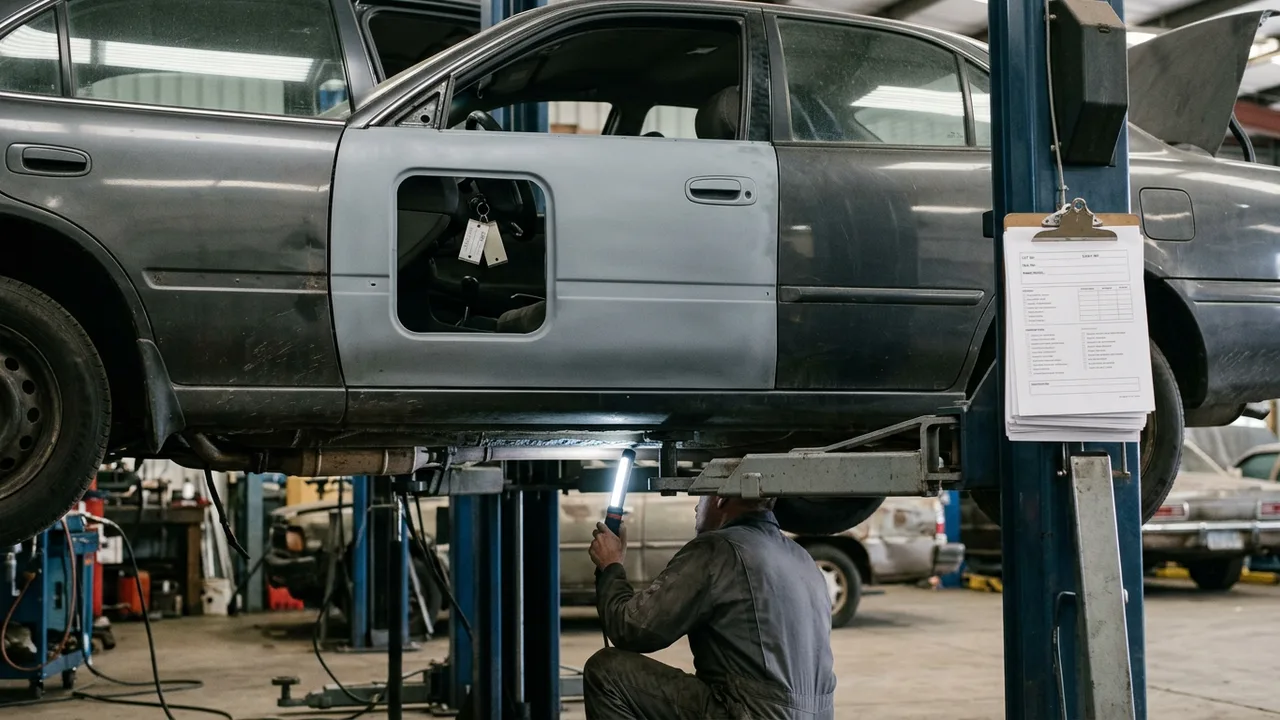
State rebuilt inspections mostly verify ownership of parts, not repair quality — never confuse the two. Buy nothing without: the damage photos and repair invoices, an independent frame-measurement and paint-depth inspection, a diagnostic scan proving airbag and ADAS systems live (dash lights can be bulbed out), and an NMVTIS pull confirming the story matches the paper. Then price it with the exit haircut included. A rebuilt car at 15% off is a clean-car price wearing a scar.
The questions buyers actually ask
Can a salvage car ever be a first car? A documented hail-total, inspected and insured, is a defensible budget play. A cheap unknown from an auction app is not.
Why do some states seem full of rebuilt cars? Branding thresholds and inspection rigor differ; cars migrate to lenient paperwork. Treat out-of-state rebrands with extra suspicion — and let NMVTIS referee.
Is a rebuilt EV or hybrid different? Yes — battery-pack integrity post-crash is its own risk class; without manufacturer-level diagnostics, walk.
Key takeaways
- Salvage = totalled, not drivable; rebuilt = state-inspected return, brand permanent
- Expect 20–40% discounts — and the same haircut when you sell
- Insurance limited, financing scarce: assume liability-only and cash
- Flood and airbag-deployed cars are the walk-aways; hail totals the sweet spot
- Demand photos, invoices, frame/paint inspection, diagnostic scan, NMVTIS pull
Sources & further reading
- State title-branding frameworks
- NMVTIS documentation
- rebuilt-market pricing and inspection practice
Figures, prices and policy details were current at the last-updated date above. Automotive pricing, incentives and regulations change frequently — verify time-sensitive details against the primary sources listed below. Read our editorial policy and fact-checking standards.