What the report actually is
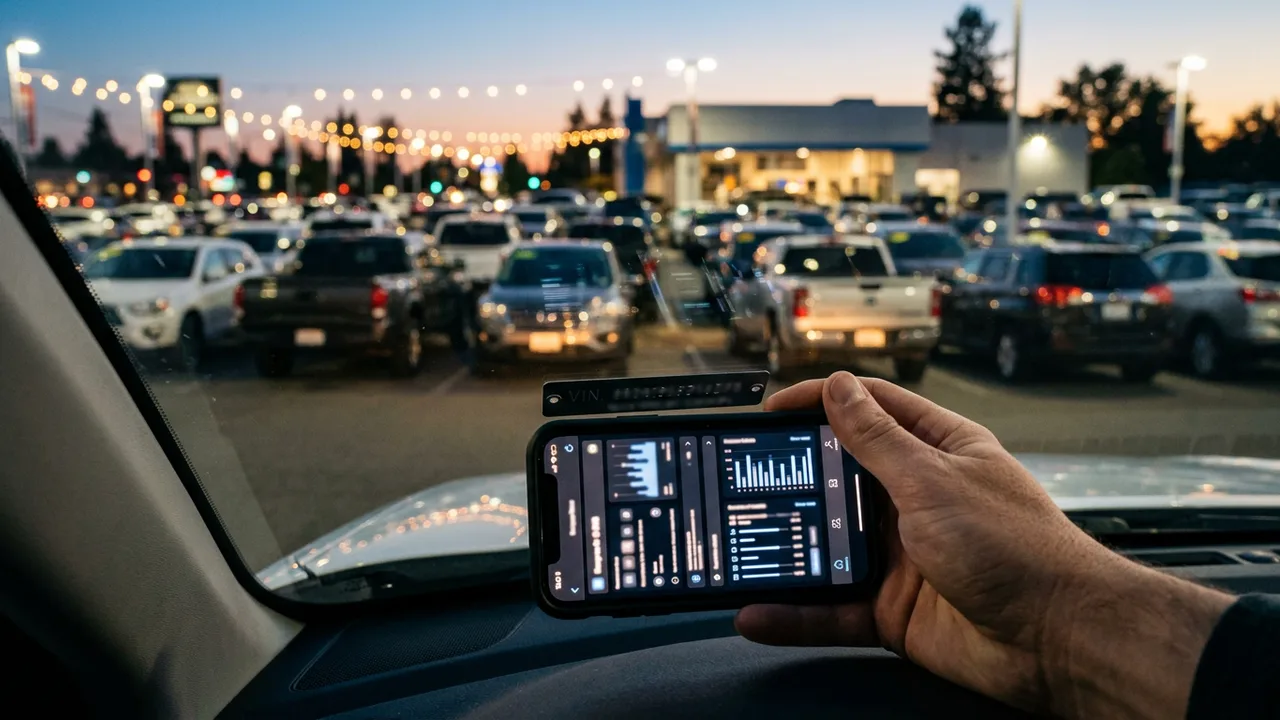
Every history report is a database mosaic keyed to the 17-character VIN: title records, registration trail, reported accidents, insurance total-loss declarations, odometer readings, recall status, use class (rental, fleet, taxi, lease). The big commercial names — Carfax and AutoCheck — buy overlapping but not identical feeds, which is why a car can look clean on one and flagged on the other. The federal floor is NMVTIS — the Justice-Department-mandated system state DMVs and insurers must report brands and total-loss data into — accessible through cheap approved providers.
Free layers first: NHTSA's VIN tools (recalls and basic build data), the NICB's VINCheck (theft and salvage records from participating insurers), and simple VIN-decode sanity checks that the badge, engine and year match what's parked in front of you.
How bad cars pass clean
Three mechanisms matter. Unreported damage: repairs paid cash, with no insurance claim, generate no record — a car can be extensively crashed and perfectly "clean". Title washing: retitling a branded (salvage/flood) car through states with looser branding rules can launder the paper trail; NMVTIS exists to close this, so cross-check it even when the commercial report is clean. Lag: feeds arrive on delays — a last-week accident won't show anywhere yet.
Flood cars deserve their own paranoia after every hurricane season: they disperse nationwide, and the tells are physical — silt in seat rails and seatbelt lower anchors, corrosion on connector pins under the dash, musty HVAC — not digital.
Using reports like a professional
Read the odometer trail for dips and flat-lines, the registration geography for hurricane-state stints and rapid multi-state hops, the use class honestly (a one-owner lease with records often beats a private car with none), and treat any total-loss or brand entry as a repricing event, not a footnote. Then do what no database can: a pre-purchase inspection on a lift. The report clears the paper; the inspection clears the car. Sellers' own reports are fine as a starting point — but pull your own on decision day; entries appear continuously.
The questions buyers actually ask
Carfax or AutoCheck? For a serious purchase, both plus an NMVTIS pull — the disagreement between them is itself information.
Is a clean report a safe car? It's an undocumented-problems-unknown car. Roughly speaking: dirty report = walk or reprice; clean report = now inspect.
Do I need reports on new cars? On genuinely new, no. On "demo" or transferred-title cars — yes, quietly.
Key takeaways
- Reports are database mosaics; Carfax/AutoCheck differ — cross-check NMVTIS
- Free first: NHTSA recalls, NICB VINCheck, VIN-decode sanity checks
- Cash repairs, title washing and reporting lag all beat clean scores
- Odometer trail, geography and use class are the tells worth reading
- The report clears paperwork; only a lift inspection clears the car
Sources & further reading
- NMVTIS program documentation
- NHTSA and NICB public tools
- used-market inspection practice
Figures, prices and policy details were current at the last-updated date above. Automotive pricing, incentives and regulations change frequently — verify time-sensitive details with the linked primary sources. Read our editorial policy and fact-checking standards.