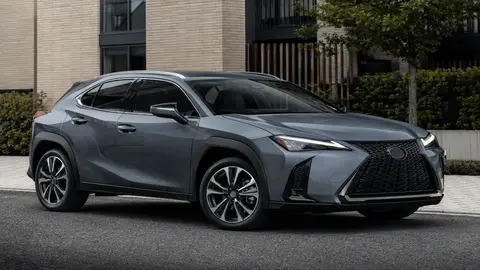
Total cost of ownership (TCO) is the full financial cost of a vehicle over a defined period — not just the monthly payment. For a typical US driver over five years it includes: purchase price, loan interest, insurance, fuel or energy, maintenance, tyres, registration/taxes, and depreciation. TCO varies dramatically by vehicle: a $35,000 SUV often costs $10,000–$15,000 more over five years than a $30,000 compact once all running costs are counted. Calculating TCO before signing a finance agreement prevents the 'monthly payment trap' where a low payment hides a high overall cost.
True Motion Auto collects and presents information from official and primary sources (regulators, government bodies, lenders and insurers' published terms). This is general information, not personalised financial advice — check figures with the provider or a qualified adviser before acting. Jurisdiction: General — check your jurisdiction. Last checked: August 2026.
Editorial oversight: Vasudha Gupta, Editor.
Five-year TCO comparison — illustrative US examples
| Cost element | Compact sedan (~$28k) | Mid-size SUV (~$42k) | Electric SUV (~$48k) |
|---|---|---|---|
| Loan interest (60 mo, 6.9% APR, 10% down) | ~$4,700 | ~$7,200 | ~$8,200 |
| Insurance (5 years avg) | ~$9,000 | ~$11,500 | ~$12,500 |
| Fuel / electricity (12,000 mi/yr) | ~$9,500 | ~$12,500 | ~$3,500 |
| Maintenance & tyres | ~$4,500 | ~$6,000 | ~$3,500 |
| Registration & taxes | ~$2,000 | ~$3,200 | ~$3,400 |
| Depreciation (residual value loss) | ~$14,000 | ~$21,000 | ~$22,000 |
| TOTAL 5-year TCO | ~$43,700 | ~$61,400 | ~$53,100 |
Why the monthly payment is a misleading benchmark
Dealers and lenders present car finance as a monthly payment because it is the smallest number associated with the transaction. A $42,000 SUV on a 72-month loan sounds like $650/month — but when insurance, fuel, maintenance, registration and depreciation are added, the real monthly cost of ownership is often $1,000–$1,400 for the same vehicle. Buying the cheaper car on the monthly payment alone, when the TCO is actually lower, is the more rational decision.
The eight cost buckets to calculate
- Purchase price and down payment
The out-the-door price — including dealer fees, destination charges and any add-ons — is your starting capital. Your down payment and trade-in equity reduce how much you finance. Use this figure, not the MSRP, for your TCO.
- Loan interest
Use an amortisation calculator with your actual APR and term. Current US averages (June 2026): 6.92% for new cars on a 60-month loan at the market average; superprime borrowers (750+ score) can access 4.5–5.5%, while subprime borrowers (below 600) may pay 13–19%. Enter your real pre-approved rate for accuracy.
- Insurance
The national average for full-coverage insurance is approximately $2,513/year ($209/month) in 2026, but rates vary enormously by vehicle, location, age, and driving record. Get actual quotes for the specific car before buying — insurance on a $48,000 EV or a performance vehicle can run $300–$400/month.
- Fuel or energy
At $4.11/gallon (AAA national average, 21 August 2026), a petrol vehicle covering 12,000 miles/year at 30 mpg costs around $1,644/year in fuel. An equivalent EV at the average US electricity rate of ~$0.17/kWh costs roughly $600–$750/year for home charging. A plug-in hybrid falls in between.
- Maintenance and tyres
ICE vehicles average $600–$900/year in scheduled maintenance; EVs typically average $350–$500 (no oil changes, fewer brake replacements due to regenerative braking). Tyres are a significant equal cost — EVs can wear tyres faster due to torque and added weight.
- Registration, taxes and fees
Annual registration costs vary widely by state — from under $100 in some states to $500+ in California or Texas for newer vehicles. Some states add annual property tax on vehicles. Electric vehicles in some states face higher registration fees to offset lost fuel-tax revenue.
- Depreciation
Often the largest single cost element. New cars depreciate around 15–25% in year one and 40–60% over five years on average. Use Kelley Blue Book or Edmunds residual value data for the specific model. Vehicles with strong resale value (trucks, popular hybrids, certain Japanese brands) significantly reduce TCO even if the purchase price is higher.
- Financing tax benefit (2025–2028)
If you are financing a new US-assembled vehicle for personal use, interest paid may be deductible up to $10,000/year under the OBBBA (for qualifying taxpayers with MAGI under $100,000 single / $200,000 joint). Factor this into your after-tax financing cost.
Edmunds True Cost to Own (edmunds.com/tco) and the US Department of Energy's Alternative Fuels Cost Calculator (afdc.energy.gov) give model-specific estimates for fuel, insurance, maintenance and depreciation. Run both for any car you are seriously considering before signing a finance agreement.
Frequently asked questions
Is depreciation really a cost if I plan to keep the car forever?
How does TCO compare for EVs vs ICE cars in 2026?
Should I include the interest deduction in my TCO?
What is a good five-year TCO for a new car?
Does the dealer's finance offer affect TCO?
Sources & further reading
- Edmunds — True Cost to Own Tool
- US Dept of Energy — Alternative Fuels Cost Calculator
- Bankrate — Average Car Loan Rates June 2026
Figures, prices and policy details were current at the last-updated date above. Automotive pricing, incentives and regulations change frequently — verify time-sensitive details with the linked primary sources. Read our editorial policy and fact-checking standards.