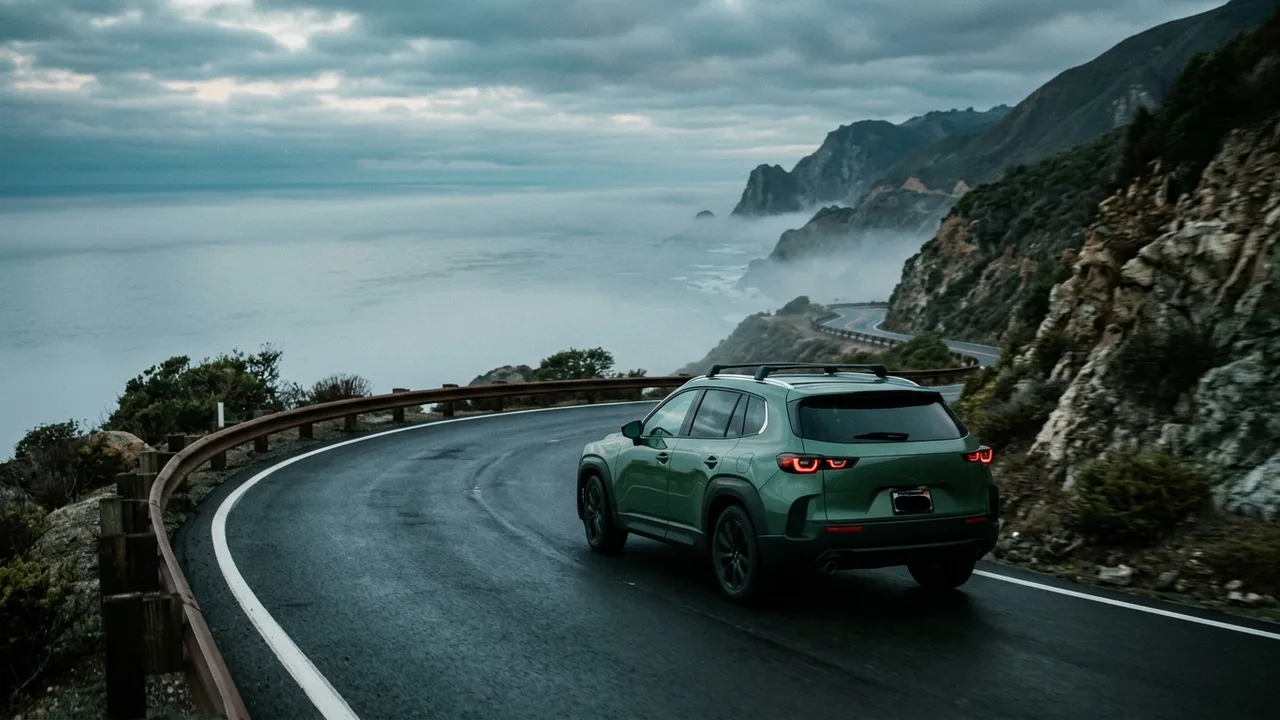
True Motion Auto has not independently road-tested this vehicle. Specifications, pricing and performance figures are compiled from manufacturer technical data and published independent tests, and are attributed where quoted. Read how we review cars.
The finding, and it's awkward: The new plug-in hybrid M5 is heavier and slower than the M5 it replaced. Recorded at 3.0 seconds to 60 mph in published instrumented testing, it is four tenths behind the outgoing F90 M5 CS's 2.6 seconds — while carrying roughly 500 kg more. More power, more weight, less pace. The numbers ask a serious question about the direction of travel.
Every figure below comes from published instrumented tests — Car and Driver and verified test databases — and is attributed accordingly. True Motion Auto has not measured this car. Read how we review cars.
The question the numbers answer bluntly
The G90 BMW M5 is the most controversial M car in years, and the controversy has a single cause: weight. BMW electrified its iconic super-saloon with a plug-in hybrid system, raising power to 717 hp while adding an enormous amount of mass.
The defence has always been that the added power more than compensates. Instrumented testing exists precisely to check claims like that — and here, the numbers deliver an answer that is genuinely uncomfortable.
The new M5 is not faster than the old one. It is slower.
The numbers
The generational comparison (figures from verified instrumented test databases):
| F90 M5 CS (2022) | G90 M5 PHEV (2025/26) | |
|---|---|---|
| 0–60 mph | 2.6 sec | 3.0 sec (M Driver's Pack) |
| Quarter mile | 10.6 sec @ 130 mph | 10.9 sec @ 130 mph |
| Power | ~627 hp | 717 hp |
| Weight | ~1,900–1,950 kg | ~2,435–2,445 kg (5,390 lb) |
| Powertrain | 4.4L twin-turbo V8 | 4.4L twin-turbo V8 + 197 PS e-motor |
| Battery | — | 18.6 kWh |
| EV range | — | ~42 miles (WLTP) / ~25 miles (EPA) |
Generational averages across all verified tests:
- F90 (2017–2023): 2.86 sec average across 13 tests
- G90 (2024–present): 3.10 sec average across 3 tests
The Touring is heavier still: ~2,550 kg.
What the numbers actually mean
1. +90 hp did not overcome +500 kg. This is the central finding, and it's simple physics. The G90 gains roughly 90 horsepower over an M5 CS but carries approximately 500 kilograms more — and the power-to-weight arithmetic goes the wrong way. The result is measurable: four tenths slower to 60 mph, and three tenths slower over the quarter.
2. The weight figure is genuinely startling. At 2,435 kg, the M5 weighs about what a large three-row SUV does. The PHEV system alone accounts for roughly 400 kg — an 18.6 kWh battery mounted low in the car, plus a 197 PS synchronous motor integrated into the eight-speed automatic. One European reviewer described the figure as "hard to believe," and the M division's own engineers have reportedly been sensitive about it.
3. Straight-line numbers understate the cornering penalty. Mass hurts acceleration somewhat; it hurts direction changes, braking and tyre life far more. A car carrying 500 kg extra has to overcome that mass at every corner entry and exit, and it punishes consumables accordingly. Expect a full set of Michelins around £1,500, and expect to replace them more often than an F90's.
4. The PHEV system does deliver something real — just not speed. The ~42-mile WLTP electric range (~25 miles EPA) is genuinely useful: short commutes can be electric-only, and for a company-car buyer the tax implications are substantial. BMW claims 176 mpg WLTP, which is a laboratory artefact rather than a real-world figure, but a driver who charges regularly and does short trips will genuinely use very little fuel. The hybrid system is an efficiency and taxation feature, not a performance one.
The honest framing
So: heavier, faster, better? Taking the question literally:
Heavier — emphatically yes. ~500 kg over the F90, ~2,435 kg as published.
Faster — no. Slower than the M5 CS to 60 mph and over the quarter on every published test we can find, and slower than the F90 generation's average.
Better — genuinely debatable, and the answer depends on what you want:
The case for the new M5:
- 42 miles of electric range is real and useful, especially for company-car taxation
- More power, more torque, more technology and a comprehensively reworked chassis (wider tracks, staggered 20/21-inch wheels, optional carbon-ceramics)
- More refined and more capable as a long-distance luxury saloon
- The M5 has always been a fast saloon first — and it remains devastatingly fast in absolute terms
The case against:
- It is slower than the car it replaced, which is difficult to defend in a performance flagship
- Mass compromises agility, braking and consumables in ways numbers alone understate
- Enthusiasts increasingly describe it as a "German muscle car" rather than a sports saloon
- The efficiency benefit is real only if you charge regularly and drive short distances — otherwise you carry 400 kg of dead weight
The bottom line
Instrumented testing exists to check claims against reality, and the BMW M5 PHEV provides an unusually clean example of why that matters. Its 717 hp is genuine and its technology is impressive, but it is measurably slower than the M5 CS it succeeds — 3.0 seconds to 60 mph against 2.6 — because roughly 500 kg of added mass overwhelms 90 additional horsepower.
That doesn't make it a bad car. It's devastatingly quick in absolute terms, more refined, more capable as a luxury express, and its 42-mile electric range is genuinely valuable for the right user. But it is a different kind of M5 — a heavier, more powerful, more technological, less agile one — and buyers deserve to know that the fastest M5 remains the older, lighter, cheaper CS.
Heavier, yes. Faster, no. Better — that depends entirely on whether you value the electric range and refinement more than the agility and outright pace you're giving up. The numbers won't decide that for you, but they will stop you assuming.
Key takeaways
- Published instrumented tests record the G90 M5 PHEV at 3.0 sec to 60 mph — four tenths slower than the outgoing F90 M5 CS's 2.6 sec
- It makes 717 hp but weighs ~2,435 kg (5,390 lb), roughly 500 kg more than its predecessor; the Touring is ~2,550 kg
- The PHEV system adds ~400 kg (18.6 kWh battery + 197 PS motor) and delivers ~42 miles WLTP electric range
- Mass penalises cornering, braking and consumables more than the straight-line figures suggest (expect ~£1,500 tyre sets)
- The hybrid system is an efficiency and company-car-taxation feature, not a performance one — the fastest M5 is still the older, lighter CS
Sources & further reading
- Car and Driver instrumented test
- verified 0–60 test databases
- evo
- Motor1
- BMW M. Figures attributed. Verified July 2026.
Figures, prices and policy details were current at the last-updated date above. Automotive pricing, incentives and regulations change frequently — verify time-sensitive details with the linked primary sources. Read our editorial policy and fact-checking standards.