What changed on 1 July 2026
The Delhi EV Policy 2026 — widely called EV Policy 2.0 — came into force on 1 July 2026 and runs to 31 March 2030. It replaces the previous policy with something considerably more forceful.
The headline shift is philosophical: Delhi has moved from encouraging electric adoption to mandating it in specific categories, while paying people substantial sums to remove old vehicles from the road.
Budget: ₹15,000 crore over four years — roughly ₹7,000 crore for incentives and ₹8,000 crore for infrastructure and tax concessions. Over ₹1,500 crore of that is earmarked specifically for scrappage benefits.
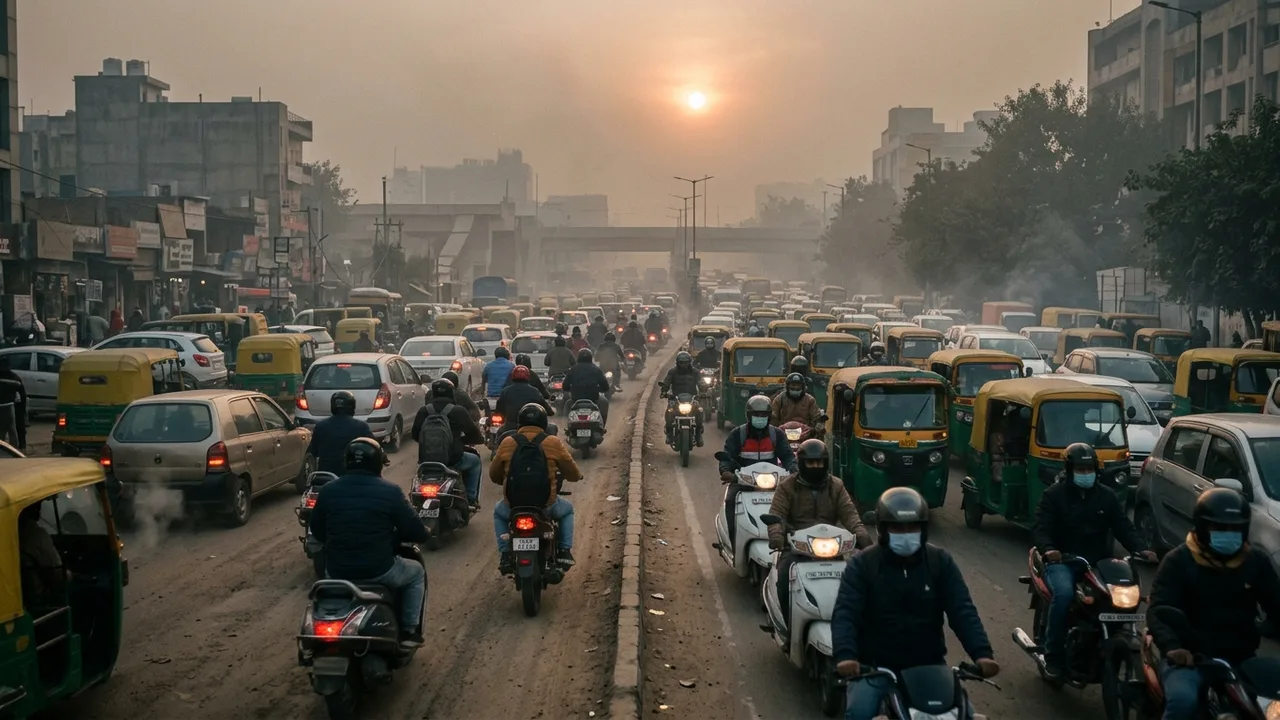
The policy's legal grounding is notable: it cites Article 21 of the Constitution and a CAQM report identifying vehicular emissions as the single largest contributor to Delhi's winter air pollution, at 23% of the total load.
The scrappage incentive — the centrepiece
This is the part that matters most, and it is genuinely large.
| You scrap | You buy | You receive |
|---|---|---|
| Delhi-registered BS-IV or older car | New EV under ₹30 lakh | ₹1,00,000 |
| BS-IV or older N1 goods carrier | Electric N1 goods carrier | ₹50,000 |
| BS-IV or older three-wheeler | Electric L5M three-wheeler | ₹25,000 |
| BS-IV or older two-wheeler | New electric two-wheeler | ₹10,000 |
The mechanics: you scrap the vehicle at an authorised facility, receive a Certificate of Deposit (CoD), and must purchase the new EV within six months of the CoD being issued. Payment is made by Direct Benefit Transfer to the owner of the scrapped vehicle.
The catch: the ₹1 lakh car incentive is capped at the first 1,00,000 eligible applicants. First come, first served. If you own a BS-IV car in Delhi and you are considering an EV in the next two years, the arithmetic of waiting is bad.
Purchase subsidies (tiered, and falling every year)
Delhi has deliberately front-loaded the incentives to reward early movers. The subsidy steps down annually.
Two-wheelers (ex-factory ≤ ₹2.25 lakh): ₹10,000 per kWh, capped at ₹30,000 in Year 1, falling to ₹20,000 in Year 2.
Three-wheelers (including auto-rickshaws): ₹50,000 in Year 1, ₹40,000 in Year 2.
N1 electric goods carriers: ₹1,00,000 in Year 1, ₹75,000 in Year 2, ₹50,000 by Year 3.
Private electric cars: notably, there is no direct purchase subsidy. The four-wheeler benefit is delivered entirely through scrappage and tax exemption. This is a deliberate design choice — Delhi is paying to remove old cars, not to add new ones.
The tax exemptions
- 100% road tax and registration fee waiver for all battery electric vehicles priced up to ₹30 lakh, valid until 31 March 2030
- 50% waiver on road tax and registration for strong hybrids under ₹30 lakh — a genuinely surprising inclusion, and a pragmatic acknowledgement that hybrids reduce emissions today
That hybrid provision is worth pausing on. Most Indian state EV policies ignore hybrids entirely. Delhi has effectively created a middle tier, which will irritate purists and probably move more metal.
The bans
This is where EV Policy 2.0 stops being a subsidy scheme and becomes a mandate.
- From 2027: only electric new auto-rickshaw registrations permitted
- From 1 April 2028: only electric new two-wheeler registrations permitted in the NCT of Delhi
Two-wheelers account for roughly 67% of Delhi's total vehicle stock. A 2028 electric-only registration mandate for that category is, by some distance, the most aggressive vehicle electrification rule in India.
Existing vehicles are unaffected. The rules apply to new registrations only. If you already own a petrol two-wheeler, you can keep using it under current fitness and emission rules. This is the single most common misunderstanding of the policy, and it has generated a great deal of unnecessary anxiety.
Charging
- 30,000–32,000 public charging points planned over four years — one of the largest urban charging networks in India
- Battery-swapping stations to be promoted, particularly for two-wheelers, three-wheelers and commercial fleets
- Every OEM dealer must deploy at least one public charging station with a minimum of three charging points
- Delhi's EV electricity tariff is ₹4.5 per kWh — among the lowest in India
- 100% subsidy of up to ₹6,000 per charging point for homes and apartments (carried over from the previous policy)
Stacking with PM E-DRIVE
Delhi state subsidies and the central PM E-DRIVE scheme are independent and can be combined.
For an electric two-wheeler in Year 1, a Delhi buyer can potentially stack:
- ₹30,000 Delhi purchase subsidy (via DBT)
- ₹10,000 Delhi scrapping incentive (via DBT)
- ~₹5,000 PM E-DRIVE (applied as an upfront invoice discount via Aadhaar e-KYC)
That is up to ₹45,000 on a vehicle that may cost under ₹1.5 lakh — plus zero road tax and zero registration fee.
The honest assessment
What's strong: the scrappage design is smart. It targets the actual pollution source (old vehicles) rather than simply subsidising new consumption. The ₹1 lakh car incentive is large enough to change behaviour. The tiered step-down creates genuine urgency. The hybrid concession is pragmatic.
What's weak: the ₹1 lakh cap at 100,000 applicants means the headline benefit is finite and will be gone quickly. The 2028 two-wheeler mandate is extremely ambitious in a city where a large share of two-wheeler owners have no access to home charging — which is precisely why the battery-swapping commitment matters more than the charger count. And, as ever in India, implementation via DBT will determine whether the money actually reaches people.
The one thing to do now: if you own a BS-IV or older Delhi-registered car and are considering an EV, get the scrappage certificate. The queue for that ₹1 lakh is finite, and it is forming.
Key takeaways
- Delhi EV Policy 2.0 live from 1 July 2026, running to March 2030; ₹15,000 crore budget
- ₹1 lakh scrappage incentive for BS-IV-or-older cars, capped at the first 100,000 applicants
- 100% road tax and registration waiver on EVs under ₹30 lakh; 50% for strong hybrids
- No direct purchase subsidy for private electric cars — benefits come via scrappage and tax
- Electric-only new registrations: auto-rickshaws from 2027, two-wheelers from April 2028
Sources & further reading
- Delhi Government Transport Department policy documents
- Outlook India
- Autopunditz
- Cars24
- TradeBrains
- ev.delhi.gov.in
Figures, prices and policy details were current at the last-updated date above. Automotive pricing, incentives and regulations change frequently — verify time-sensitive details against the primary sources listed below. Read our editorial policy and fact-checking standards.