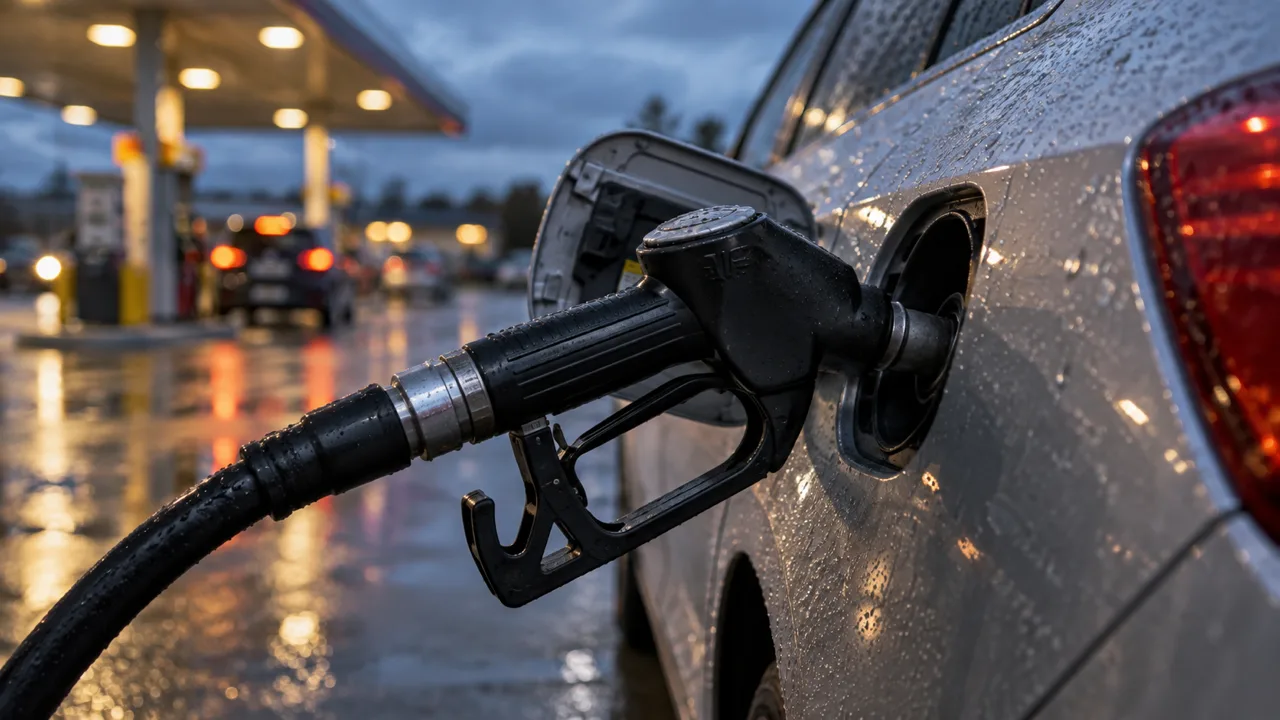
Diesel prices are high because wholesale fuel costs have risen as crude oil trades consistently above $100 a barrel, with the RAC tracking the impact of the Middle East conflict on UK pump prices. Diesel is also affected by record low reserves, while fuel duty has begun rising as the temporary 5p cut is withdrawn.
At a glance
| Item | Detail |
|---|---|
| Diesel average | 195.32p a litre on 18 September |
| Petrol average | 172.02p a litre on 18 September |
| 55-litre diesel fill | £107.43 |
| 55-litre petrol fill | £94.61 |
| Diesel record | 199.09p a litre, set on 25 June 2022 |
How close is diesel to its all-time high?
For drivers who feel as though the numbers on the pump have suddenly jumped, the latest figures show why. RAC Fuel Watch put the UK average diesel price at 195.32p a litre on 18 September 2026, while petrol averaged 172.02p. Diesel had risen by 11.72p a litre in the first 18 days of September, including a 5p increase in a single week. Petrol rose by more than 10p over the same period, with 3.6p added in the last week.
The direction was still upwards a few days later. The PetrolPrices.co.uk fuel price index, a weekly national average drawn from UK Government statistics, put petrol at 172.0p and diesel at 195.5p on 21 September. That represented weekly increases of 3.87p for petrol and 4.81p for diesel. For anyone running several vehicles, changes of that size quickly become a meaningful operating cost rather than a small difference at the pump.
Diesel is now close to the UK record average of 199.09p a litre, set on 25 June 2022. On 18 September, RAC head of policy Simon Williams said “it is looking increasingly likely that the average price of diesel will reach a new all-time high next week.” That does not mean every filling station will charge the same amount, but it shows how close the national average has moved to its previous peak.
The cost of a complete fill makes the increase easier to see. At the RAC averages, filling a 55-litre family car cost £94.61 with petrol and £107.43 with diesel. Compared with the end of February 2026, a petrol fill was £21.55 more expensive, a rise of 30 per cent. A diesel fill cost about £29 more, a rise of 37 per cent. Those are substantial changes over a period of only several months.
Why have fuel prices risen so sharply?
The RAC says it is tracking how UK pump prices are being affected by the conflict in the Middle East that began on 28 February 2026. Crude oil has been trading consistently above $100 a barrel. Because crude oil is a major component of wholesale fuel costs, sustained high oil prices feed into what motorists eventually pay at filling stations.
There is more to the pump price than crude oil alone. The RAC explains that a litre of fuel includes the wholesale price, which is influenced by crude oil, refinery capacity, the pound-to-dollar exchange rate and distribution costs. On top of that come the retailer's margin, fuel duty and VAT. This means a movement in oil prices is important, but it is not the only factor determining the final number displayed on the forecourt.
Diesel has another pressure point. Auto Express reported on 21 September that record low diesel reserves mean prices are rising sharply with no respite in sight, and that diesel prices are predicted to soar into 2027. That helps explain why diesel has remained considerably more expensive than petrol and why its recent increases have been especially painful for drivers and businesses that depend on diesel vehicles.
Tax is also beginning to rise. According to the Office for Budget Responsibility, the main fuel-duty rate on standard petrol and diesel had been held at 52.95p a litre by a temporary 5p cut. The withdrawal started with 1p added from 1 September 2026. A further 2p is due from 1 December, followed by the final 2p from 1 March 2027, restoring the rate to 57.95p. From April 2027, fuel duty is due to be uprated with RPI inflation each year.
What the increase means for your monthly fuel bill
A single fill is only part of the picture. Compared with the end of February, a household filling a petrol vehicle twice a month was paying about £43 a month extra by the September figures. For diesel, the extra monthly cost was about £58. For a household budget already built around regular commuting or other necessary journeys, that is money that has to be found every month without any increase in the distance travelled.
The effect can be larger for a small fleet simply because the cost is repeated across several vehicles and more frequent refuelling. The important figure is not just the national average but the change in the cost of every routine fill. With diesel at 195.32p a litre in the RAC's 18 September figures, a 55-litre fill came to £107.43. Even before considering how often each vehicle needs fuel, that illustrates why an increase of several pence per litre deserves attention.
There is also a known tax timetable ahead. The first stage of the temporary fuel-duty cut's withdrawal has already taken effect, with 1p added from 1 September. Another 2p is due from 1 December and another 2p from 1 March 2027. Those scheduled changes are separate from movements in wholesale prices, retailer margins and the other factors that determine the final pump price.
For budgeting purposes, that distinction matters. The price motorists see can move because of oil markets, refinery capacity, currency movements, distribution costs and retailer margins while the fuel-duty rate follows its own published schedule. Drivers and fleet operators therefore have more than one source of cost pressure to watch rather than a single event that can be expected to pass quickly.
What drivers can actually do to cut the cost
The most direct action is to compare local pump prices before filling up. A difference between nearby filling stations matters more when each litre is already expensive, particularly on a full tank or when several vehicles are being refuelled. The RAC's free myRAC app includes a Fuel Finder feature that allows any registered user, whether an RAC member or not, to search for the cheapest fuel within two, five or ten miles.
The useful habit is to make price checking part of the refuelling decision rather than waiting until the warning light leaves little choice. That gives drivers a wider selection of filling stations and makes it easier to see whether a cheaper option is available nearby. For small fleets, applying the same approach consistently across vehicles can keep attention on the price actually being paid rather than relying on the national average.
It is also worth looking at fuel spending as a monthly number. The September comparison with February shows why: two petrol fills a month were costing a household about £43 extra, while two diesel fills were costing about £58 extra. Seeing the increase in monthly terms can make it easier to understand the effect on a household or business budget and to judge how much difference a cheaper local pump price makes over repeated fills.
What drivers cannot control is the wider combination of crude oil prices, refinery capacity, exchange rates, distribution costs, tax and retailer margins. The practical response is therefore to focus on the part of the bill where there is an immediate choice: where to buy fuel. With diesel close to its previous record and both fuels rising rapidly during September, comparing prices before each fill is one of the clearest ways to avoid paying more than necessary.
Watch out for the fuel-duty timetable as well as day-to-day pump movements. Another 2p a litre is due to be added from 1 December 2026, followed by a final 2p from 1 March 2027, before annual RPI-linked uprating is due from April 2027.
Frequently asked questions
What is the average diesel price in the UK?
What is the UK record diesel price?
How much does it cost to fill a 55-litre car?
How can I find cheaper fuel near me?
Sources & further reading
Figures, prices and policy details were current at the last-updated date above. Automotive pricing, incentives and regulations change frequently — verify time-sensitive details with the linked primary sources. Read our editorial policy and fact-checking standards.