The number insurers watch — and you pay for
Every quarter, collision-industry analysts at Mitchell publish the report that quietly shapes your insurance premium. The Q1 2026 edition of its "Plugged-In" analysis delivers the freshest answer to a question every EV owner and shopper eventually asks: do electric cars really cost more to fix?
They do — but the story is turning. The average US repairable collision claim ran $6,042 for a battery EV against $4,902 for a petrol vehicle in Q1 2026 — a gap of roughly 23%. Plug-in hybrids split the difference at $5,352, with mild hybrids at $4,993, almost indistinguishable from pure petrol. And for the first time in years, the headline severity numbers fell across every powertrain — down roughly 9% quarter over quarter, an unusually broad decline that suggests the repair industry is finally getting on top of modern-vehicle complexity.
Why EVs cost more to repair
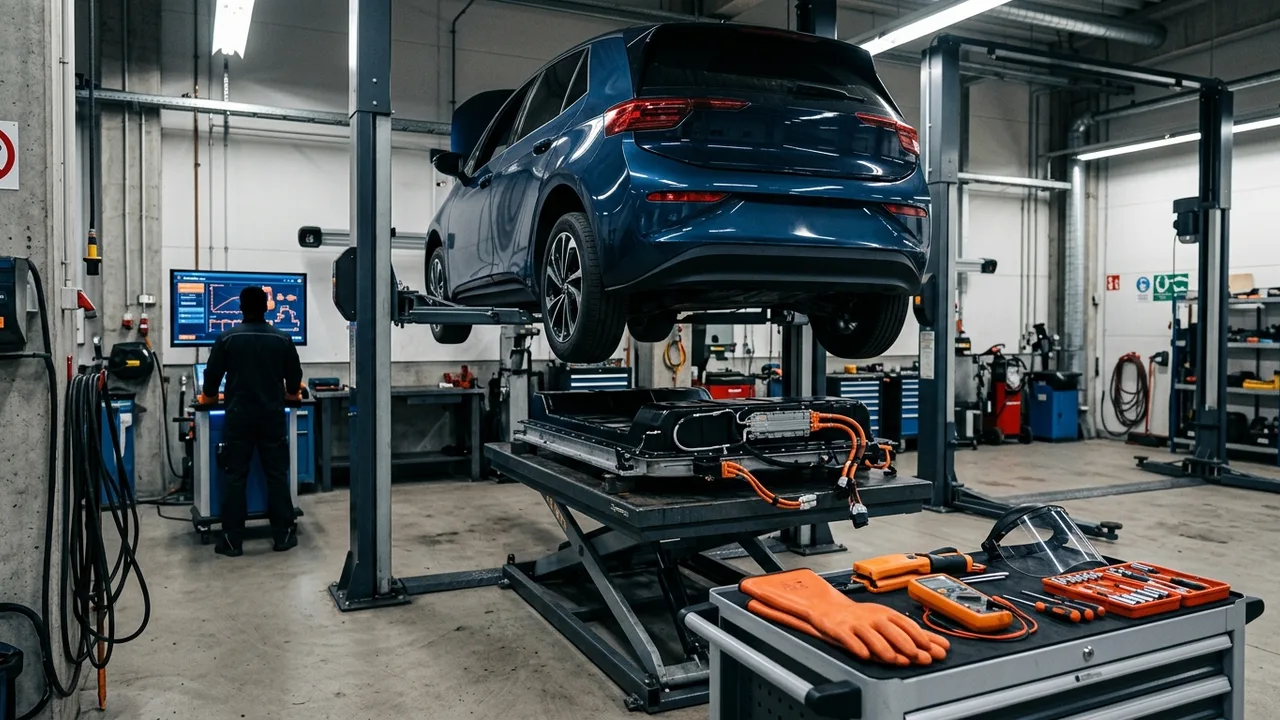
The premium has consistent, explainable causes rather than mystery. Electric vehicles concentrate expensive hardware exactly where crashes happen: sensor-dense bumpers and fenders (radar, cameras, parking arrays), aluminium-intensive structures, and high-voltage components that demand certified technicians, mandatory de-energising procedures and battery inspections even for cosmetic-looking damage. Labour rates for EV-certified shops run higher, calibration of driver-assistance systems adds line items petrol cars of a decade ago never knew, and until recently, parts networks for newer EV brands were thin enough that lead times themselves inflated claims through longer rental periods.
None of this is unique to EVs — a sensor-laden new petrol crossover shares much of it — but EVs sit at the sharp end of every trend simultaneously.
The gap is narrowing
The more interesting line in the data is the direction of travel. Earlier industry studies — including research widely cited via Kelley Blue Book — put the EV repair premium at around 30%. The current 23% figure, alongside the broad severity decline, points to a repair ecosystem maturing in real time: standardised repair procedures published by more manufacturers, expanding certified-shop networks, better parts availability from EV makers who have learned collision support the hard way, and adjusters growing experienced enough to stop totalling repairable cars out of high-voltage caution.
EVs also held steady at 3.33% of US repairable claims even as sales growth slowed — the repair volume is now large enough that the industry treats electric damage as routine work rather than exotic risk, and routine work gets cheaper.
The honest assessment
For owners, the practical meaning is straightforward. The repair premium is real and shows up where you'd expect: in comprehensive insurance pricing, in deductible decisions, and in total-cost-of-ownership math that fuel savings must overcome. It is also shrinking — and the trajectory matters more than the snapshot for anyone keeping a car five-plus years. What the data does not support is the folk claim that any EV fender-bender means a written-off car; severity is falling, claim frequency is stable, and hybrids demonstrate that electrified needn't mean expensive to fix.
Shopping advice follows the numbers: before buying any EV, price its insurance specifically (premiums vary far more by model than by powertrain), and favour brands with established certified-repair networks — the gap between an EV with mature collision support and one without is wider than the EV-versus-petrol gap itself.
The questions owners actually ask
Will my EV insurance fall as repair costs improve? Slowly, and unevenly by model. Insurers price on their own claims experience; models with good repair networks see it first.
Are hybrids the sweet spot? On this metric, arguably yes — mild hybrids repair at effectively petrol cost, and PHEVs sit only modestly above.
Does a minor EV crash risk the battery? Certified shops inspect for it as standard procedure, which is part of the cost — and the reason to insist on certified repair rather than the cheapest quote.
Key takeaways
- Q1 2026: average EV collision repair $6,042 vs $4,902 petrol — a 23% gap
- Gap has narrowed from ~30% in earlier studies; severity fell ~9% across all powertrains
- Causes: sensors, high-voltage procedures, certified labour, calibration — not mystery
- Mild hybrids repair at essentially petrol cost; PHEVs sit between
- Price insurance by specific model before buying; favour mature repair networks
Sources & further reading
- Mitchell "Plugged-In" Q1 2026 collision-severity report (via Repairer Driven News)
- earlier KBB-cited repair-premium research, 2024–26
Figures, prices and policy details were current at the last-updated date above. Automotive pricing, incentives and regulations change frequently — verify time-sensitive details against the primary sources listed below. Read our editorial policy and fact-checking standards.