Note: costs mentioned below are given in US dollars as a general point of reference — actual prices vary by country, currency, and local market.
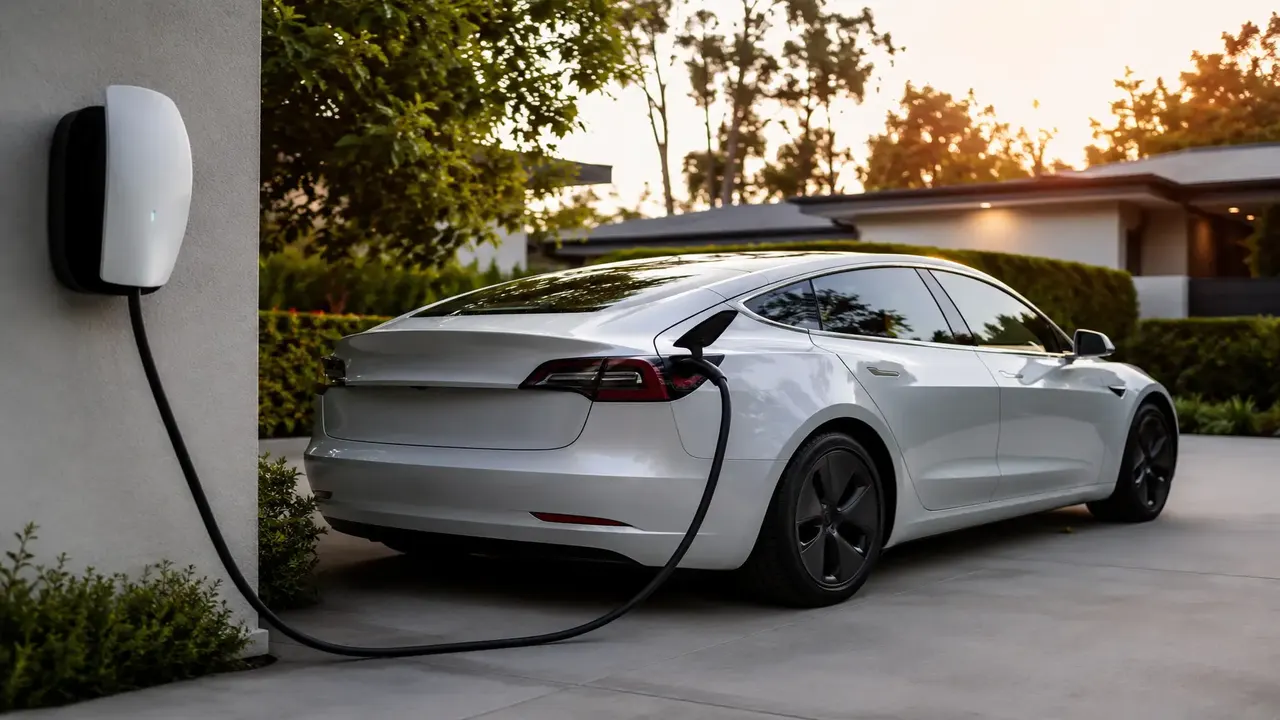
Charging an EV at home typically costs the equivalent of $1-$1.50 per gallon in fuel terms in most US states, based on average residential electricity rates and typical EV efficiency — still well below gasoline. The trend to watch in 2026 is regional electricity price increases (parts of the Northeast and California among the highest) and the spread of time-of-use utility plans, which can cut overnight charging costs sharply for owners who shift charging to off-peak hours but raise costs for anyone charging on-peak.
At a glance
| Factor | 2026 trend |
|---|---|
| Average US residential electricity price | Higher than five years ago; varies widely by state |
| Off-peak time-of-use charging | Increasingly available and often the cheapest way to charge |
| Home charger installation | Costs stable to slightly down as installer competition has grown |
| Public DC fast charging | Notably more expensive per mile than home charging |
The gap between home and gas is still wide
Even with electricity prices up, charging at home remains the cheapest way to fuel a personal vehicle in most of the US and UK. A typical EV uses roughly 25-35 kWh per 100 miles; at a national-average US residential rate, that works out to a per-mile cost well below a comparable gas car, particularly for owners who charge overnight.
Where the gap is narrowing
Electricity rates have risen unevenly. States and regions with higher grid costs — parts of the Northeast, California and Hawaii among them — have seen home charging costs climb enough that the gas-vs-electric gap is noticeably smaller than it was several years ago, though it hasn't closed. Owners in lower-cost-power states or countries still see a much bigger charging-cost advantage.
Time-of-use plans are the biggest lever
A growing share of utilities now offer time-of-use (TOU) electricity plans with steep discounts overnight and higher prices during peak afternoon/evening hours. For EV owners who can schedule charging (most EVs and chargers support delayed-start scheduling), TOU plans often cut the effective cost of charging substantially versus a flat-rate plan — but the same plan can raise costs for anyone who plugs in as soon as they get home during peak hours.
What determines your real charging cost
- Local electricity rate and whether a time-of-use plan is available.
- Vehicle efficiency (miles per kWh) — this varies by model as much as gas mileage does between cars.
- How much charging happens at home versus at public fast chargers, which cost meaningfully more per kWh.
- Charger install cost if a Level 2 home charger is needed — a one-time cost that pays back over time versus relying on public charging.
Public DC fast charging is convenient but typically costs several times more per mile than charging at home — treat it as a road-trip tool, not a daily habit, if cost matters to you.
The incentive picture has also shifted
The federal EV purchase tax credit that many US buyers relied on ended in 2025, which doesn't change per-mile charging cost but does change the total cost-of-ownership math that made EVs attractive. Some states and utilities still offer rebates for home charger installation or discounted EV charging rate plans — those are now a bigger relative factor in EV affordability than they were when the federal purchase credit was in place.
Frequently asked questions
Is it still cheaper to charge an EV at home than to buy gas?
Do time-of-use electricity plans actually save EV owners money?
How much does a home EV charger cost to install in 2026?
Is public fast charging worth using regularly?
Sources & further reading
- U.S. Energy Information Administration (EIA) — electricity price data
- U.S. Department of Energy — Alternative Fuels Data Center, eGallon/charging cost tools
Figures, prices and policy details were current at the last-updated date above. Automotive pricing, incentives and regulations change frequently — verify time-sensitive details with the linked primary sources. Read our editorial policy and fact-checking standards.