The subsidy landscape, redrawn
Ask most buyers what "EV subsidy" means and they'll cite schemes that no longer apply to them. The FAME-II programme that defined the early EV years has lapsed; its successor framework (the PM E-DRIVE era) concentrated central money on two-wheelers, three-wheelers, buses and charging infrastructure — not on private electric cars. The days of a central cash discount landing on a Nexon EV invoice are over.
What remains is still substantial — it's just structural rather than a cheque:
1. GST at 5%. The big one hiding in plain sight. Electric cars attract 5% GST against the multiples levied on combustion cars (whose effective burden with cess climbs steeply by size). On a ₹15-lakh vehicle, this differential is worth lakhs — permanently, invisibly, at the sticker.
2. Road-tax and registration waivers — state by state. Most major states fully or largely waive road tax and registration for EVs (Delhi, Maharashtra, Karnataka, Tamil Nadu, Telangana, UP among the notable regimes, each with conditions and end-dates that shift). On-road-minus-ex-showroom for an EV can be a rounding error where a petrol equivalent adds 8–15%. This is now the single largest visible saving at purchase — and because it's state policy, the same car costs meaningfully different amounts across borders.
3. State purchase incentives — shrinking, capped, conditional. A few states still run per-kWh purchase subsidies or early-bird quotas for cars, but caps are low, funds exhaust quickly, and several schemes have wound down or pivoted to two-wheelers. Verify on the state portal the week you buy, not from a year-old article — this is the fastest-moving line item in Indian car pricing.
4. Income-tax deduction (80EEB) — check current status. The interest deduction on EV loans (up to ₹1.5 lakh) applied to loans sanctioned in its eligibility window; its extension status has changed with budgets. Treat it as a bonus to verify with your CA, not a certainty to bank on.
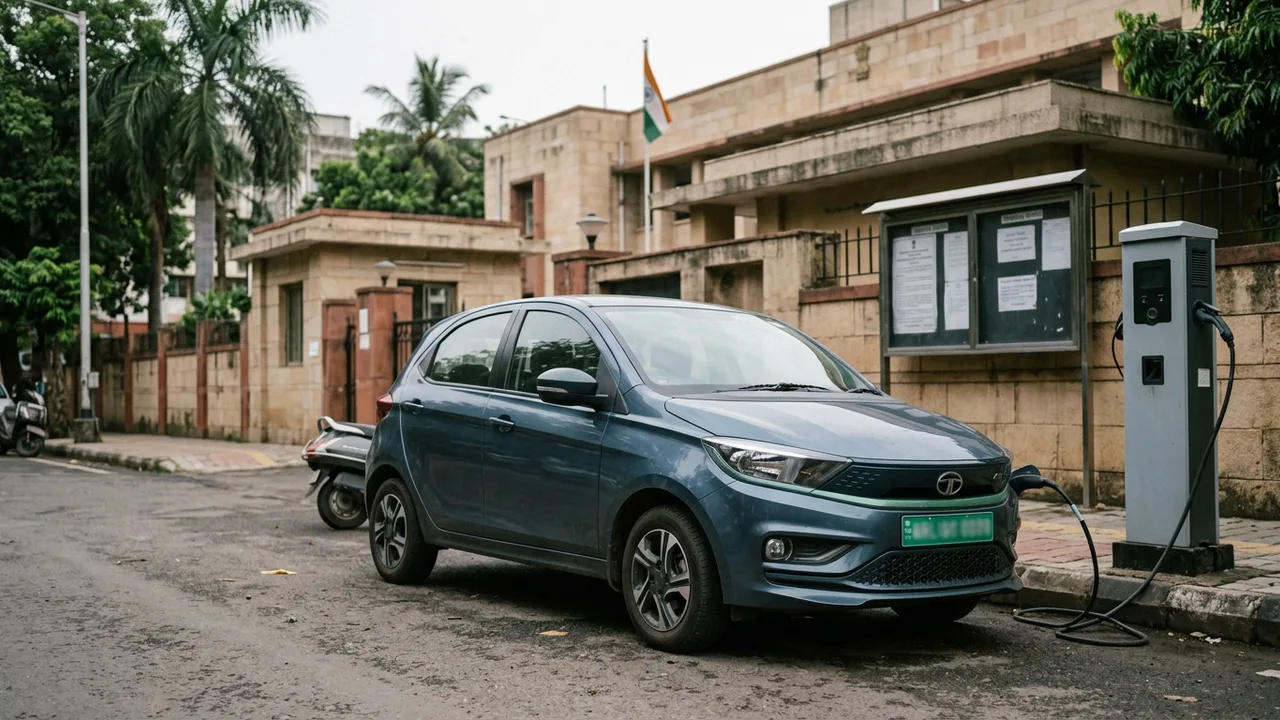
5. The soft incentives. Green plates and exemption from registration renewals aside, several cities offer parking concessions and toll experiments; Delhi-style policies have periodically extended perks like priority registrations. Modest individually, pleasant collectively.
What this means at the showroom
- Compare on-road, never ex-showroom. The EV's advantage concentrates in taxes; a ₹2-lakh ex-showroom gap can shrink to nothing on-road in a waiver state.
- The manufacturer is now the "subsidy". With central support gone, brands discount directly — festival pricing, free chargers, buyback guarantees. Negotiate the installed home charger; it's the most valuable throw-in.
- Charging economics remain the real incentive: ₹1.0–1.5/km home-charged versus ₹5–7/km for petrol. Over 60,000 km, that gap dwarfs every government scheme combined.
- Fleet and commercial buyers retain richer treatment in several states — if the car is for business, the calculus differs; ask.
The honest caveats
State schemes carry sunset clauses and quota exhaustion; road-tax waivers have end-dates that get extended, amended or lapsed with budgets; and policy risk cuts both ways — a future GST council or state budget can change the math. Buy an EV because the running-cost and product case works today; treat every incentive beyond GST and your state's current waiver as weather, not climate.
The questions buyers actually ask
Is home charging installation subsidised? Some discoms and state schemes support residential charger installation or preferential EV tariffs — the discom's website, not the dealership, is the authority. Even unsubsidised, a basic 3.3 kW home setup pays for itself within months against public charging rates.
Do hybrids get any of these benefits? Almost none nationally — strong hybrids carry conventional GST-plus-cess and standard road tax in most states (a few announced exceptions have come and gone). The tax wall between hybrids and EVs is deliberate policy, and it's the main reason hybrid prices sting in India relative to their global positioning.
Will road-tax waivers survive till my purchase? Treat each state's waiver as budget-cycle weather: several have been extended repeatedly, some trimmed. If the waiver materially decides your purchase, buy inside the current notified window rather than betting on renewal.
Key takeaways
- Central purchase subsidies for private e-cars have ended; GST at 5% is the durable national advantage
- State road-tax/registration waivers are now the biggest visible saving — and vary sharply by state
- Residual state purchase subsidies are capped, fast-exhausting and must be verified week-of-purchase
- Negotiate manufacturer throw-ins (home charger above all) — brands replaced the government as discounter
- Home-charging economics (₹1–1.5/km) remain the incentive that outlasts every scheme
Sources & further reading
- GST schedule for electric vehicles
- state EV policy documents and transport-department notifications (Delhi, Maharashtra, Karnataka, Tamil Nadu, Telangana, UP), current as of July 2026
- PM E-DRIVE scheme scope
- Section 80EEB provisions
Figures, prices and policy details were current at the last-updated date above. Automotive pricing, incentives and regulations change frequently — verify time-sensitive details against the primary sources listed below. Read our editorial policy and fact-checking standards.