Four years of scarcity, ending
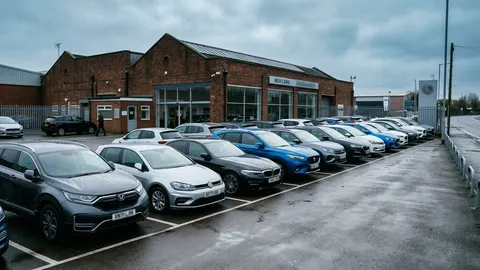
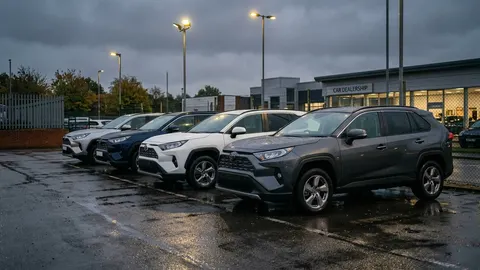
The American used-car market has been supply-starved since 2021. The chain of causation is by now well understood: pandemic-era production collapsed, new-car sales collapsed with it, leasing collapsed alongside — and leases, three years later, are what feed the used market with clean, low-mileage, warrantied cars.
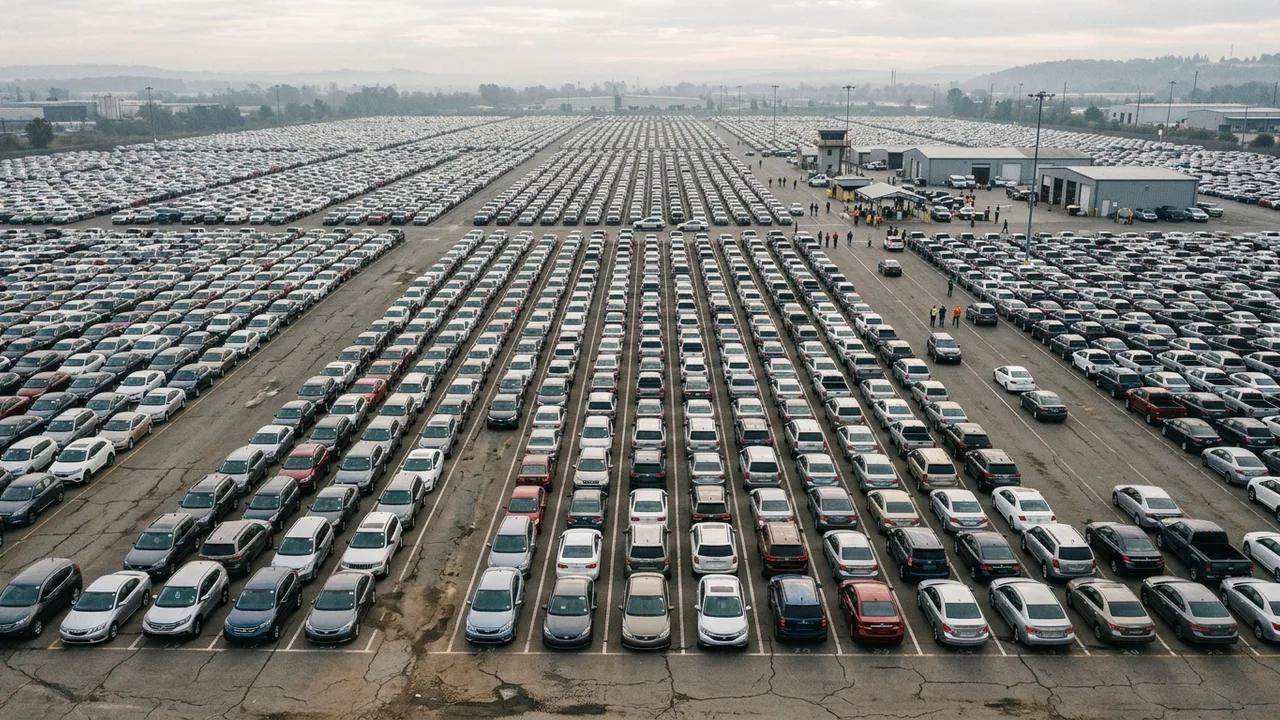
That drought is now ending. Off-lease volumes are projected to rise 25.7% in 2026, according to Edmunds — representing close to half a million additional units returning to the market compared with last year. Other forecasts put the figure around 400,000 additional lease returns across all powertrains.
This is the single most predictable inventory event in the used-car business, and it is happening right now.
The electric part of the wave is the remarkable part
Buried inside that broader number is a genuinely extraordinary statistic: EV lease returns are projected to surge 230% in 2026, with an estimated 215,000 electric vehicles coming off lease.
The cause is the "leasing loophole." Under the Inflation Reduction Act, the $7,500 federal EV credit could be passed through to virtually any lessee via the dealer, bypassing the domestic-sourcing and income restrictions that applied to purchases. The industry noticed immediately. Franchise EV lease volumes rose 438% across 2023 alone, and 46% of all franchise EV sales that year were leases.
Three years later, those cars are coming home. They are predominantly 2022–2023 models — two to three years old, low mileage, and many still under the federally mandated eight-year/100,000-mile battery warranty.
The brand mix is also shifting in a way that matters. As of mid-2025, roughly 50% of EV lease maturities were Teslas. Through 2026 and 2027, Cox Automotive data shows that mix diversifying substantially toward mainstream OEM brands — which changes both pricing dynamics and the kind of buyer who will consider one.
But used prices went up. What?
Here is where the intuitive story breaks down. More supply should mean lower prices. It has not — at least, not yet.
The Manheim Used Vehicle Value Index rose to 215.3 in March 2026, up 6.2% year on year and the highest reading since summer 2023. By June it stood at 212.9, still up 2.1% year on year. Three-year-old used vehicles averaged $31,548 in Q1 2026 — the second-highest first-quarter figure on record, trailing only the Q1 2022 peak of $32,164.
Three forces are holding prices up against the incoming supply:
1. The 4-to-6-year-old hole. The pandemic production collapse means there is a genuine shortage of vehicles in exactly the age band value-focused buyers want. Off-lease cars are two to three years old. They do not fill that hole.
2. Demand pulled forward. Higher-than-average tax refunds activated pent-up demand in Q1, pushing used retail sales roughly 2% above year-ago levels while days' supply fell below 40 in March.
3. Displaced new-car buyers. With the average new car near $52,000 and more new inventory above $50,000 than below $35,000, buyers are being pushed down-market. Cars seven years or older now account for about 40% of used sales.
The off-lease wave is arriving into a market with more demand than it can absorb. That is why it is easing the shortage without collapsing prices.
Where the actual bargains are
Used EVs are the anomaly, and the opportunity. The Manheim EV Index rose 12% year on year in June, significantly outperforming the non-EV index at 1.7%. Used EV wholesale values are up around 7.9% year on year — leading every other segment. In Q1 2026, 93,500 used EVs sold, up 12%, and average used EV prices reached near-parity with petrol cars: roughly $34,821 versus $33,487.
Read that carefully, because it contains a contradiction worth understanding. Used EV values are rising, which sounds bad for buyers. But they are rising from a deeply depressed base — most pricing indices show used EV values still 20–30% below their post-pandemic peak. The rise reflects demand catching up to a segment that was oversold, not a bubble.
For a buyer, a two-to-three-year-old EV with documented battery health, remaining factory warranty and a residual battery warranty of five-plus years is arguably the best value proposition in the American used market right now. Elevated fuel prices have only sharpened that.
Sedans and compacts are the other soft spot. Higher depreciation rates plus off-lease and rental-fleet returns are creating genuine retail corrections in this segment, in contrast to trucks and SUVs, where demand is holding prices firm and negotiability is limited.
Timing your purchase
Wholesale prices typically soften in summer, after the spring tax-refund surge pushes trade-in volume into auctions. That softening reaches retail on a four-to-six-week lag. Late summer into autumn 2026 is therefore the logical window for buyers, and the corresponding window for sellers is before it.
If you are currently in a lease: on compacts and EVs, walking away rather than exercising a buyout is usually the right call, because the buyout price was set against residual assumptions that depreciation has since overtaken. On trucks, SUVs and hybrids, the buyout is more likely to be favourable.
The cliff after the wave
One last thing, and it is important: this is a one-off. Lease origination in 2025 was low, and Q1 2026 leasing ran at roughly 20% — essentially flat. Cox Automotive expects total lease penetration to fall toward 21% in 2026, the lowest in three years, as EV incentives disappear.
Which means that the off-lease abundance of 2026 is followed by scarcity in 2028 and 2029. If you have been waiting for the used market to loosen up, this is the year. It may be the only one for a while.
Key takeaways
- Off-lease volumes projected to rise 25.7% in 2026 — nearly 500,000 extra units
- EV lease returns forecast to surge 230%, to roughly 215,000 vehicles
- Despite the supply, Manheim's index was up 6.2% YoY in March 2026
- Used EVs are the strongest-performing segment, near price parity with petrol cars
- Low 2025–26 lease origination means a supply cliff arrives in 2028–29
Sources & further reading
- Edmunds Q1 2026 Insights Used Car Report
- Cox Automotive Manheim Used Vehicle Value Index Q1/Q2 2026
- S&P Global Mobility EV lease-return analysis (March 2026)
- Cox Automotive 2026 forecasts
- Autotrader B2B dealer analysis
Figures, prices and policy details were current at the last-updated date above. Automotive pricing, incentives and regulations change frequently — verify time-sensitive details with the linked primary sources. Read our editorial policy and fact-checking standards.