Note: every registration figure below is taken from the Society of Motor Manufacturers and Traders' preliminary release of 2 October 2026, which the SMMT says is subject to change. Full and final figures are due at 9am on Monday 5 October 2026.
The UK registered 350,518 new cars in September 2026, up 12.1% on a year earlier and the strongest plate-change September since 2017, according to the SMMT's preliminary count. The Jaecoo 7, a Chery-built SUV that only reached Britain last year, was the month's best-selling car on 10,813 registrations, 884 ahead of the Tesla Model 3. Battery-electric cars set a volume record at 99,199, a 28.3% share, and plug-in hybrids set one too. The same release says the year-to-date electric share of 26.2% is still well short of the 33% the ZEV mandate requires for 2026.
At a glance
| Figure | What the source says | Source |
|---|---|---|
| Total registrations | 350,518, up 12.1% from 312,793 in September 2025; the tenth consecutive month of growth and the best September since 2017 | SMMT preliminary figures, 2 October 2026 |
| Best-selling car | Jaecoo 7 on 10,813, then Tesla Model 3 on 9,929 and Ford Puma on 6,958 | SMMT |
| Battery-electric cars | 99,199, up 36.3%, a record volume and a 28.3% share against 23.3% a year ago | SMMT |
| Plug-in hybrids | 59,563, up 55.7%, a record volume and a record 17.0% share | SMMT |
| Petrol | 131,861, down 6.7%; share fell from 45.2% to 37.6% in a year | SMMT |
| Year to date | 1,739,253 cars, up 10.2%; battery-electric 454,945, a 26.2% share | SMMT |
| 2026 mandate target | 33% zero-emission share; on the industry's 2.183-million-car outlook, a further 265,000 battery-electric registrations would be needed in the final quarter | SMMT |
| Mandate review | Consultation published 14 August 2026, closing at 11:59pm on 23 October 2026; the 2030 and 2035 end dates are not under review | GOV.UK, Department for Transport |
What the SMMT published
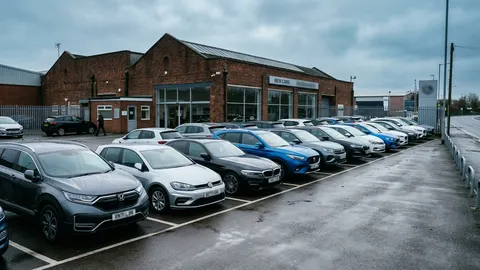
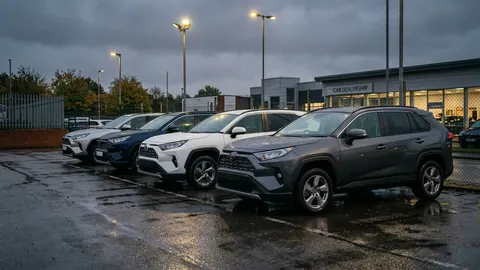
September is one of the two plate-change months, and the SMMT says it typically accounts for around one in seven of the year's registrations. This one came in at 350,518 new cars, 12.1% more than the 312,793 registered in September 2025 and, by the SMMT's description, the tenth consecutive month of growth and the strongest September since 2017.
The notes to the release give the two comparison points that put that claim in proportion. September 2017 was 426,170 cars, so this September was still 75,652 short of it. September 2019, the last pre-pandemic plate change, was 343,255, which this month cleared by 7,263. The market has recovered past 2019 for this month; it has not recovered to 2017.
Growth came from every buyer type. Private registrations rose 13.9% to 149,158, a 42.6% share, up from 41.9%. Fleets grew 9.6% to 190,988 and remain the majority of the market at 54.5%. The small business channel rose 37.6% to 10,372. Over the first nine months of the year the total stands at 1,739,253, up 10.2%, with private demand up 12.8% and fleet up 8.0%.
In a separate note published the same morning, SMMT chief executive Mike Hawes wrote that the overall growth is largely being driven by intense competition, significantly from new entrants, increased choice and attractive deals, which are encouraging many into the new car market who might otherwise have bought used. That framing matters for the rest of this article: the industry body itself attributes the month to discounting and new brands rather than to a change in underlying demand. The June 2026 figures were presented the same way.
The Jaecoo 7 and the rest of the top ten
The SMMT's preliminary model table puts the Jaecoo 7 first for the month on 10,813 registrations, with the Tesla Model 3 second on 9,929. The gap is 884 cars. The year-to-date table tells a different story: the Ford Puma still leads 2026 on 42,926 against the Jaecoo 7's 39,473, a margin of 3,453 with three months left.
| Rank | Model | September 2026 | Year-to-date position |
|---|---|---|---|
| 1 | Jaecoo 7 | 10,813 | 2nd, 39,473 |
| 2 | Tesla Model 3 | 9,929 | 9th, 23,704 |
| 3 | Ford Puma | 6,958 | 1st, 42,926 |
| 4 | Kia Sportage | 6,521 | 3rd, 37,085 |
| 5 | Tesla Model Y | 5,946 | Outside the top ten |
| 6 | Nissan Qashqai | 5,554 | 4th, 33,082 |
| 7 | Vauxhall Corsa | 5,498 | 5th, 27,390 |
| 8 | Volkswagen Golf | 5,496 | 6th, 26,702 |
| 9 | MG HS | 5,444 | 7th, 26,653 |
| 10 | Audi A3 | 5,268 | Outside the top ten |
Auto Express, reporting the same release on 2 October, says Jaecoo entered the UK only last year and now holds 3.4% of the market, ahead of Renault, Volvo, Honda and Cupra, and that together with its sister brand Omoda the Chery newcomers now outsell Ford and Audi. The same report records the nickname the car has picked up, the Temu Range Rover, and quotes Philip Nothard, insight director at Cox Automotive, saying the increasing influence of Chinese manufacturers is impossible to ignore, that it is stimulating competition and consumer choice, and that it is intensifying pressure on established brands as the industry works towards demanding EV targets.
None of this is new as a trend; the Chinese-brand explainer on this site recorded the Jaecoo 7 topping the chart in March 2026. What is new is the scale of the month it topped, and that it did so against a Tesla end-of-quarter push. Buyers weighing one up should also read why insuring a Chinese car in the UK has been harder than buying one.
Where the extra 37,725 cars came from
The SMMT's powertrain table is the most useful part of the release, because it shows that the whole of the market's growth, and more, arrived with a plug.
| Powertrain | September 2026 | September 2025 | Change | Share 2026 | Share 2025 |
|---|---|---|---|---|---|
| Battery-electric | 99,199 | 72,775 | +36.3% | 28.3% | 23.3% |
| Plug-in hybrid | 59,563 | 38,261 | +55.7% | 17.0% | 12.2% |
| Hybrid | 45,838 | 47,865 | -4.2% | 13.1% | 15.3% |
| Petrol | 131,861 | 141,287 | -6.7% | 37.6% | 45.2% |
| Diesel | 14,057 | 12,605 | +11.5% | 4.0% | 4.0% |
| Total | 350,518 | 312,793 | +12.1% | 100% | 100% |
Worked from those rows: the market added 37,725 cars year on year. Battery-electric cars added 26,424 of them and plug-in hybrids 21,302, a combined 47,726. Petrol lost 9,426, conventional hybrids lost 2,027 and diesel gained 1,452. The plug-in growth was therefore larger than the growth of the whole market, which is another way of saying that petrol and hybrid buyers were replaced, not merely outnumbered. Cars with a plug came to 158,762 between them, 45.3% of everything registered; the SMMT puts all electrified cars together at a record 58.4%. Its release also describes the battery-electric total as almost five new cars every minute, a rate it says is more than double that of three years ago, and it counts 178 battery-electric models now on sale, more than twice the number in 2023.
Two things in the table cut against the headline. Conventional hybrids fell in a growing market, and plug-in hybrids grew faster than pure electric cars, at 55.7% against 36.3%. Electrek, which published its own analysis of the release on 2 October, flags the second of those as the thing to watch if the government's review ends up giving manufacturers more credit for plug-in hybrids.
The best-selling electric cars
| Rank | Battery-electric model | September 2026 |
|---|---|---|
| 1 | Tesla Model 3 | 9,929 |
| 2 | Tesla Model Y | 5,946 |
| 3 | BYD Sealion 7 | 3,191 |
| 4 | BYD Seal | 3,184 |
| 5 | Kia EV3 | 3,026 |
| 6 | Skoda Enyaq | 2,214 |
| 7 | Volvo EX30 | 1,961 |
| 8 | Mercedes-Benz CLA | 1,921 |
| 9 | Skoda Elroq | 1,897 |
| 10 | Leapmotor B10 | 1,883 |
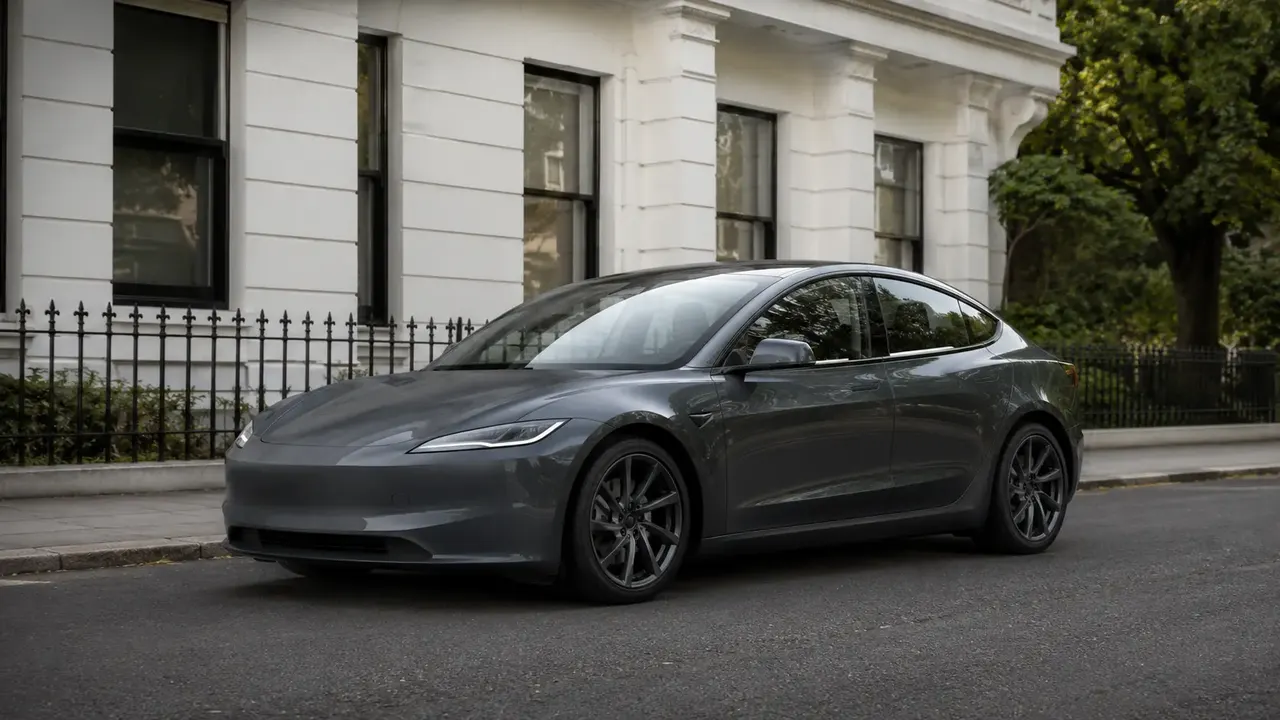
Electrek's arithmetic on the Tesla numbers is worth carrying because it explains the shape of the month. The two Teslas account for 15,875 cars, which Electrek puts at 16% of every electric car registered in September, and it notes that 42% of the Model 3's 23,704 UK registrations this year landed in this one month. Tesla loads its deliveries into the last month of each quarter; Electrek gives the June figure as 12,403 across the range. So the Model 3's second place is real, but it is a quarter-end spike rather than a monthly run rate, which is also why the car sits ninth for the year while finishing second for the month.
BYD took third and fourth with two different cars, and Electrek points out that the brand was not eligible for the Electric Car Grant when it launched here and is selling regardless. Leapmotor's B10 made the top ten in its first months on sale. Of the ten best-selling electric cars, three carry Chinese badges, and Electrek records that the Model 3 sold here is the cheaper, China-built car.
The 33% problem, and the two ways of reading it
Here is the SMMT's own framing. After nine months, 454,945 battery-electric cars have been registered, a 26.2% share. The ZEV mandate requires 33% for 2026 and, as the release points out, 26.2% is behind even last year's 28% target. On the industry's latest outlook of a 2.183-million-car year, the SMMT calculates that a 33% share would require an additional 265,000 battery-electric registrations in the final quarter alone.
That number can be checked against the release's own totals. A 2.183-million year with 1,739,253 cars already registered leaves 443,747 for October to December. If 265,000 of them had to be electric, the final quarter would need a battery-electric share just under 60%, roughly double the record month just reported. Electrek reached the same figure. No month in 2026 has come close: the record-volume month just reported was 28.3%, and June, covered here, was 30.0%.
The second reading starts from the flexibilities, which are the part of the mandate the headline target leaves out. Manufacturers can meet their obligation by cutting the CO2 of their non-electric cars, by borrowing against future years and by buying credits from rivals that have a surplus. Electrek, citing analysis by the campaign group New AutoMotive, puts the effective market-wide requirement for 2026 at 24.6% once those routes are counted, and observes that 26.2% is already above it. On that reading, the mandate is doing what it was designed to do: 178 electric models are on sale because manufacturers have to sell them, and the discounts the SMMT complains about are the mechanism rather than a side effect.
The SMMT does not accept that the flexibilities settle the matter. Its chief executive's note argues that they reduce in impact over time and, in his words, do not remove the cost, and that the cost is a barrier to investment. The release quotes Mr Hawes in full: “September's record EV performance is a major achievement. Drivers are increasingly embracing the growing choice of models made available and high fuel prices are also undoubtedly giving more consumers reason to consider going electric. The industry's commitment is clear with billions of pounds of investment in new models, new technology and incentives. Despite all these factors, uptake remains behind mandated targets and, whilst flexibilities help, the UK still has the world's toughest targets and highest energy costs. The Mandate review is an opportunity to review those factors, to build on this momentum and support consumers but, in doing so, strengthen business viability and UK competitiveness.”
Both readings use the same table. One measures the market against the headline 33%; the other measures it against the number manufacturers actually have to hit after flexibilities. Neither is wrong on its own terms, and the SMMT's note is explicit that the gap between them is what the review should decide.
What the government's review says, and does not say
The review the SMMT keeps referring to is a live consultation. The Department for Transport published the Zero emission vehicle mandate review on 14 August 2026; it closes at 11:59pm on 23 October 2026. GOV.UK describes it as seeking views on the ZEV mandate and its effectiveness in the UK, and ties it to the government's earlier commitment to review the underlying Vehicle Emissions Trading Schemes order by early 2027. The consultation document covers the current trajectory and yearly headline targets, the effectiveness of the existing compliance flexibilities and alternative policy approaches.
The press release that launched it is equally clear about what is not on the table. The 2030 end of new petrol and diesel car sales and the requirement for all new cars and vans to be zero-emission by 2035 are described as unchanged. Transport Secretary Heidi Alexander is quoted saying the UK EV market is strong, with sales up and manufacturers and charge-point operators investing billions alongside government backing of £7.5 billion, including an Electric Car Grant that at that date had helped more than 160,000 people make the switch. Auto Express reads the government's position as having hinted at relaxing certain elements of the mandate while doubling down on the 2030 and 2035 dates; GOV.UK's own text commits to nothing beyond the consultation.
The grant is the other lever in the SMMT's explanation of the month. The release credits government's Electric Car Grant, alongside model choice and discounts, for the record. Which cars qualify, and in which band, changes without much notice, and the published price of a grant-eligible car can differ by exactly the size of the grant depending on who is quoting it.
Fuel prices are in the background
Mr Hawes names high fuel prices as one reason more buyers are considering electric cars, and the week's other motoring story explains why. On the same day the SMMT published, the RAC said the average price of diesel in the UK had risen above £2 a litre for the first time, to 200.01p, with petrol at 174.71p, as reported by BBC News. The RAC's Simon Williams called £2 a price threshold no one wanted to cross and put the cost of filling an average family diesel car at £110, almost £32 more than at the start of the conflict involving Iran. The run-up to that record, and the US export-ban threat behind part of it, was covered here on 28 September.
The SMMT's table does not show diesel buyers switching, however. Diesel registrations rose 11.5% in September to 14,057 and held a 4.0% share. Petrol is where the share loss sits, down from 45.2% to 37.6% in a year, and the cars gaining it are plug-ins of both kinds.
These are preliminary figures. The SMMT says they are subject to change and that the full and final September data will be published at 9am on Monday 5 October 2026; model rankings separated by a few hundred cars can move. The SMMT also attributes the record to discounts, new entrants and the grant rather than to a change in underlying demand, and it reports plug-in hybrids growing faster than battery-electric cars. For a buyer, a record month for registrations is a signal that dealers are discounting to hit targets; the price on the order form is still the only one that binds.
What happens next
Three dates follow from this release. The SMMT's final September figures are due at 9am on Monday 5 October 2026 and may revise the model table. The Department for Transport's mandate consultation closes at 11:59pm on 23 October 2026, after which the government has said it will review the trading-scheme order by early 2027. And the final quarter will show whether the 265,000 additional electric registrations the SMMT says the headline target needs are even arithmetically plausible: on the release's own numbers they would require roughly three in five of every car registered between now and December to be battery-electric.
The year-to-date model race is the other thing to watch. The Ford Puma leads the Jaecoo 7 by 3,453 cars with three months to run, and the Jaecoo outsold it by 3,855 in September alone. If that pattern holds, a Chinese-built SUV from a brand that, by Auto Express's account, only entered the UK last year will be the UK's best-selling car of 2026.
Frequently asked questions
What was the best-selling car in the UK in September 2026?
Was September 2026 the best September ever for UK car sales?
How many electric cars were registered in the UK in September 2026?
Is the UK on track for the 2026 ZEV mandate target?
What does a 76 plate mean?
Sources & further reading
- SMMT, Record electric car market powers bumper September — preliminary September 2026 new car registrations, powertrain, buyer-type and model tables (2 October 2026)
- SMMT, Mike Hawes, Market and manufacturing head in right direction — chief executive's update (2 October 2026)
- GOV.UK, Department for Transport, Zero emission vehicle mandate review — consultation (published 14 August 2026, closes 23 October 2026)
- GOV.UK, Review launched to shape pathway to reach zero emission driving by 2035 (14 August 2026)
- Auto Express, Tom Jervis, Jaecoo 7 leads charge as September sees best new car sales in almost a decade (2 October 2026)
- Electrek, Fred Lambert, UK EV sales surge 36% to record high in September (2 October 2026)
- BBC News, Lucy Hooker, UK diesel prices top £2 a litre for first time, RAC says (2 October 2026)