From nowhere to fourth in two years
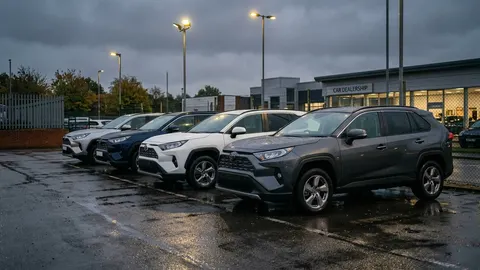
Two years ago, "VinFast" meant nothing to Indian car buyers. Today the Vietnamese manufacturer is India's fourth-largest EV maker, moving roughly 1,238 units a month for a 4.8% share of the electric car market as of May 2026 — and posting its best-ever monthly retails in June.
It got there with two cars, built at its own plant in Thoothukudi, Tamil Nadu: the VF 6 (from ₹17.29 lakh) and the VF 7 (from ₹21.89 lakh), joined this year by the VF MPV 7 at ₹24.49 lakh. Tellingly, VinFast has already ended introductory pricing on the VF 6 and VF 7 — a company does not do that unless demand is holding.
The VF 3 is the logical next move: take the brand downmarket, into the segment where Indian volume actually lives.
What the VF 3 is
A two-door, four-seat micro-SUV. Boxy, upright, unmistakably Jimny-ish in silhouette — and that resemblance is not accidental.
Specification (global, India-spec unconfirmed):
- 18.64 kWh battery
- Claimed range: 210–215 km
- Rear-wheel drive, single motor: around 43.5 PS and 110 Nm
- 0–50 km/h in about 5.3 seconds
- 191 mm ground clearance
- 10-inch floating touchscreen, manual/automatic climate control depending on trim, front power windows
- Roof load capacity of up to 50 kg
- DC fast charging supported globally
Expected launch: the festive season — October or November 2026. Nothing official yet.
Expected price: the credible range is ₹7.5–10 lakh ex-showroom, with CarWale at the lower end and CarDekho nearer ₹10 lakh. VinFast is also expected to offer a Battery-as-a-Service plan, which would push the effective entry price lower still.
Why the BaaS plan is the whole story
If VinFast lands the base VF 3 near ₹7.5–8 lakh with a BaaS option, it becomes the cheapest SUV-shaped electric car in India — and in a market where the shape of a car carries enormous status weight, that matters more than the spec sheet suggests.
The template already exists. MG's Windsor used exactly this play: a Battery-as-a-Service entry price of ₹9.99 lakh, decoupling the battery cost from the vehicle and charging around ₹3.9 per kilometre in usage. It sold 75,000 units in under two years. The BaaS mechanism did not just lower the price; it removed the psychological barrier that stops Indian buyers at the showroom door.
VinFast knows this. Everybody in the Indian EV industry knows this. The question is whether VinFast can make the economics work at a price point roughly ₹2 lakh below where MG proved it.
The competition
The VF 3 lands into a segment that has quietly become one of India's most interesting:
- Tata Tiago EV — India's most affordable electric car, freshly facelifted in June 2026. Five doors, five seats, and the practicality champion. Tata is pushing it hard at buyers transitioning from ICE hatchbacks.
- MG Comet EV — ₹7.99–10.57 lakh. The city-parking king, and proof that the quirky micro-EV segment is real.
- Tata Punch EV — a rung above, but the volume king of small Indian SUVs.
- Citroën ë-C3 — struggling, but present.
- Incoming: MG Bingo EV, Tata Altroz EV.
Against that field, the VF 3 has one clear differentiator: it looks like an SUV. The Comet looks like a toaster. The Tiago looks like a hatchback. In a market where SUV styling drives purchase decisions across every price band, a genuinely rugged-looking micro-EV at under ₹10 lakh is an unoccupied position.
The problems
Two doors. This is not a small issue. It immediately excludes a large slice of Indian family buyers, for whom rear-door access is non-negotiable. VinFast is betting on the second-car urban household — the school run, the grocery trip, the daily commute — rather than the primary family vehicle.
Range. 210–215 km claimed will translate to roughly 150–170 km in real Indian conditions with the air-conditioning on. That is genuinely adequate for a city runabout and genuinely insufficient for anything else. Buyers need to be honest with themselves about this.
Safety. VinFast has not yet had the VF 3 crash-tested for any rating. In a market where Bharat NCAP scores have become a mainstream purchase driver — and where Tata has built an entire brand position on safety — arriving without a rating is a real commercial handicap.
India-spec uncertainty. No ARAI homologation figures yet. Every number above should be treated as indicative until VinFast confirms.
The verdict
The Vietnamese precedent is instructive. In its home market, the VF 3 became the best-selling car in the country — partly because it was cheap, but mostly because it was likeable. It had character, in a segment where cars typically look like appliances.
Indian buyers reward character too. Ask anyone who has tried to buy a Maruti Jimny.
Our read: if VinFast prices the base VF 3 at ₹7.5–8 lakh with a working BaaS plan, it will find buyers nobody predicted — perhaps 1,500–2,500 a month. If it lands at ₹10 lakh without BaaS, it is a two-door car competing against a five-door Tiago EV at similar money, and it will struggle.
The entire success or failure of this launch rests on a single number, and VinFast has not announced it yet.
Key takeaways
- VinFast VF 3 expected in India around October–November 2026, at ₹7.5–10 lakh
- Two-door, four-seat micro-SUV; 18.64kWh battery, 210–215 km claimed range
- Battery-as-a-Service pricing expected, following MG's Windsor playbook
- VinFast is already India's fourth-largest EV maker on VF 6 and VF 7 volume
- No crash-test rating yet — a genuine handicap in the Bharat NCAP era
Sources & further reading
Figures, prices and policy details were current at the last-updated date above. Automotive pricing, incentives and regulations change frequently — verify time-sensitive details with the linked primary sources. Read our editorial policy and fact-checking standards.