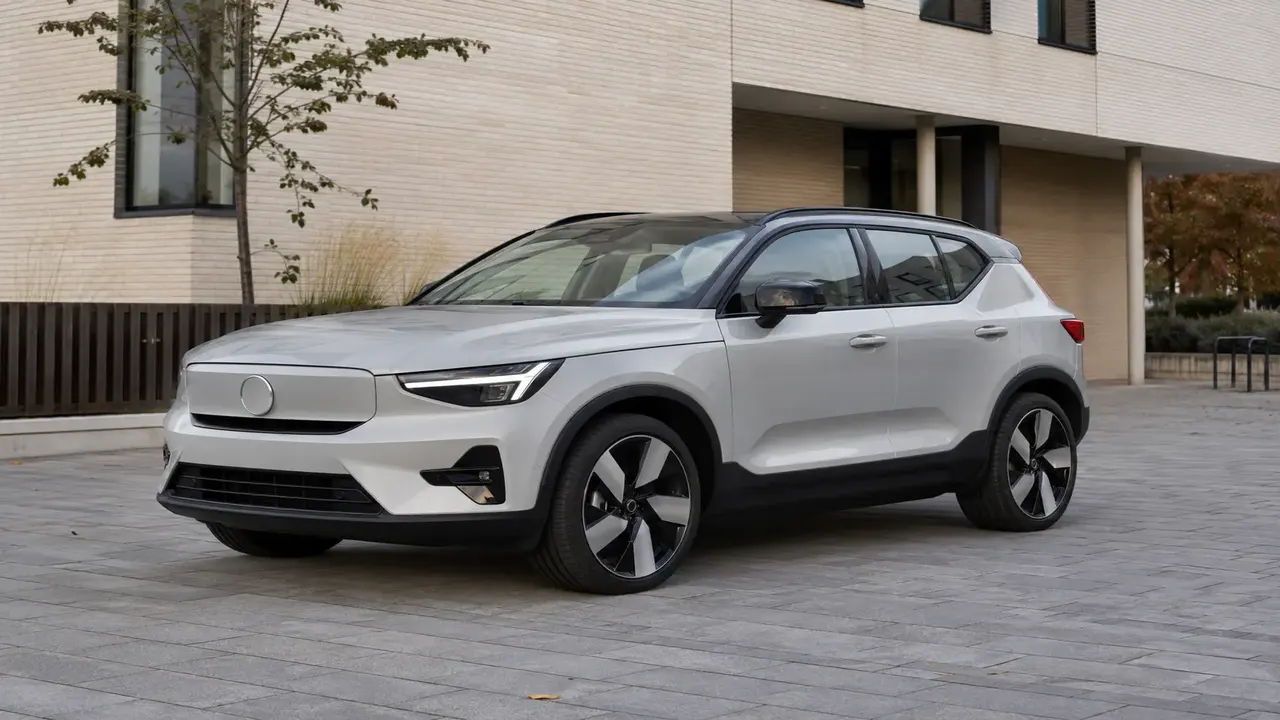
Volvo has announced 13 all-new cars to be launched between now and the end of 2030, with seven for Western markets and six for China. For UK buyers, the plan means a changing Volvo range built around SPA2 and SPA3, with both electric cars and a third-generation hybrid option.
At a glance
| Item | Detail |
|---|---|
| New cars | 13 by end of 2030 |
| Western markets | 7 cars |
| China | 6 cars |
| Powertrains | Electric and third-generation hybrid |
| Core computing | HuginCore |
| 2030 EBIT target | Above 8 per cent |
How many new cars will Volvo launch by 2030?
Volvo Cars says it will launch 13 all-new cars between now and the end of 2030, in what it describes as the largest and most ambitious global product push in its 99-year history. The announcement was made on 17 September 2026, ahead of the company’s investor day in Stockholm on Thursday 18 September. Reuters, Autocar, Carscoops, InsideEVs and CarBuzz all reported the plan. For buyers, the headline is not simply the number of cars, but how Volvo is dividing them by market: seven are intended for Western markets, covering Europe and North America, while six are being developed for China. That gives UK shoppers a clear reason to focus on the Western-market programme rather than treating all 13 cars as one undifferentiated global line-up.
The Western-market cars will use Volvo’s SPA2 and SPA3 architectures. SPA2 underpins the EX90 SUV, while SPA3 underpins the new EX60 crossover. Volvo’s China-focused models will take a different development route, working with sister company Geely Auto on shared platforms and using a market-specific technology stack. The regional split means Volvo is planning distinct product routes for Western markets and China rather than describing one identical range for every market. Hakan Samuelsson, Volvo Cars president and chief executive, said: “Our showrooms will look very different in 2030”. He also said: “This is our strongest product pipeline ever, tailored to regional needs, and emphasises our ambition to be the leading premium car brand”.
Will Volvo's new cars be electric or hybrid?
Volvo says the coming line-up will mix electric cars with a third-generation hybrid option. It also says the programme will take the brand into new segments and body styles. That means the 13-car plan is broader than a single powertrain strategy: electric cars are part of the programme, but so is a new generation of hybrid technology. For buyers who are watching how Volvo’s range changes over the rest of the decade, that mix is one of the most important parts of the announcement. It shows that the company’s 2030 showroom plan is built around more than one propulsion route, while Volvo also plans to enter new segments and body styles.
A new concept car will arrive in 2027 to preview an evolved Volvo design language. The company has also confirmed a senior design change, with Thomas Ingenlath, the former Polestar chief executive, returning to Volvo as Chief Design Officer. Those two points sit alongside Samuelsson’s comment that Volvo showrooms will look very different in 2030. For UK buyers, the practical picture is therefore a combination of new cars, a mix of electric and third-generation hybrid powertrains, and an updated design direction. The Western-market models will be based on SPA2 and SPA3, while the China-focused cars will be developed with Geely Auto on shared platforms and their own market-specific technology stack.
What is HuginCore and why does it matter to Volvo buyers?
Every car in the 13-model programme will use Volvo’s HuginCore computing platform. At the same time, Volvo wants to increase component commonality across the Geely group from 10 per cent today to 30 per cent by 2030. In plain terms, Volvo is pairing a much larger product pipeline with more shared underlying technology and components. The approach covers both sides of the regional split: Western models will sit on SPA2 or SPA3, while the China-focused cars will use shared platforms with Geely Auto. HuginCore is the common computing element across all of them, making it one of the parts of the plan that Volvo has said will apply to every car in the programme.
Software and the buying process are part of the same strategy. Volvo says it wants regular over-the-air software updates, greater customer transparency and faster delivery options. Those promises matter because the product push is not only about adding new body styles or changing powertrains; it also includes how the cars are updated and how customers are served. The common HuginCore platform gives Volvo one stated computing foundation for the new line-up, while the higher component-commonality target shows how the company wants to make more use of shared parts across the Geely group. For buyers, the key point is that future Volvo models are being planned around a more common technical base even though product development is being tailored by region.
Why is Volvo launching 13 new cars now?
The product push arrives alongside clear financial targets. Volvo says it is aiming for an EBIT margin above 8 per cent, compared with 3.5 per cent in 2025; EBIT means earnings before interest and tax. The company also has an ambition to double market share. These goals put the new-car programme in a wider business context: Volvo is not only setting out what it wants to launch, but also what it wants those products to support financially and commercially. Reuters, Autocar, Carscoops, InsideEVs and CarBuzz reported the product push, while Volvo describes it as the biggest and most ambitious in its 99-year history. The company is therefore tying a large product renewal to higher profitability and a larger share of the market.
Recent sales figures add context to those targets. InsideEVs reported that Volvo’s global sales fell 11 per cent in the first quarter of 2026 year on year and then fell 5.6 per cent in the second quarter. Against that backdrop, Volvo is setting out a product plan that spans Western markets and China, electric cars and a third-generation hybrid option, new segments and body styles, and a common HuginCore computing platform. For buyers, the useful conclusion is straightforward: the Volvo range is due to change substantially before the end of 2030, but the company is not taking a one-size-fits-all route. Its seven Western-market cars and six China-focused cars will follow different platform strategies while sharing the broader push towards common computing and more component commonality across the Geely group.
The 13-car figure covers a programme running through the end of 2030 and is split between Western markets and China. UK buyers should therefore focus on the seven Western-market cars and remember that the line-up will mix electric cars with a third-generation hybrid option.
Frequently asked questions
How many new cars will Volvo launch by 2030?
Are all 13 new Volvos electric?
What platforms will Volvo’s new cars use?
What financial targets has Volvo set for 2030?
Sources & further reading
- Volvo Cars media site - product plan announcement, 17 September 2026
- Reuters - Volvo Cars to launch 13 new models this decade
- Autocar - Volvo launches its biggest product push, 13 new models
Figures, prices and policy details were current at the last-updated date above. Automotive pricing, incentives and regulations change frequently — verify time-sensitive details with the linked primary sources. Read our editorial policy and fact-checking standards.


