Why "Neue Klasse" is not marketing fluff
BMW has used the phrase Neue Klasse — New Class — three times in its history, and each time it meant something.
The 1962 BMW 1500 was the first. BMW was a beleaguered maker of land yachts and bubble cars, close to being absorbed by Mercedes. The Neue Klasse saloons saved the company and became the 3 Series. The 1972 1602 Elektro followed as BMW's first electric car, built for the Munich Olympics with a 44-mile range. The i3 was arguably the third.
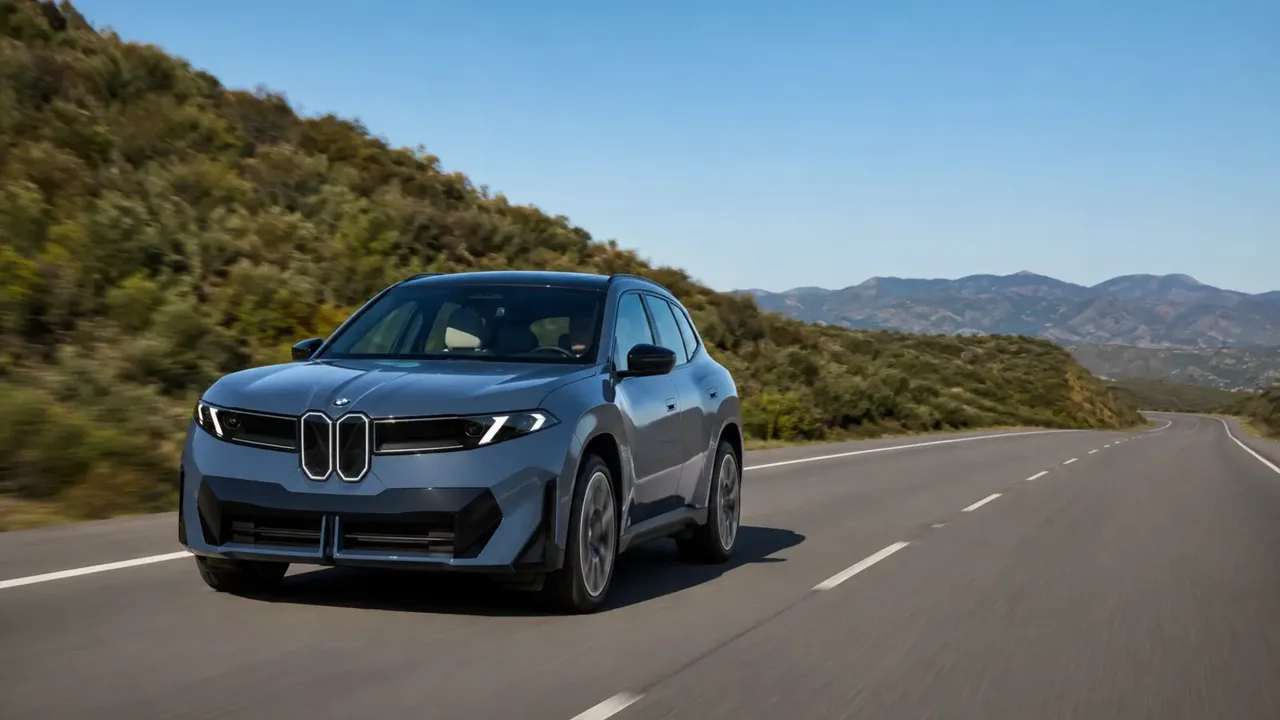
The 2026 iX3 is the fourth, and it carries the same weight. It is the first model on BMW's dedicated Neue Klasse EV platform, and the underpinnings, design language, battery technology and software will roll out across the incoming i3, the next X5, and the flagship 7 Series — part of a plan to launch more than 40 new cars by 2028.
If you want to know what a BMW will be for the next decade, this is the car to look at.
The battery is the story
BMW's sixth-generation battery technology uses new cylindrical cells — a chemistry and format change, not an incremental one.
- 20% more energy density and 30% faster charging than the previous iX3
- Two lithium-ion NMC packs: 82.6 kWh or 108.7 kWh usable
- Up to 500 miles WLTP on the entry 50 xDrive (with the smaller wheels); 491–493 miles with larger wheels
- The single-motor iX3 40: 395 miles WLTP
- Charging up to 400 kW, adding around 230 miles in ten minutes
Five hundred miles. In a family SUV. That number was science fiction three years ago, and it puts the iX3 at the very top of the market, marginally behind only the Volvo EX60's 503-mile claim.
BMW engineers have reportedly seen predicted ranges climb toward 600 miles during road testing.
Real-world verification, from a UK winter test with substantial motorway running: around 3.4 mi/kWh. That is genuinely excellent for a 2,300kg SUV.
Performance and prices
UK (launch line-up — 50 xDrive only):
| Trim | Price (OTR) |
|---|---|
| iX3 50 xDrive | £58,755 |
| 50 xDrive M Sport | £61,225 |
| 50 xDrive M Sport Pro | £62,755 |
The iX3 40 (single-motor, RWD, 316bhp, 0–62mph in 5.9 sec) has since joined at around £53,000.
US: the 2027 iX3 50 xDrive starts at $61,500 (excl. destination). Reservations opened in early May; deliveries begin autumn 2026. EPA range 383–434 miles.
Performance (50 xDrive): 462–469bhp, 0–62mph in 4.7–4.9 seconds, top speed 130mph. It is more powerful than an M340i. It also weighs 2,316kg on Autocar's scales — nearly 300kg more than a dual-motor Model Y, and that number is the honest counterweight to everything else here.
Here is the remarkable part: the new iX3 is cheaper than the car it replaces, despite a much bigger battery and more powerful motors. In a market where every EV has been getting more expensive, that is a genuinely bold move — though options can still add £10,000.
The interior: BMW throws out its own rulebook
Gone: the instrument binnacle. Gone: the iDrive rotary controller, which has defined BMW interiors for twenty years.
In their place:
- A 17.9-inch trapezoidal central touchscreen
- BMW Panoramic Vision — a long, thin display spanning the entire width of the windscreen base, projecting key information onto the lower glass
- A two-tier dashboard split by full-width air vents
- A floating centre console with physical buttons for the shifter, handbrake, hazards, volume and defroster
- Translucent illuminated dashboard trim
- A square steering wheel
It is a wholesale reinvention, and reactions are divided. The exterior — smaller kidney grilles, dramatically oversized angular headlight and taillight units — is dividing opinion even harder. Several reviewers have admitted, candidly, that they are not sure they get it yet.
Practicality
- 520-litre boot, expanding to 1,750 litres with the 40/20/40 rear seats folded
- A 58-litre frunk — ideal for cables, or muddy boots
- Optional electrically retractable tow bar, 2.0-tonne braked towing capacity
- Genuinely comfortable rear space for tall adults
The criticisms, fairly stated
No standard panoramic roof. The Mercedes GLC Electric and Volvo EX60 both include one. The iX3 does not.
Adaptive dampers are not available at launch. They arrive later in 2026. The current suspension is firm but well-damped — sporty rather than uncomfortable — and reviewers expect the adaptive setup to add meaningful breadth.
The adaptive cruise control has no following-distance buttons. BMW removed them. You set a preference in a touchscreen menu and then trust the car. It is, mercifully, very well calibrated — but the space for the buttons is visibly there on the steering wheel, and their absence is baffling.
You must log into a BMW profile to unlock certain functions. Quick, but irritating.
The weight. 2,316kg is a lot of car, and no amount of clever chassis engineering entirely disguises it.
The verdict
The iX3 has been named What Car? Car of the Year 2026 and Electrifying's 2026 Car of the Year. That is not a coincidence.
The honest summary: this is the best electric SUV BMW has ever made, by an enormous margin, and it is not close. It is efficient, quick, comfortable, practical, technologically extraordinary, and — remarkably — cheaper than its predecessor.
It is not, however, an M-car driving experience. Reviewers who have driven the i4 M50 and i5 M60 are consistent on this: the iX3 is surprisingly good for a 2.4-tonne SUV, but it does not deliver the involvement of BMW's best electric saloons. It is a superb device rather than a thrilling one.
For most buyers, that is exactly the right trade. And the most exciting thing about the iX3 is what comes next: the i3, the X5, the 7 Series, all on this platform, all with this battery.
BMW's fourth Neue Klasse has landed. On this evidence, it will work as well as the first one did.
Key takeaways
- First model on BMW's dedicated Neue Klasse EV platform; the template for 40+ cars by 2028
- Sixth-gen cylindrical cells: 20% more energy, 30% faster charging, up to 400kW
- Up to 500 miles WLTP (UK) / 383–434 miles EPA (US)
- UK from £58,755 (50 xDrive) or ~£53,000 (40); US from $61,500
- Cheaper than the car it replaces, despite a bigger battery and more power
Sources & further reading
Figures, prices and policy details were current at the last-updated date above. Automotive pricing, incentives and regulations change frequently — verify time-sensitive details with the linked primary sources. Read our editorial policy and fact-checking standards.