The headline rate that refuses to die
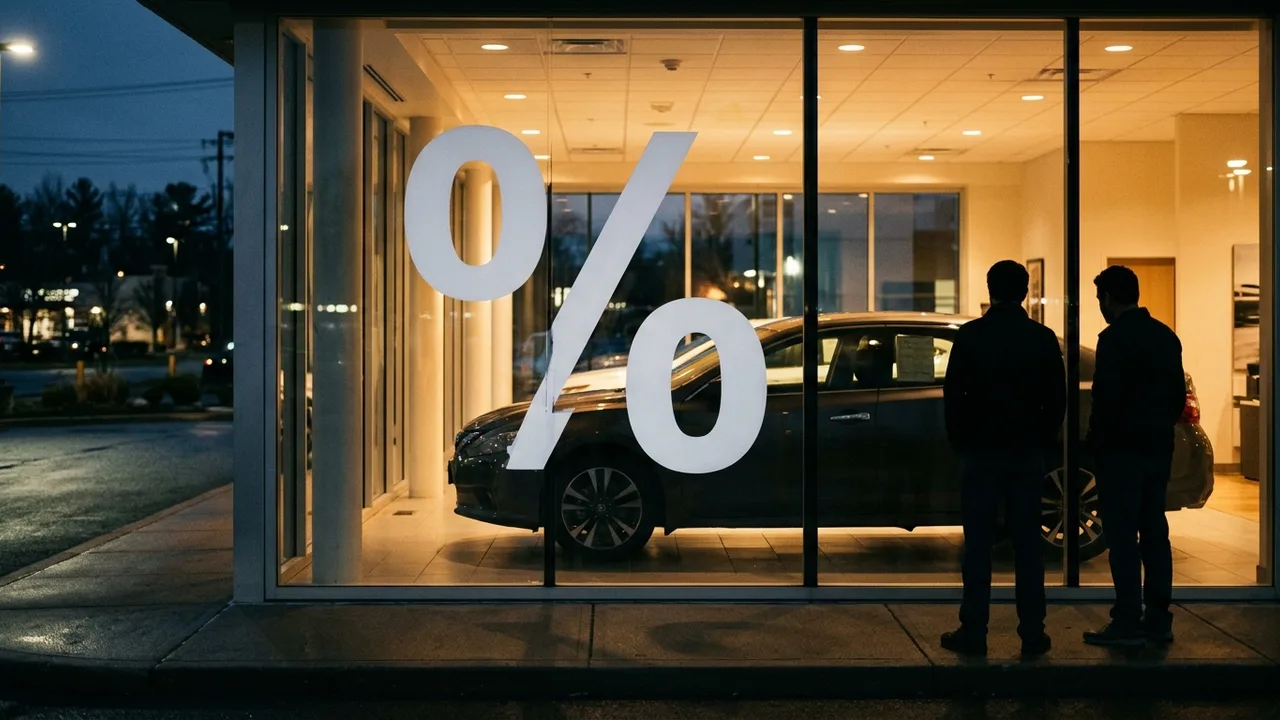
In the cheap-money years, 0% APR was everywhere; in the rate shock that followed, it nearly vanished. In 2026 it occupies a middle state: alive, strategic and selective. Manufacturers' captive lenders deploy zero-percent where they need sales velocity — slow-turning models, outgoing generations, EV inventory ahead of compliance deadlines — and nowhere else. Understanding that logic is how you find the deals and read them correctly.
A 0% offer is not generosity. It is the manufacturer buying down the interest through its captive finance arm as a targeted incentive — a discount wearing a financing costume. That framing answers most questions buyers have about it.
Where zero-percent lives in 2026
- Slow inventory and sunset models. When a model sits on lots or a redesign looms, subvented APR moves the metal without cutting the sticker (which would bruise resale values and lease residuals). The deals cluster accordingly — and they rotate monthly.
- EVs. With the federal purchase credit gone, manufacturers under compliance and inventory pressure lean on financing subsidies; some of the most aggressive 0%-plus-cash combinations of 2026 sit on electric models.
- Domestic-brand trucks and family SUVs in seasonal pushes — the traditional home of the genre.
- Rarely: hot sellers, hybrids in tight supply, or anything commanding sticker. Scarcity doesn't need subsidy.
What it actually takes to qualify
The fine print is consistent across brands:
- Top-tier credit. Approvals typically demand a FICO in roughly the 720+ zone; the best structures effectively filter to 750+. A large share of applicants get offered a different, higher rate — which is legal and routine, and where many buyers stop paying attention.
- Shorter terms than the ad implies. Zero percent frequently applies to 36–60 months; the 72-month version, where offered, may carry 0.9–3.9% instead. The monthly payment on a short zero-term can exceed a longer low-rate loan — affordability, not rate, is what pinches.
- Captive financing only, the specific model and trim listed, and often a choice: 0% OR the cash rebate — not both.
The rebate-versus-rate math everyone should run
That either/or is the whole game. Take a $40,000 purchase, five-year loan:
- 0% APR: you pay $40,000 total. Payment ≈ $667.
- $3,000 rebate + 6% financing: you finance $37,000, pay roughly $5,900 in interest over 60 months — total ≈ $42,900. Payment ≈ $715.
Here, 0% wins by nearly $3,000. But flip the numbers — a $5,000 rebate against a 4% market rate — and the rebate side wins. The rule: the bigger the rebate and the lower the market rate you can source elsewhere (bank, credit union), the worse 0% looks. Run both totals every time; dealers will happily let the shinier number win by default. Credit unions quoting mid-single-digit used rates also change the calculus of "new at 0% vs used at 6%" — sometimes in the new car's favor on total cost, which is exactly what the manufacturer intends.
Reading the offer like an adult
- Check the stack rules: some brands allow 0% plus smaller bonus cash; most force the either/or.
- Price the car first, financing second. Negotiate the transaction price as if paying cash; introduce the subvented rate afterward so the discount isn't quietly reabsorbed.
- Watch the term trap: a 36-month 0% payment can exceed your budget while a 60-month 3% fits — total-cost math, not rate worship.
- Mind the add-on migration. When the rate carries no margin, finance offices push harder on warranties, protection packages and accessories. The rate being clean doesn't mean the paperwork is.
- If your credit misses tier one, compare the dealer's counter-rate against outside pre-approval before signing anything — the counter is where margin returns.
The questions buyers actually ask
Does 0% financing hurt my credit? The application is a normal hard inquiry, and the loan a normal installment account. What catches people is applying at multiple dealers weeks apart — cluster your rate shopping within a single short window so scoring models treat it as one search.
Can I pay a 0% loan off early? Almost always, without penalty — but there's rarely a reason to. Zero-percent money is the cheapest loan you'll ever hold; paying it down early donates the time value back. Park the cash in anything earning interest and make the scheduled payments smiling.
Why did the dealer say I "don't qualify" and offer 5.9%? Two possibilities: your credit tier genuinely missed the program, or the dealer earns reserve on the 5.9%. You're entitled to know which — ask for the captive lender's decision in writing, and bring an outside pre-approval so the counter-offer has competition standing next to it.
Key takeaways
- 0% APR is a manufacturer discount delivered through financing — deployed on models that need help selling
- Expect roughly 720+ credit, shorter terms, captive financing and either/or choices against cash rebates
- Always compute total cost both ways: big rebate + outside financing frequently beats zero percent
- Negotiate price before revealing financing intentions, and hold the line in the F&I office
- Offers rotate monthly and regionally — timing a slow model's quarter-end is half the strategy
Sources & further reading
- Manufacturer captive-finance published offers, 2026 program sampling
- Federal Reserve consumer-credit rate data
- credit-union auto-rate surveys
- True Motion Auto finance-desk analysis
Figures, prices and policy details were current at the last-updated date above. Automotive pricing, incentives and regulations change frequently — verify time-sensitive details against the primary sources listed below. Read our editorial policy and fact-checking standards.