Note: costs mentioned below are given in US dollars as a general point of reference — actual prices vary by country, currency, and local market.
Cost per mile = (kWh added × price per kWh) ÷ miles of range gained. Log each session — where, kWh added, what it cost, and the odometer — and after ten to fifteen sessions covering your normal mix of home and public charging the average settles into a figure you can trust. Home overnight charging is usually a fraction of the cost of a rapid charger, so the mix matters more than the car.
Why this needs tracking when petrol does not
A petrol car states its cost at the pump every time. An EV charged at home buries the cost inside a monthly electricity bill that is not itemised by appliance, so most owners genuinely do not know what they are spending. Separating it out is a small amount of bookkeeping that replaces a marketing estimate with your own number.
What to record for each session
- Date, and where you charged: home, workplace, public slow or public rapid.
- kWh added — from the charger display, the receipt, or the car's own app.
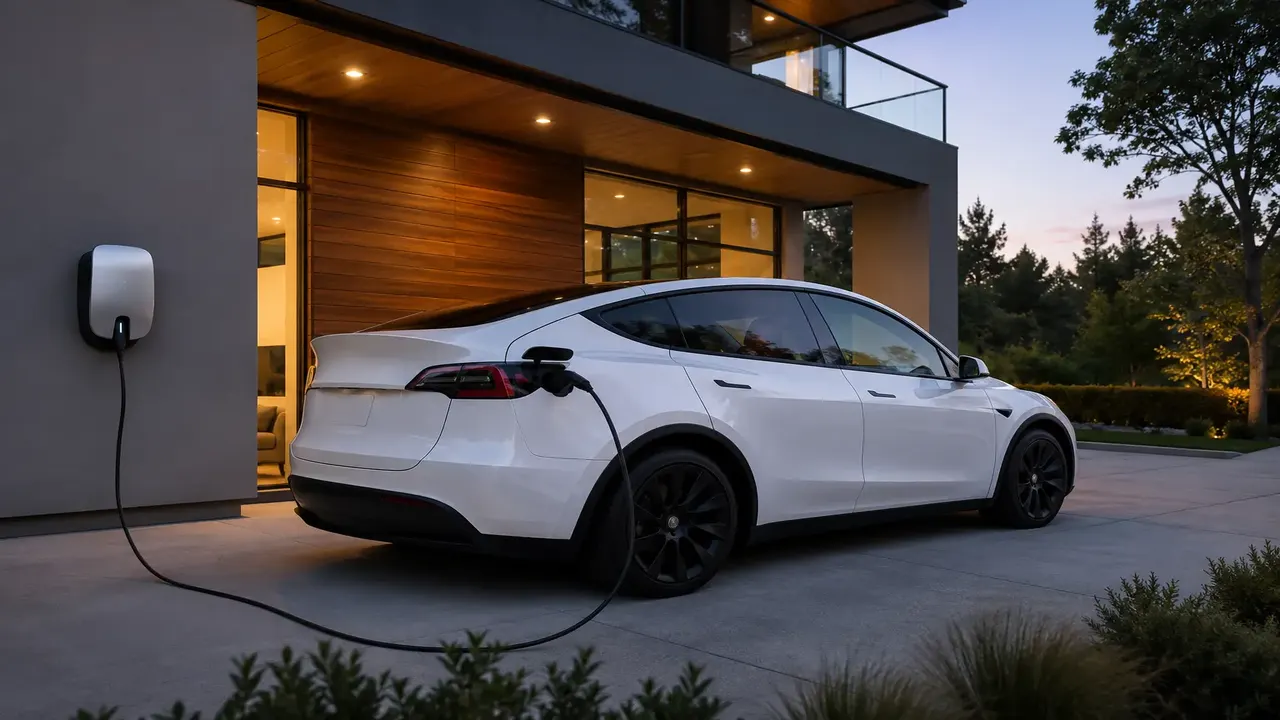
- Cost paid. For home charging, use your tariff's per-kWh rate for the hours you actually charged.
- Odometer reading, so you can attribute distance to energy.
The arithmetic
Add 30 kWh at $0.15/kWh and gain 110 miles of range: $4.50 ÷ 110 ≈ 4 cents per mile. Do the same sum for a rapid-charge session and the figure typically triples. That gap, not the purchase price, is what makes charging access the decisive question for EV running costs.
| Session type | kWh added | Rate | Cost | Range gained | Cost per mile |
|---|---|---|---|---|---|
| Home, overnight | 32 kWh | $0.16/kWh | $5.12 | 115 miles | $0.045 |
| Workplace, free to use | 18 kWh | — | $0.00 | 65 miles | $0.00 |
| Motorway rapid | 40 kWh | $0.42/kWh | $16.80 | 140 miles | $0.12 |
These are illustrative figures. Electricity prices vary enormously by country, supplier, tariff and time of day — use your own bill and your own receipts, not the numbers above.
Reading a public charging receipt
Public pricing is frequently not a flat per-kWh rate. Networks variously charge per minute, add a session or connection fee, tier the price by charger speed, or apply overstay penalties once the car is full. Two sessions delivering identical kWh can therefore cost very different amounts.
On a per-minute tariff, what you pay depends on how fast your car can accept charge, not on how much energy you receive. A car that tapers early on a 150 kW charger can end up paying far more per kWh than the headline rate implies.
Reading the trend, not one session
A single road-trip rapid charge will spike the average and is not your everyday cost. Two to three weeks of normal driving gives a blended figure that reflects your real home-to-public ratio, which is the number worth comparing against a petrol car.
What the cost-per-mile figure leaves out
- Battery degradation over years, which slowly reduces the range each kWh buys. That needs separate range measurement over time or a battery health certificate.
- The one-off cost of a home charger and its installation, which has to be amortised separately.
- Time-of-use tariffs, where the same home charger costs very different amounts depending on the hour the car actually drew power.
- Standing charges and any tariff you moved onto specifically for the car.
Frequently asked questions
How much does it cost to charge an EV at home overnight?
Is rapid charging always more expensive than charging at home?
Do I need a smart charger to work this out?
How many sessions before the average is trustworthy?
Why does my car show more range added than the kWh suggests?
Sources & further reading
- US Energy Information Administration — electricity retail price data
- US Department of Energy — home EV charging
- GOV.UK — UK energy price statistics
Figures, prices and policy details were current at the last-updated date above. Automotive pricing, incentives and regulations change frequently — verify time-sensitive details with the linked primary sources. Read our editorial policy and fact-checking standards.