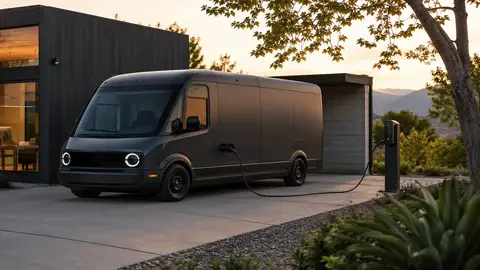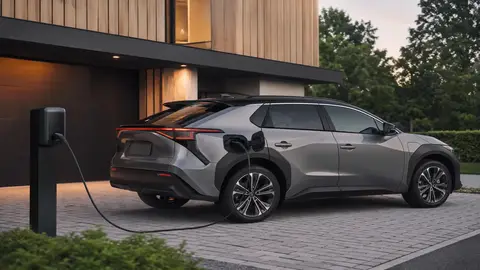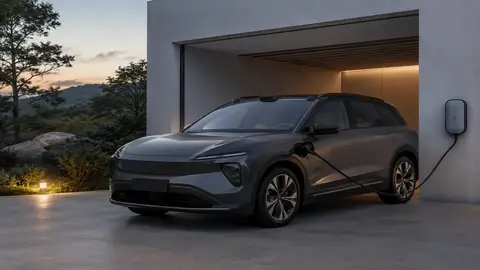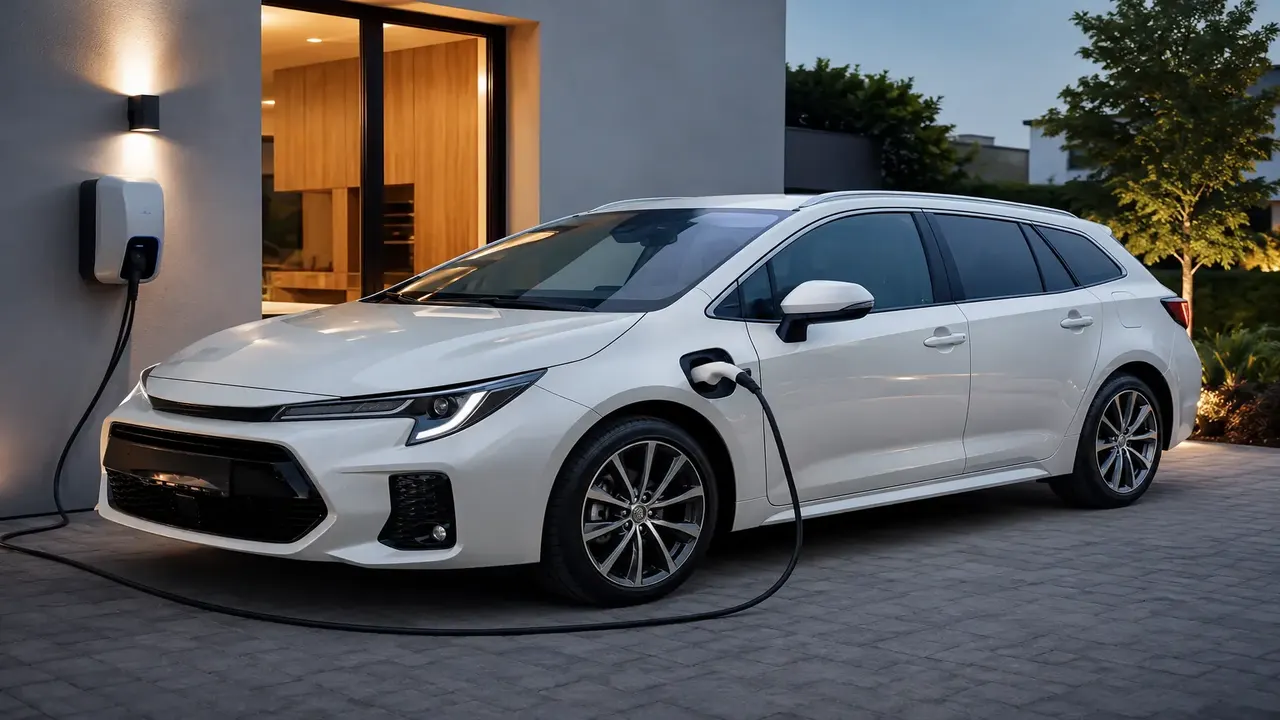
There is no single number — charging time depends on the charger, the battery size and how full the battery already is. As a rule of thumb: Level 1 (standard wall socket): adds about 3–5 miles of range per hour — 40+ hours for a full charge. Level 2 (240V home/public AC): adds about 12–40 miles per hour — roughly 4–10 hours for a full charge. DC fast charging (public rapid): typically takes a modern EV from 10% to 80% in about 20–40 minutes, and the fastest cars can do it in under 20. The last 20% is always the slowest, which is why road-trip charging usually stops at 80%.
EV charging speeds at a glance
| Charging level | Typical power | Range added per hour | Time to a useful charge | Best for |
|---|---|---|---|---|
| Level 1 (120V AC) | 1.2–1.4 kW | 3–5 miles | Overnight top-ups only (40+ hrs full) | Plug-in hybrids, low-mileage drivers |
| Level 2 (240V AC) | 3.7–11 kW | 12–40 miles | 4–10 hrs to full | Home charging, workplaces, overnight |
| DC fast (Level 3) | 50–350 kW | 100–600+ miles | ~20–40 min for 10–80% | Road trips, quick top-ups |
The three levels of EV charging
Every EV charges using one of three power levels. Understanding them is the single most useful thing for predicting how long a charge will take, because the gap between the slowest and fastest is enormous — hours versus minutes.
Level 1: a standard wall socket
Level 1 uses an ordinary household outlet (120V in the US, a 3-pin socket in the UK and India) and the cable supplied with the car. It delivers only 1.2–1.4 kW, adding roughly 3–5 miles of range per hour. That is fine for a plug-in hybrid or a driver covering very few miles, but charging a large battery from empty can take two days. Treat Level 1 as a trickle top-up, not your main charging method.
Level 2: the home and workplace standard
Level 2 uses a 240V supply — a dedicated home wallbox, a workplace charger or a public AC point — and delivers anywhere from 3.7 kW to 11 kW. Most owners do the overwhelming majority of their charging here, usually overnight. Expect 12–40 miles of range per hour depending on the wallbox and the car's onboard charger, which means a typical EV refills from low to full while you sleep.
DC fast charging: for journeys, not every day
DC fast chargers (also called rapid or Level 3) bypass the car's onboard charger and feed direct current straight to the battery at 50 kW up to 350 kW. This is what makes long trips practical: a modern EV commonly goes from 10% to 80% in about 20–40 minutes, and the fastest, highest-voltage cars on a powerful charger can do it in under 20. It is designed for occasional use on the road, not daily charging.
What actually determines your charging time
Two cars on the same charger can take very different times. These are the factors that decide it:
- Battery size (kWh): a bigger battery holds more energy, so it takes longer to fill at the same power. A 60 kWh city car charges faster than a 100 kWh SUV.
- Charger power vs the car's limit: charging happens at the lower of the two. A 150 kW charger cannot push a car that accepts only 50 kW, and an 11 kW car cannot exceed 11 kW on a 22 kW AC point.
- State of charge and the charging curve: EVs charge fastest when fairly empty and deliberately slow down as they fill. Peak speed usually happens between about 10% and 50%.
- Temperature: cold batteries charge slowly. Many EVs precondition (warm) the battery on the way to a fast charger to protect speed.
- Onboard charger (AC only): for Level 1 and 2, the car's built-in AC charger caps the rate — commonly 7.4 kW or 11 kW.
- Battery chemistry: LFP batteries are happy charged to 100% regularly; NMC packs are usually kept to ~80% for daily use, which also affects how you plan charging.
Why charging slows down after 80%
As a lithium-ion battery approaches full, the car reduces charging power to protect the cells. The result is striking on a fast charger: filling the last 20% can take roughly as long as the first 80%. On a road trip it is almost always quicker overall to stop at 80% and drive on than to wait for 100%. At home overnight, where time is not a constraint, charging to whatever level suits your chemistry and next journey is fine.
Real-world examples
These illustrative figures show how the same car varies by charger. Always check the manufacturer's stated charge times for an exact model and trim.
| Scenario | Battery | Level 2 (11 kW) | DC fast (10–80%) |
|---|---|---|---|
| Compact city EV | ~50–60 kWh | ~5–6 hrs to full | ~25–35 min |
| Family SUV | ~75–85 kWh | ~7–9 hrs to full | ~30–40 min |
| Large/long-range EV | ~95–110 kWh | ~9–11 hrs to full | ~20–30 min on a high-power charger |
How to charge faster
- Precondition the battery before a fast charge — set the sat-nav to the charger so the car can warm the pack.
- Arrive with a lower state of charge; the fast-charging window from ~10–50% is where you gain the most range per minute.
- Match the charger to the car — a 150–350 kW unit only helps if your car can accept high power.
- On trips, stop at 80% rather than waiting out the slow final fifth.
- Use a properly rated Level 2 wallbox at home instead of relying on a slow 3-pin socket.
- In cold weather, charge soon after driving while the battery is still warm.
Home charging is the real game-changer
For most owners, the day-to-day question is not how fast public charging is, but whether you can charge where the car sleeps. A home or workplace charger means starting most days effectively full, and you may rarely use public rapid charging at all. Charging convenience depends on parking and access far more than on any single car's headline speed — a point worth weighing before you buy.
Frequently asked questions
How long does it take to fully charge an electric car at home?
How long does a fast charger take?
Why does my EV stop charging quickly near 100%?
Does cold weather affect charging time?
Can I charge to 100% every day?
Sources & further reading
Figures, prices and policy details were current at the last-updated date above. Automotive pricing, incentives and regulations change frequently — verify time-sensitive details with the linked primary sources. Read our editorial policy and fact-checking standards.