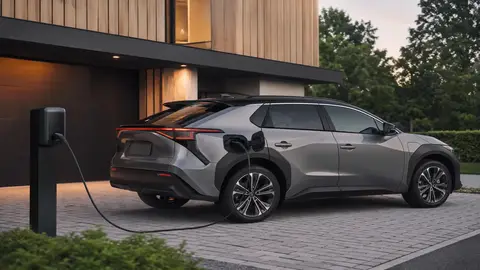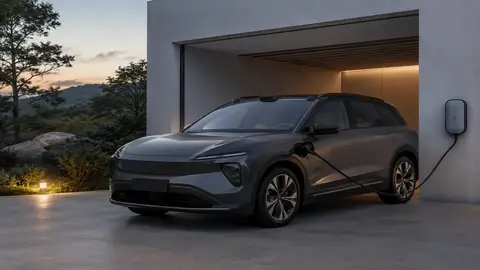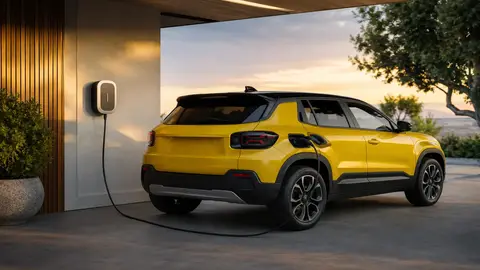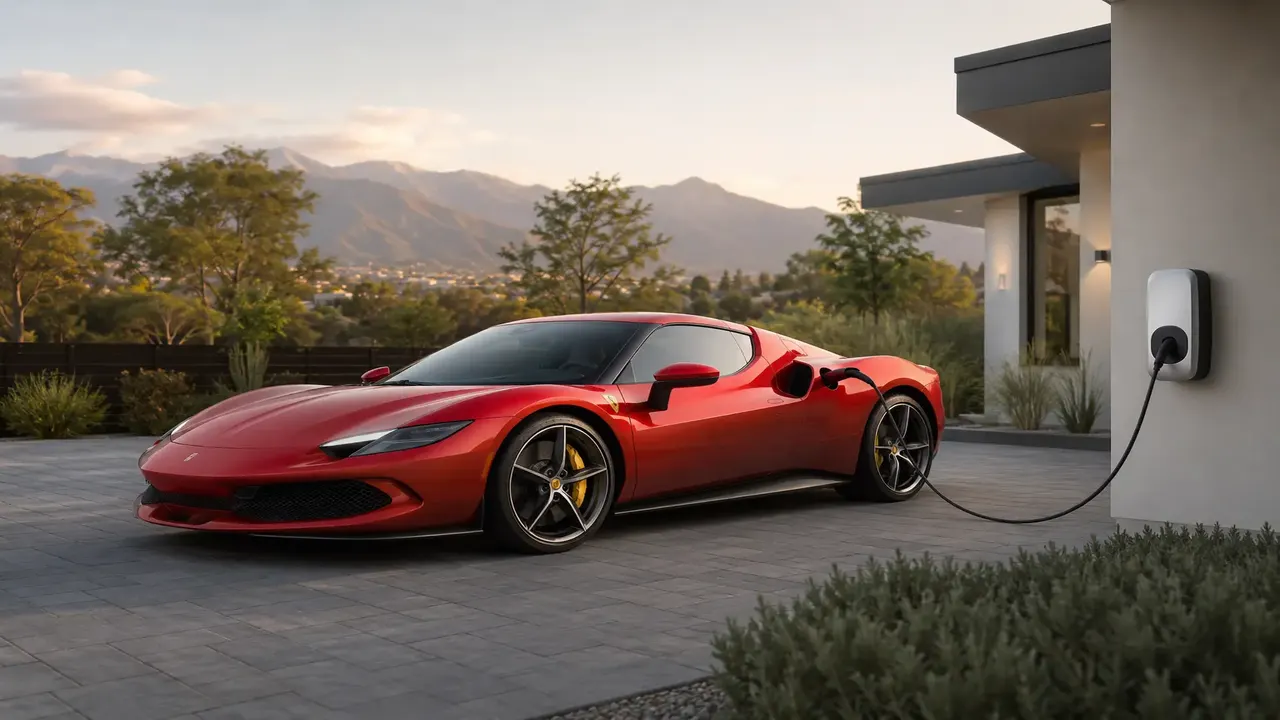
There are three types of EV charging. Level 1 uses a standard household socket (120V in the US, a 3-pin plug in the UK/India) and adds about 3-5 miles of range per hour - fine for plug-in hybrids or very low mileage. Level 2 uses a 240V supply (home wallbox, workplace, public AC) at 3.7-11 kW, adding 12-40 miles per hour - this is the everyday standard for home charging. DC fast charging (Level 3) delivers 50-350 kW directly to the battery, taking most EVs from 10% to 80% in about 20-40 minutes - built for road trips, not daily use.
The three charging levels at a glance
| Level | Voltage / power | Range added per hour | Time to useful charge | Best for |
|---|---|---|---|---|
| Level 1 | 120V AC, ~1.4 kW | ~3-5 miles | Overnight top-ups (40+ hrs full) | PHEVs, low mileage |
| Level 2 | 240V AC, 3.7-11 kW | ~12-40 miles | 4-10 hrs to full | Home, workplace, overnight |
| DC fast (Level 3) | DC, 50-350 kW | ~100-600+ miles | ~20-40 min (10-80%) | Road trips, quick top-ups |
Why charging comes in levels
Every EV charges at one of three power levels, and the difference between them is enormous - from a trickle to a torrent. Understanding the three is the foundation of EV ownership, because it tells you what to use at home, at work and on the road. The key distinction is AC versus DC: Levels 1 and 2 deliver alternating current that the car's onboard charger converts, while DC fast charging feeds direct current straight to the battery, bypassing that bottleneck.
Level 1: the standard wall socket
Level 1 is the slowest, using an ordinary household outlet - 120V in the US, a domestic 3-pin socket in the UK and India - and the cable that often comes with the car. It delivers only about 1.4 kW, adding roughly 3-5 miles of range per hour. Charging a large battery from empty can take more than a day. It needs no installation, which is its appeal, but it's really only suitable for plug-in hybrids (with their small batteries) or drivers who cover very few miles. Treat it as a trickle top-up, not a primary method.
Level 2: the everyday standard
Level 2 is where most charging happens. It uses a 240V supply - a dedicated home wallbox, a workplace charger, or a public AC point - and delivers anywhere from 3.7 kW to 11 kW depending on the equipment and the car's onboard charger. That adds 12-40 miles of range per hour, enough to refill most EVs from low to full overnight while you sleep. A home Level 2 charger, installed on a dedicated circuit, is the single biggest convenience upgrade for an EV owner: you wake up each day effectively full and rarely think about charging.
Public Level 2 chargers are common at workplaces, shopping centres, hotels and car parks, ideal for topping up while you do something else for a few hours.
DC fast charging: for the road
DC fast charging (often called Level 3 or rapid charging) is a different technology. Instead of relying on the car's onboard AC charger, it feeds direct current straight to the battery at 50 kW up to 350 kW. This is what makes long journeys practical: a modern EV typically goes from 10% to 80% in about 20-40 minutes, and the fastest, highest-voltage cars on a powerful charger can do it in under 20. It's designed for occasional use - road trips and quick top-ups - not daily charging, both because it's more expensive and because frequent high-power charging is slightly harder on the battery over time.
Why DC fast charging slows above 80%
On a fast charger, charging speed isn't constant - it peaks when the battery is fairly empty and tapers as it fills, slowing sharply above 80% to protect the cells. That's why road-trip charging usually stops at 80%: the last fifth can take as long as the first 80%. (See our charging-curve guide for the detail.)
Which level should you use?
| Situation | Use | Why |
|---|---|---|
| Charging overnight at home | Level 2 (or Level 1 for PHEV) | Refills by morning, cheapest energy |
| At work or shopping | Level 2 (public AC) | Tops up while parked |
| On a road trip | DC fast charging | Quick 10-80% to keep moving |
| A plug-in hybrid, low miles | Level 1 | Small battery fills overnight on a socket |
How connectors fit in
The charging level and the connector are separate things. In North America, NACS (the Tesla connector, SAE J3400) has become the dominant standard and carries both AC (Level 1/2) and DC (fast) through one plug; older US cars use J1772 for AC and CCS1 for DC. In Europe, the UK and India, Type 2 handles AC and CCS2 handles DC. Whatever the plug, the level - and therefore the speed - depends on the power being delivered, not just the connector shape. (See our connector-types guide.)
For most owners, the overwhelming majority of charging is slow, cheap Level 2 at home, done overnight - you simply start most days full. DC fast charging, the headline-grabbing fast stuff, is reserved for trips. If you can charge where your car sleeps, you may rarely use public fast charging at all.
Frequently asked questions
What's the difference between Level 1, Level 2 and DC fast charging?
Is Level 2 charging enough for daily use?
How fast is DC fast charging?
Can I rely on Level 1 charging only?
Does the connector type affect charging speed?
Sources & further reading
- U.S. Department of Transportation - Charger Types and Speeds
- U.S. DOE Alternative Fuels Data Center - Charging Infrastructure
Figures, prices and policy details were current at the last-updated date above. Automotive pricing, incentives and regulations change frequently — verify time-sensitive details with the linked primary sources. Read our editorial policy and fact-checking standards.