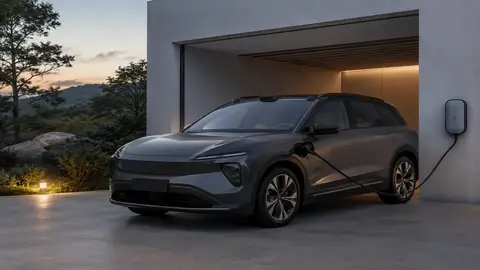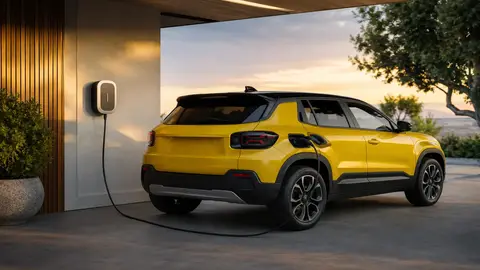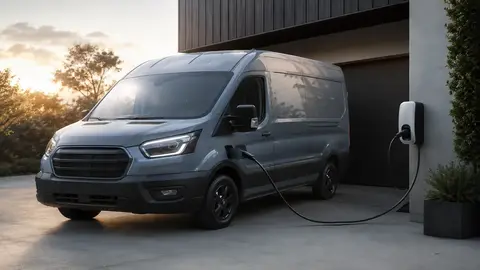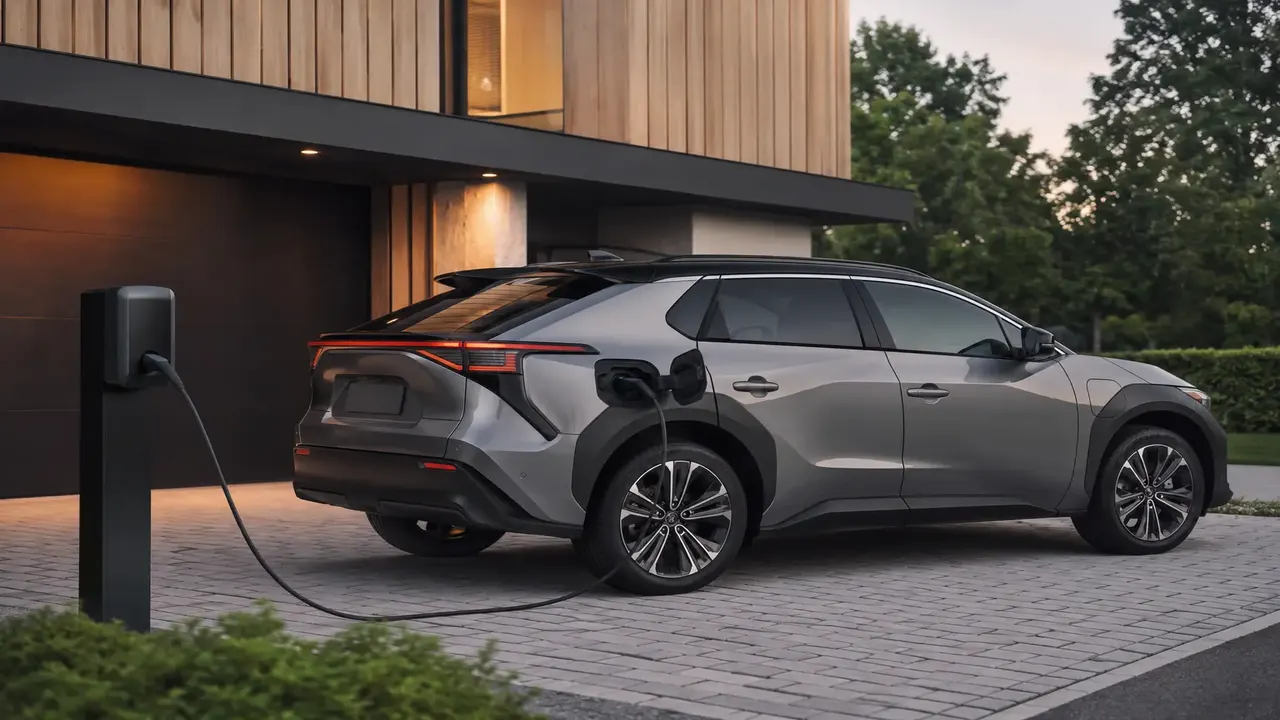
Bidirectional charging lets your EV send power out, not just take it in. There are three flavours: V2L (vehicle-to-load: plug appliances into the car), V2H (vehicle-to-home: back up your house) and V2G (vehicle-to-grid: export to the utility). In 2026 the market has moved from pilot to production: a full V2H system typically costs $4,000-$13,000 installed depending on hardware and panel work. You need a bidirectional-capable EV, a UL 9741-certified bidirectional charger or DC unit, and - for V2H - a transfer switch/gateway; V2G additionally requires a utility interconnection agreement that can take 4-12 weeks.
Bidirectional charging at a glance
| Type | What it does | Equipment needed | Typical complexity |
|---|---|---|---|
| V2L | Powers tools/appliances via an outlet | Built-in adapter (many EVs include) | Lowest - plug and go |
| V2H | Backs up your home in an outage | Bidirectional charger + transfer switch/gateway | Medium - permit + electrical work |
| V2G | Exports energy to the grid for credits | Above + utility interconnection | Highest - agreement + approvals |
The three types of bidirectional charging
All bidirectional charging means power flowing both ways through (or from) your EV, but the use cases differ sharply.
V2L - vehicle-to-load
The simplest form. Many modern EVs include a V2L adapter or built-in socket that turns the car into a large mobile battery, powering camping gear, power tools or a few appliances directly. No special home equipment is needed - it is essentially a giant power bank on wheels.
V2H - vehicle-to-home
V2H lets your EV back up your house during a power cut or shift energy to cheaper times. Because a typical EV battery (60-100+ kWh) dwarfs a home battery, even a partial charge can run essentials for a day or more. This requires a bidirectional charger plus a gateway or transfer switch that safely isolates your home from the grid while the car powers it.
V2G - vehicle-to-grid
V2G sends energy from your car back to the utility, potentially earning credits or supporting the grid at peak times. It is the most complex setup because exporting to the grid is tightly regulated: you need a utility interconnection agreement, anti-islanding compliance and approved export limits.
What you need to set it up
- A bidirectional-capable EV. Not all EVs support exporting power. Confirm your specific model supports V2H/V2G (some support V2L only). Availability is growing in 2026 but still model-dependent.
- A bidirectional charger or DC unit. DC bidirectional units (which convert power in the wall box and bypass the car's onboard charger) deliver roughly 11-25 kW at high round-trip efficiency. Look for UL 9741 certification in the US.
- A gateway / transfer switch (V2H). This isolates your home from the grid during backup so you don't back-feed power onto lines that workers may be repairing.
- A utility interconnection agreement (V2G only). Required to export, governed in the US by IEEE 1547. Applications commonly take 4-12 weeks.
- Permits and a qualified installer. Even V2H without grid export needs an electrical permit and professional installation.
What it costs in 2026
The bidirectional market crossed from pilot to production in 2026, with several hardware platforms competing. Costs vary widely with the hardware and your home's wiring:
| Component | Typical 2026 range | Notes |
|---|---|---|
| Bidirectional charger hardware | ~$3,500-$10,000 | DC units cost more than AC |
| Gateway / transfer switch | ~$1,000-$3,000 | Needed for home backup |
| Installation + permits | ~$1,500-$5,000+ | Higher with panel upgrades or long runs |
| Full installed system (V2H) | ~$4,000-$13,000 | Site-dependent |
Note that some packages bundle the charger with a home-integration kit (for example, certain truck-based systems pair the vehicle's charge unit with a home backup kit). Always get an itemised installer quote.
Is it worth it?
The case is strongest if you live somewhere with frequent outages (V2H backup), have time-of-use or export tariffs that reward exporting at peak (V2G), or already run solar and want the car as a flexible battery. The case is weakest if you have a reliable grid, flat electricity pricing and no export incentive - the payback can be long. As of early 2026, a growing number of US utilities run active V2G programs, but availability still depends heavily on where you live.
Three things make or break a bidirectional project: (1) does your exact car support V2H/V2G, not just V2L; (2) does your utility allow and reward export where you live; and (3) what will the install actually cost after any panel upgrade. Confirm all three before buying hardware.
UK and India notes
In the UK, V2G and V2H pilots and commercial offers exist (often paired with smart tariffs), but availability is still limited and tied to specific cars and chargers; rules on grid export run through your DNO. In India, bidirectional charging is at an early stage with limited consumer hardware, though V2L-capable vehicles are increasingly common. In all regions, verify compatibility and local grid-connection rules before buying.
Frequently asked questions
What's the difference between V2L, V2H and V2G?
How much does a vehicle-to-home setup cost?
Does my EV support bidirectional charging?
Do I need utility approval for bidirectional charging?
Can my EV power my house during a blackout?
Sources & further reading
- Clean Energy Reviews - Bidirectional EV Chargers Review (V2G & V2H)
- U.S. DOE Alternative Fuels Data Center - Vehicle-to-Grid
Figures, prices and policy details were current at the last-updated date above. Automotive pricing, incentives and regulations change frequently — verify time-sensitive details with the linked primary sources. Read our editorial policy and fact-checking standards.