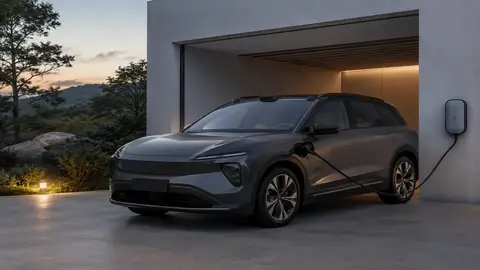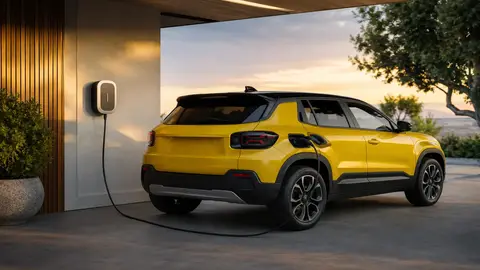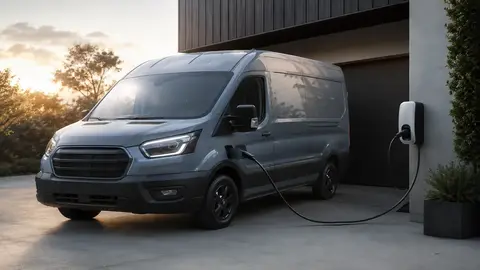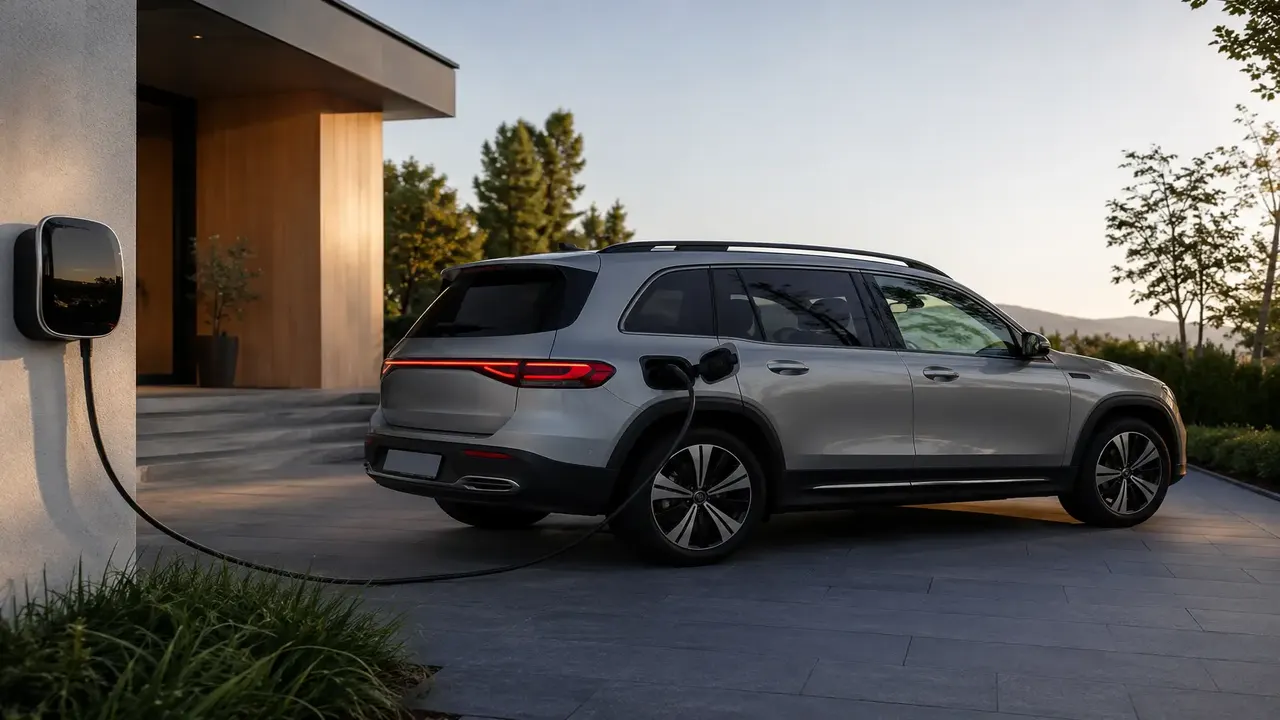
Installing a Level 2 home charger means adding a 240V circuit and mounting the charger, done by a licensed electrician. In 2026 a typical US install costs $400-$1,200 in labour on top of the charger hardware ($300-$800); if your panel needs upgrading, add $800-$3,500. Most jobs need a permit ($50-$800, often around $300) for any new circuit or hardwiring. The steps: assess your panel, choose hardwired vs plug-in, pull a permit, run the circuit, mount and connect the charger, and pass inspection. A US home-charger tax credit (30%, up to $1,000) runs until 30 June 2026.
Home charger install at a glance
| Item | Typical 2026 figure | Notes |
|---|---|---|
| Charger hardware | ~$300-$800 | Level 2, 32-48A |
| Electrician labour | ~$400-$1,200 | 2-6 hours typical |
| Permit | ~$50-$800 (often ~$300) | Required for new circuit/hardwiring |
| Panel upgrade (if needed) | ~$800-$3,500 | Only if service is at capacity |
| Total (no upgrade) | ~$700-$2,000 | Most common range |
| US tax credit | 30%, up to $1,000 | Form 8911 - ends 30 June 2026 |
What the job actually involves
A Level 2 home charger needs a dedicated 240V circuit - the same kind of supply that runs an electric oven or dryer. A licensed electrician runs that circuit from your panel to where the charger will live, installs the charger (hardwired or via a heavy-duty outlet), and the work is inspected. It's a routine job for a qualified electrician, usually completed in a few hours, but the details - panel capacity, wiring distance, permit rules - drive the cost.
Step by step
- Assess your electrical panel. An electrician checks whether your service and panel have spare capacity for a 240V, 40-60A circuit. If not, you'll need load management (often cheaper) or a panel upgrade.
- Choose the charger and amperage. Pick a 32-48A Level 2 unit and the right connector for your car (NACS or J1772 in the US; Type 2 elsewhere). See our buyer's guide.
- Decide hardwired vs plug-in. Hardwired allows up to 48A and often avoids a costly GFCI breaker; plug-in (NEMA 14-50) is portable but capped near 40A.
- Pull a permit. Any new circuit or hardwired install generally requires an electrical permit from your local authority.
- Run the circuit and mount the charger. The electrician installs the breaker, runs the cable, mounts the unit and connects it.
- Pass inspection. An inspector verifies the work meets code before the charger is signed off for use.
What it costs
For a straightforward install where your panel has spare capacity and the charger is near it, expect total costs (hardware plus labour) in the rough range of $700-$2,000. The big variables that push it higher are distance from the panel (more cable and labour), a panel or service upgrade, and local permit fees. A short run into an attached garage near the panel is the cheap end; a long underground run to a detached garage with a panel upgrade is the expensive end.
| Cost driver | Adds roughly | Why |
|---|---|---|
| Long wiring run | $200-$1,000+ | More cable, conduit and labour |
| Panel / service upgrade | $800-$3,500 | If service is at capacity |
| GFCI breaker (plug-in) | $200-$400 | Required for many NEMA outlets |
| Permit & inspection | $50-$800 | Varies by jurisdiction |
| Trenching to detached garage | $1,000+ | Underground run |
Hardwired vs plug-in: which to choose
Both are valid; the trade-offs:
- Hardwired: delivers up to 48A for faster charging, often skips the pricey GFCI breaker that NEMA outlets need, and looks cleaner. The charger is fixed in place.
- Plug-in (NEMA 14-50): lets you unplug and take the charger with you or swap units easily, and is convenient if you might move. It's capped around 40A and frequent unplugging can wear the outlet, plus many jurisdictions require a GFCI breaker that adds cost.
Choose hardwired for maximum speed and a permanent install; plug-in for flexibility.
Permits and inspection
Most jurisdictions require an electrical permit to add a new EV charging circuit or to hardwire a charger - typically $50-$800, often around $300. You generally don't need a permit only if you're plugging a portable charger into an existing, adequate outlet without any new wiring. Don't skip the permit: unpermitted electrical work can void insurance, fail at home sale, and risks an unsafe install. A licensed electrician handles the permit and inspection as part of the job.
The federal Alternative Fuel Refueling Property credit (Form 8911) returns 30% of qualifying home-charger hardware and installation cost, up to $1,000, but is scheduled to end on 30 June 2026 under the One Big Beautiful Bill Act - confirm current eligibility and your census-tract qualification before relying on it. Note that the separate $7,500 new and $4,000 used EV purchase credits already ended on 30 September 2025. Many utilities also offer rebates; check your provider.
UK and India notes
In the UK, home chargers must be installed by a qualified, often manufacturer-approved installer to meet wiring regulations, and smart-charging requirements apply; grant support exists for certain renters and flat-owners rather than most homeowners. In India, installation should be done by a licensed electrician sized to your sanctioned load, and a load-limiting or scheduled charger is often wise to avoid overloading the connection. In all regions, use a qualified professional and confirm local electrical rules before installing.
Frequently asked questions
How much does it cost to install a home EV charger?
Do I need a permit to install an EV charger?
Can I install a home EV charger myself?
Should I get a hardwired or plug-in charger?
Is there still a tax credit for home EV chargers?
Sources & further reading
- Qmerit - Understanding Level 2 EV Charger Installation Costs
- U.S. DOE Alternative Fuels Data Center - Permitting Processes for EV Charging
Figures, prices and policy details were current at the last-updated date above. Automotive pricing, incentives and regulations change frequently — verify time-sensitive details with the linked primary sources. Read our editorial policy and fact-checking standards.