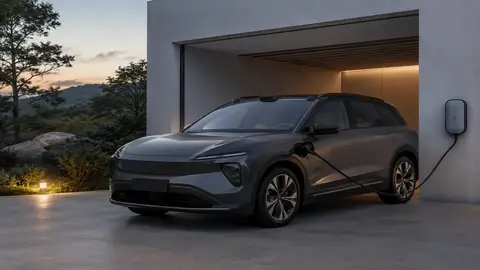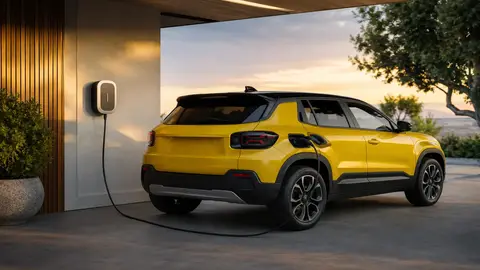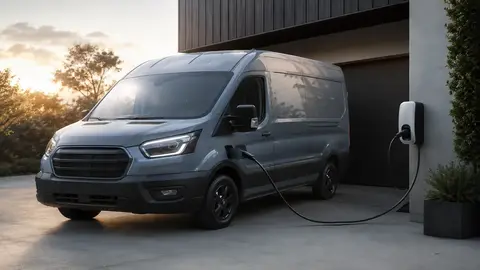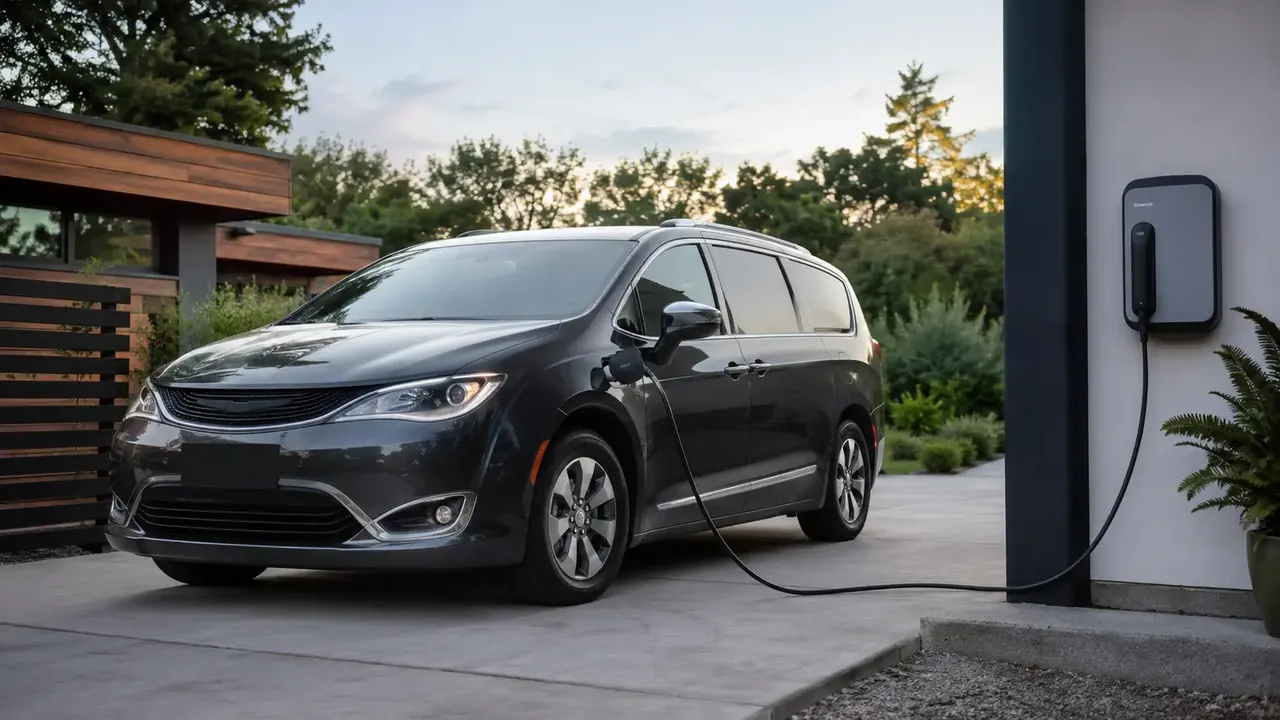
To offset a typical EV's charging, you need roughly 6-10 extra solar panels (about 3 kW of additional capacity) on top of your household array - a rule of thumb is about 1 kW of solar per 4,000 EV miles driven per year. An average EV uses 3,000-4,500 kWh a year. In most grid-tied homes, your panels feed the grid by day (earning net-metering credits) and the EV charges from the grid at night, balancing out over a month. A solar-aware smart charger can instead charge the car directly from surplus solar. Pairing solar with home charging can push your effective fuel cost close to zero.
Solar + EV charging at a glance
| Question | Typical answer | Notes |
|---|---|---|
| Panels to offset an EV | ~6-10 (=3 kW) | On top of household use |
| Sizing rule | ~1 kW solar per 4,000 EV miles/yr | Scales with mileage |
| EV energy use | ~3,000-4,500 kWh/year | At ~12,000 miles/year |
| How charging works | Grid-tied net metering, or direct solar | Depends on setup & tariff |
| Best charger feature | Solar-aware (surplus) charging | Charges only on excess solar |
How much solar does an EV need?
An EV is a big new electrical load, so charging it from solar means adding capacity. The numbers are very manageable: an average EV driven about 12,000 miles a year uses roughly 3,000-4,500 kWh, and offsetting that takes around 6-10 additional panels - about 3 kW of extra solar - on top of whatever covers your household electricity. A simple sizing rule is roughly 1 kW of solar for every 4,000 EV miles you drive annually, so a low-mileage driver needs fewer panels and a high-mileage one needs more.
Vehicle efficiency matters too: an efficient compact EV might be fully offset by 6 panels, a mid-size SUV by 7, and a large truck-style EV by 9 or more. If you already have solar, you may just need to add a few modules rather than design a system from scratch.
How solar EV charging actually works
There are two common models, and most homes use the first:
Grid-tied with net metering
In a standard grid-tied setup, your panels generate during the day - often while the car is away - and export surplus to the grid, earning net-metering credits. At night, the EV charges from the grid, and over a billing period the exported credits offset the imported energy. You don't need the sun to be shining while the car is plugged in; the accounting balances out monthly. This is the simplest approach and works well wherever net metering is favourable.
Direct solar (surplus) charging
Alternatively, a solar-aware smart charger reads your home's real-time solar production and consumption (via current sensors on your panel) and charges the car only with surplus power that would otherwise be exported. This maximises self-consumption - valuable where net-metering rates are poor or export is unrewarded - and lets you genuinely 'drive on sunshine' during daylight hours. It works best if the car is home during the day, or paired with a home battery.
Adding a home battery
A home battery stores daytime solar for evening EV charging, which is useful if your car is away during peak sun or if your tariff penalises grid import at night. It adds cost and isn't essential - many owners do fine with net metering or daytime charging - but it increases how much of your driving is genuinely solar-powered and adds backup capability. Bidirectional (V2H) setups can even let the car itself act as that battery.
Is it worth it?
The case for solar-plus-EV is strongest when:
- You drive enough miles that EV charging is a meaningful share of your electricity use.
- Your electricity is expensive, so each solar kWh you self-generate saves more.
- You have good roof space and sun, and favourable net-metering or export terms.
- You can charge during the day or add a battery to shift solar to evening charging.
Together, home charging and solar can drive your effective per-mile fuel cost close to zero after the system pays back. The payback period depends on local electricity prices, solar costs and incentives, so model your own numbers.
Practical setup tips
- Size the array for your household plus your EV mileage - add roughly 3 kW for an average driver.
- Choose a solar-aware smart charger if you want to charge directly from surplus solar.
- Schedule charging for peak solar hours if the car is home during the day.
- Check your net-metering or export terms - they strongly affect the best charging strategy.
- Consider a home battery only if your usage pattern or tariff justifies the added cost.
The federal residential solar tax credit landscape changed under 2025 legislation - the 30% residential clean-energy credit for homeowner-owned solar was cut short, so confirm current federal, state and utility solar incentives before sizing a system. The separate home-charger credit (Form 8911) is scheduled to end 30 June 2026, and the $7,500/$4,000 EV purchase credits ended 30 September 2025. Always verify current incentives locally.
UK and India notes
In the UK, home solar paired with an EV works well on smart tariffs; the Smart Export Guarantee pays for exported solar, and solar-aware chargers help you self-consume more. In India, abundant sunshine makes solar-plus-EV compelling, and rooftop-solar subsidy schemes plus low electricity costs strengthen the case, though net-metering rules vary by state. In all regions, check local net-metering, export rates and incentives before sizing your system.
Frequently asked questions
How many solar panels do I need to charge an EV?
Can I charge my EV directly from solar panels?
Do I need a home battery to charge my EV with solar?
Is solar worth it for EV charging?
How much electricity does an EV use per year?
Sources & further reading
- EnergySage - How Many Solar Panels Do You Need to Charge an EV?
- SolarReviews - How much solar do I need to charge my electric car?
Figures, prices and policy details were current at the last-updated date above. Automotive pricing, incentives and regulations change frequently — verify time-sensitive details with the linked primary sources. Read our editorial policy and fact-checking standards.