Note: costs mentioned below are given in US dollars as a general point of reference — actual prices vary by country, currency, and local market.
Answer the charging question before the budget question. With reliable home or workplace charging, a shorter-range EV (roughly 150–220 miles) is comfortable, and the money saved on battery capacity is real. Relying on public charging only, you want more range — commonly 250 miles or more — simply to charge less often. Work out any incentive you actually qualify for first and apply it to your budget before you filter, not after. In the US the federal clean vehicle credit ended for vehicles purchased after 30 September 2025, so what remains is state and utility programmes, which are smaller and vary a great deal by location.
At a glance
| Charging access | Recommended minimum range | Why |
|---|---|---|
| Home Level 2 charger | 150-220+ miles | Charges overnight; range anxiety matters less |
| Workplace charging only | 200-250 miles | Covers commute plus errands between charges |
| Public charging only | 250-300+ miles | Fewer, longer charging sessions needed |
Why charging access matters more than sticker price
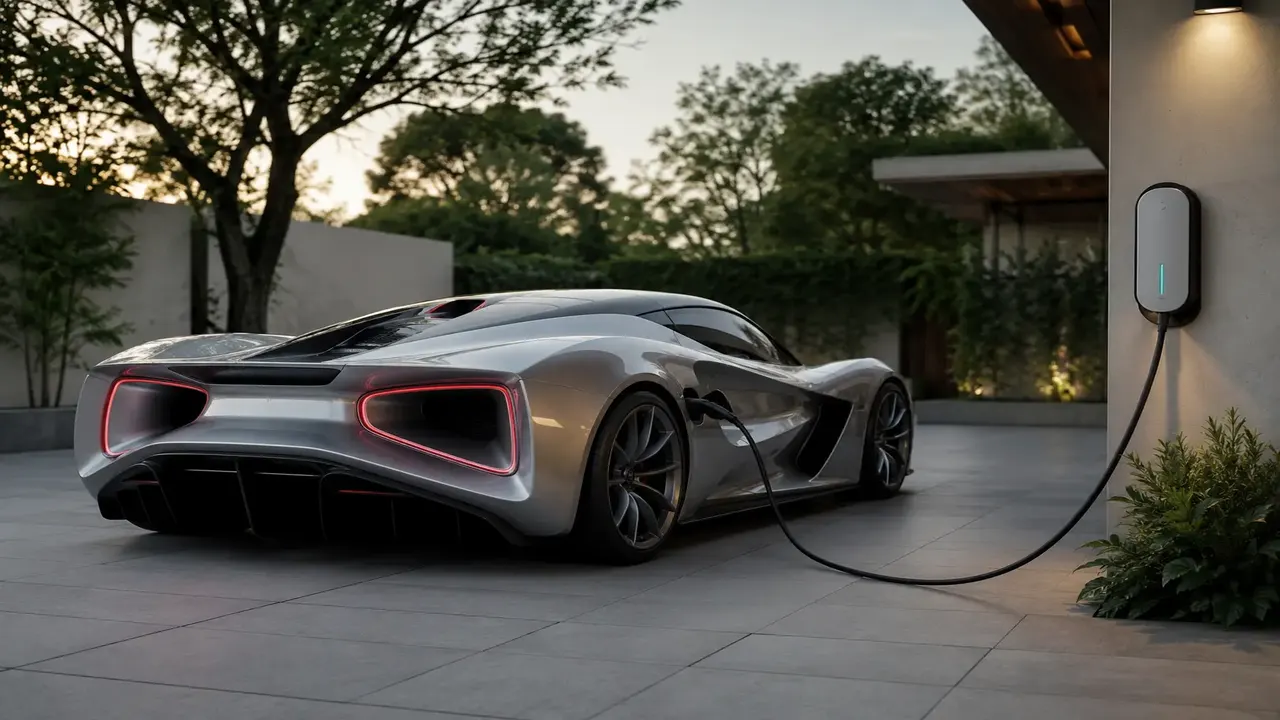
Two buyers with an identical $40,000 budget can need completely different EVs. A driver who can install a home Level 2 charger effectively refuels every night and rarely needs more than 200 miles of range. A driver relying on public DC fast chargers wants more range and faster charging speed to reduce how often they're waiting at a charger. That is why charging access belongs at the front of the decision rather than the back: it changes which vehicles actually work day to day, not merely which ones you can afford.
Work out your incentives before you set the budget
Check for applicable incentives before you filter by price. The US federal clean vehicle credit ended for vehicles purchased after 30 September 2025, so for American shoppers today that mostly means state-level rebates or utility incentives where they exist, which tend to be smaller and vary a lot by location. Because eligibility rules change and differ by state, treat any figure you find as a range rather than a guaranteed number, and always recommends confirming eligibility on the state program's current listing before assuming a specific credit applies.
Range and charging speed tradeoffs
Battery size vs. price
Bigger battery packs cost more and add weight, so range and price move together — a 250-mile compact EV typically costs several thousand dollars more than a 150-mile version of the same model. Whether that premium is worth paying comes straight back to your charging access: it buys convenience you may not need.
Charging speed
Public-charging-focused buyers are also weighted toward vehicles with faster DC fast-charging peak rates (commonly 100-250 kW on newer models), since that determines whether a fast-charge stop takes 20 minutes or 45.
Worked example
A buyer with a $38,000 budget and no home charger, relying on public and workplace charging. With no federal credit available, the question is whether a state or utility incentive applies where they live — if none does, the effective budget stays at $38,000; where a rebate applies, the effective budget rises accordingly. The shortlist should then be longer-range compact and midsize EVs with strong fast-charging speeds, setting aside shorter-range models that would otherwise fit the raw budget.
The federal EV tax credit ended for vehicles purchased after September 30, 2025. Remaining incentives are state, utility or manufacturer programs, which are revised periodically and vary by location. Always verify current eligibility directly through your state energy office or utility before finalizing a purchase decision. Federal and state EV incentive rules are revised periodically and depend on income, vehicle price caps and manufacturing location. Always verify current eligibility directly through the IRS or your state energy office before finalizing a purchase decision.
Common mistakes when shopping for an EV without a charging plan
- Buying based on advertised range without factoring winter cold-weather range loss (commonly 10-30%)
- Assuming a public charging network near home now will still be reliable and available in a year
- Underestimating home electrical upgrade costs needed for a Level 2 charger install
- Ignoring charging speed and only comparing battery size
Frequently asked questions
How much does home charging access change which EV I should buy?
Will I qualify for a tax credit?
How much range do I actually lose in cold weather?
Is a plug-in hybrid a better fit than a full EV for public-charging-only buyers?
Does workplace charging count the same as home charging?
Sources & further reading
- U.S. Department of Energy — Alternative Fuels Data Center, EV Charging
- Internal Revenue Service — Clean Vehicle Credit
- U.S. Department of Energy — Fuel Economy Guide, Electric Vehicles
Figures, prices and policy details were current at the last-updated date above. Automotive pricing, incentives and regulations change frequently — verify time-sensitive details with the linked primary sources. Read our editorial policy and fact-checking standards.