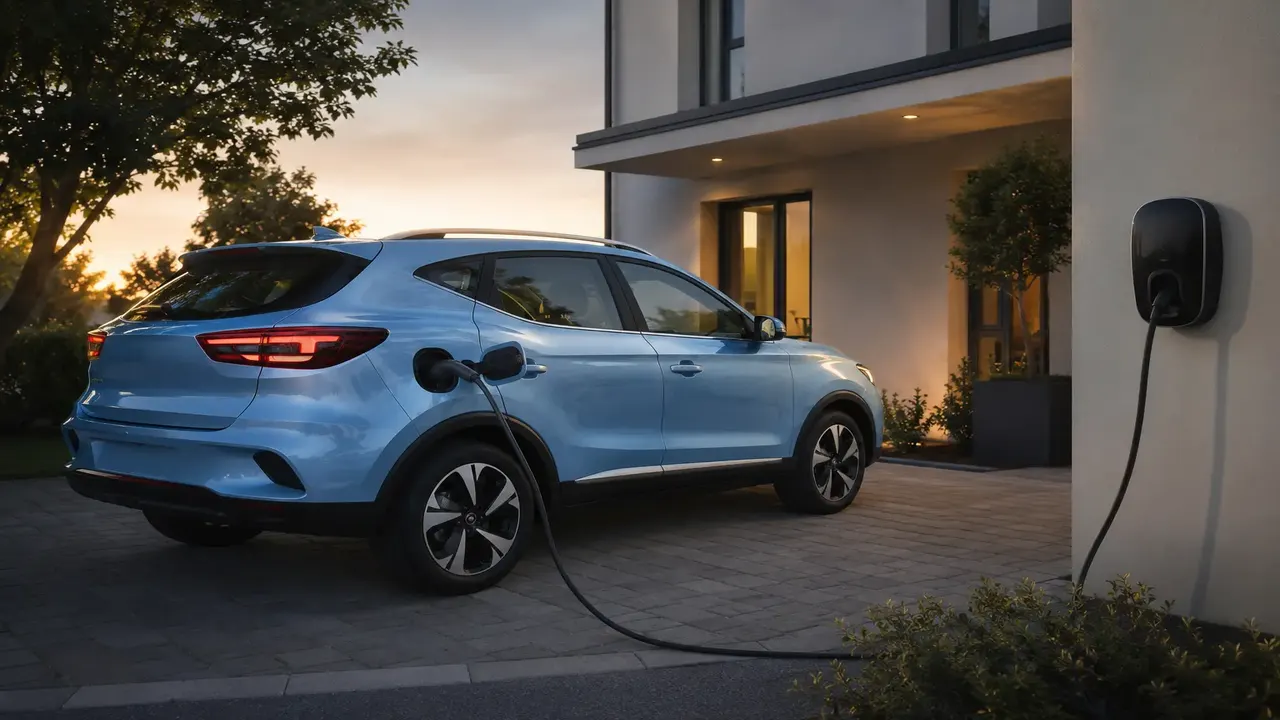
The UK had roughly 80,000+ public charging devices installed as of early 2026, according to government and Zap-Map tracking, up from around 73,000 a year earlier — growth of roughly 10-15% year on year. Rapid and ultra-rapid chargers (50kW+) make up a growing share of new installations, concentrated on motorway corridors, while local on-street charging in cities remains the weakest link for drivers without home driveways.
At a glance
| Metric | Early 2026 |
|---|---|
| UK public charging devices | ~80,000+ |
| Year-on-year growth | ~10-15% |
| ZEV mandate 2026 target (new car sales) | Rising annual zero-emission sales percentage |
| Weakest infrastructure link | On-street/urban charging for non-driveway households |
The headline numbers
The UK Department for Transport publishes quarterly electric vehicle charging infrastructure statistics, and the trend through 2025 into 2026 has been consistent growth — the public charging device count crossed roughly 80,000 in early 2026, continuing several years of double-digit annual growth. Rapid and ultra-rapid chargers, which matter most for road trips and drivers without home charging, have grown as a share of the total, concentrated on motorway service areas and A-road corridors.
Why the rollout matters right now
The UK's Zero Emission Vehicle (ZEV) mandate requires manufacturers to sell a rising percentage of zero-emission vehicles each year, climbing toward a 2030 phase-out point for new pure petrol and diesel car sales. That mandate puts pressure on charging infrastructure to keep pace with a growing EV parc, particularly for the roughly a third of UK households without off-street parking who can't rely on home charging.
What's working
- Motorway corridor coverage: rapid charging hubs on major routes have expanded significantly, easing long-distance travel anxiety.
- Private investment: charge point operators have continued investing despite broader economic pressures, betting on long-term EV parc growth.
- Government-local authority funding schemes: programs supporting on-street charging installation in council areas have picked up pace, though unevenly across regions.
What's lagging
On-street residential charging remains the clearest gap. Installing chargers on public streets for households without driveways involves local council planning, pavement/kerb work, and grid connection points — all slower and more logistically complex than a single-site motorway hub. Regional disparity is also notable: London and the South East have denser charging coverage than parts of Wales, Scotland, and Northern England relative to EV registrations there.
| Charger type | Role in the network |
|---|---|
| Slow/fast (up to 22kW) | Home, workplace, on-street — most common but not road-trip relevant |
| Rapid (50kW+) | Top-up charging on longer local journeys |
| Ultra-rapid (150kW+) | Motorway corridor stops for fastest top-ups |
Charger count statistics don't capture reliability or how many chargers are usable at once at a given site. A rising device count is a good macro signal but doesn't guarantee a working charger will be available when you need one.
Frequently asked questions
How many EV charging points are there in the UK in 2026?
Is the UK charging network growing fast enough?
What is the UK's ZEV mandate?
Where is UK EV charging weakest?
Are rapid chargers increasing in the UK?
Sources & further reading
- GOV.UK — Electric vehicle public charging infrastructure statistics
- Zap-Map — UK charging point statistics
Figures, prices and policy details were current at the last-updated date above. Automotive pricing, incentives and regulations change frequently — verify time-sensitive details with the linked primary sources. Read our editorial policy and fact-checking standards.