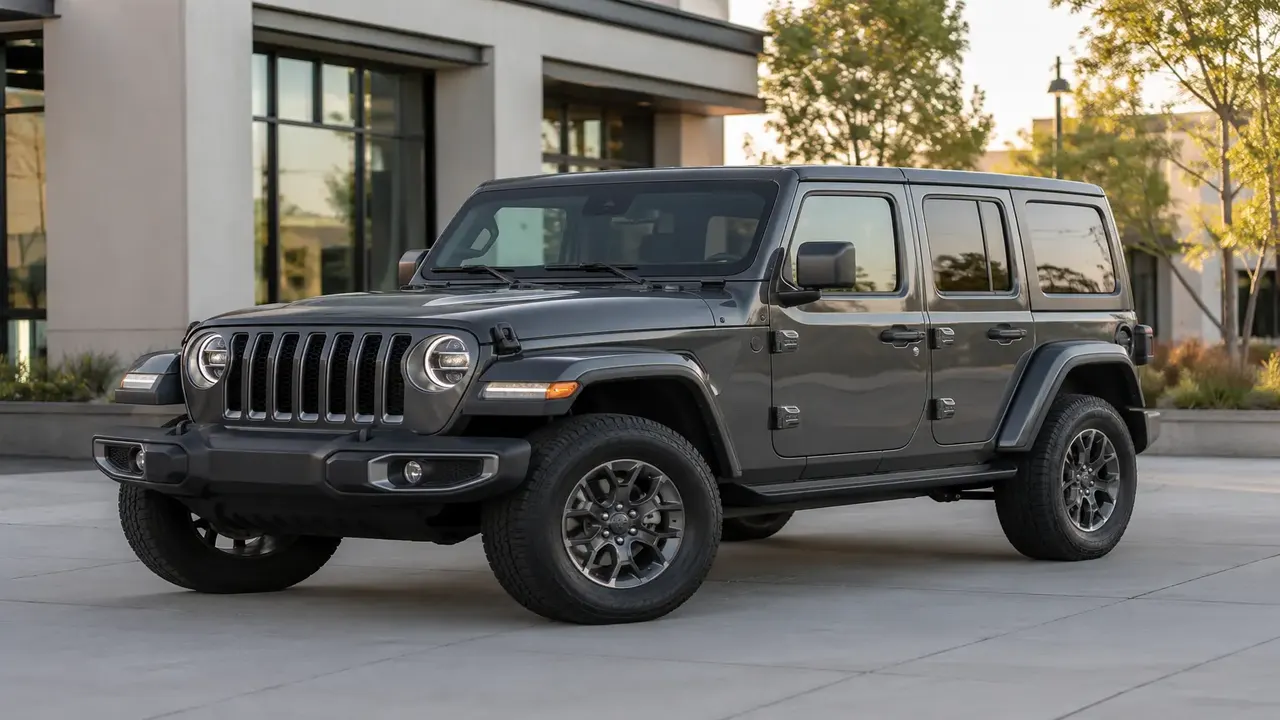
The Wrangler and Bronco both offer removable doors/roofs, solid-axle (or near-solid) off-road capability, and body-on-frame toughness, but they solve the same problem differently. Wrangler leans on decades of Jeep Trail Rated pedigree, a simpler part-time 4x4 system on base trims, and the widest AWD/off-road accessory ecosystem in the industry. Bronco counters with a more modern independent front suspension on most trims (better on-road ride), a 7-speed manual option, and class-leading crawl ratios on Raptor/Badlands trims. Fuel economy is mediocre on both (roughly 18-22 mpg combined for 4-cylinder versions), and both start in the mid-$30,000s before options push well past $60,000 on loaded trims.
At a glance
| Factor | Jeep Wrangler | Ford Bronco |
|---|---|---|
| Body style | 2-door / 4-door (Unlimited) | 2-door / 4-door |
| Front suspension | Solid axle (all trims) | Independent (most trims); solid axle on Bronco Raptor is not offered — IFS throughout |
| Typical starting price (US) | Low-to-mid $30,000s | Mid $30,000s |
| Roof/door options | Removable soft or hard top, removable doors | Removable roof panels, removable doors |
| Off-road party trick | Rubicon: locking diffs, disconnecting sway bar | Raptor/Badlands: locking diffs, wider track, more suspension travel |
| On-road ride/handling | Traditional solid-axle firmness and steering feel | Generally more composed on pavement |
Where the two actually differ
Both trucks trace their identity to 1960s-70s off-road icons, and both were reintroduced (Bronco in 2021, after a 25-year gap) specifically to compete with each other. The core mechanical difference is the front suspension: Wrangler keeps a solid front axle across its lineup, which is prized by rock-crawling purists for articulation and durability, while Bronco uses independent front suspension on every trim, which generally rides and steers more like a modern SUV on pavement at some cost to ultimate low-speed articulation.
Off-road capability
Top trims from both brands (Wrangler Rubicon, Bronco Badlands/Raptor) offer front and rear locking differentials, disconnecting sway bars or equivalent, and aggressive approach/departure angles in the 40s of degrees. Bronco's Sasquatch package and Raptor trim push wider tracks and long-travel suspension aimed more at high-speed desert running; Wrangler Rubicon leans toward low-speed rock crawling with a lower crawl ratio. Neither is the 'wrong' choice for most trail driving — the difference shows up mainly at the extremes (desert whoops vs. technical rock ledges).
Everyday livability
Bronco's independent front suspension typically makes it feel less bouncy and more planted on highways and broken pavement, which matters if the vehicle is also a daily driver. Wrangler's solid axle contributes to a more traditional, sometimes floatier on-road feel, particularly at higher speeds, but it's a known quantity with a huge aftermarket for lift kits, armor, and tires.
Powertrains and running costs
Both offer four-cylinder turbo engines as the volume choice, with V6 or turbocharged six-cylinder options higher in the range, and both have offered a plug-in hybrid variant (Wrangler 4xe) at various points — check current-year availability before assuming a specific trim exists. Combined fuel economy for four-cylinder versions typically lands in the 18-22 mpg band; V6/performance trims and the largest tires drop that further. Insurance and maintenance costs run slightly above compact-SUV averages for both because of their specialty body-on-frame construction and off-road parts.
Resale value and ownership
Wrangler has one of the strongest resale records in the US market thanks to instant brand recognition and a huge base of buyers who specifically want a Jeep. Bronco has held value well since its relaunch too, partly because early demand outstripped supply, but it has a shorter track record to judge long-term depreciation against. Both are known for a firm, sometimes noisy ride and wind noise around removable roof seals — normal for the segment, not a defect.
Who should choose which
Choose Wrangler if brand history, the biggest customization/accessory ecosystem, and proven low-speed rock-crawling geometry matter most. Choose Bronco if you want a more composed daily-driving feel, a manual transmission option higher in the range, and modern tech (larger standard touchscreens, driver-assist features) without sacrificing serious trail hardware on the top trims.
Frequently asked questions
Is the Ford Bronco as capable off-road as the Jeep Wrangler?
Which gets better fuel economy, Wrangler or Bronco?
Does the Bronco have a solid front axle like the Wrangler?
Which holds its resale value better?
Can I get a manual transmission in either?
Sources & further reading
Figures, prices and policy details were current at the last-updated date above. Automotive pricing, incentives and regulations change frequently — verify time-sensitive details with the linked primary sources. Read our editorial policy and fact-checking standards.