First, the rule that doesn't exist
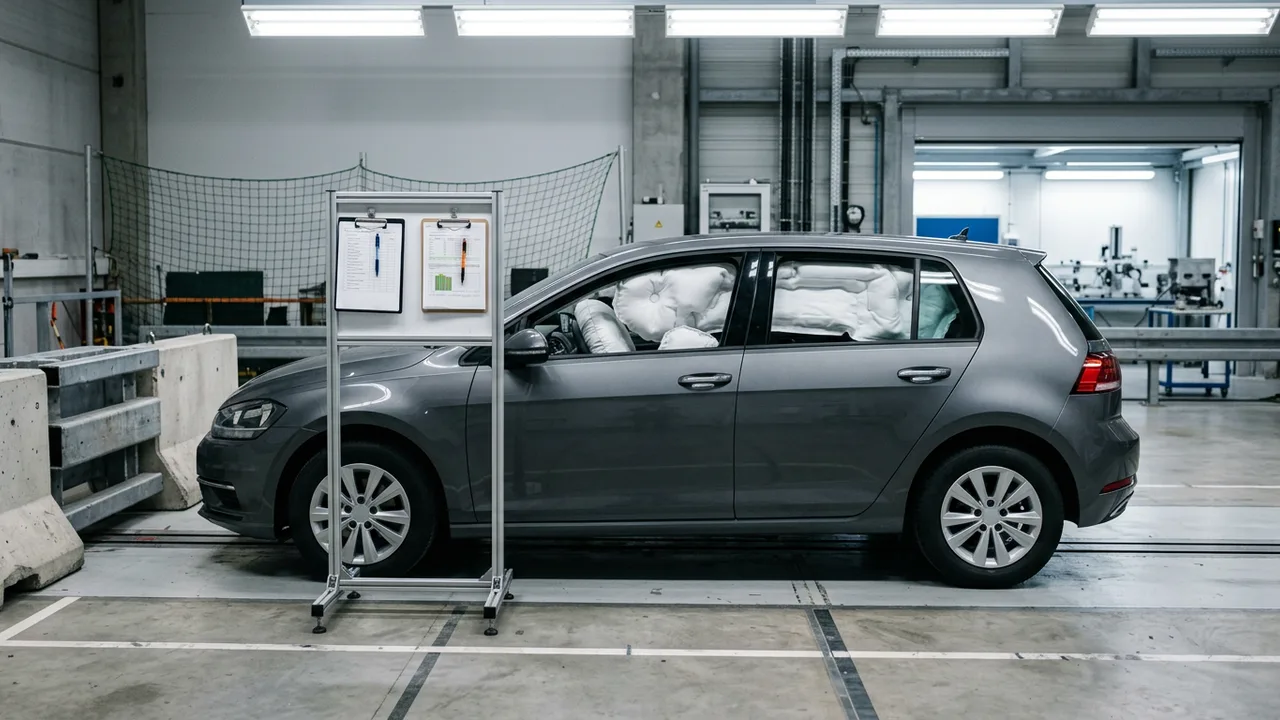
One of India's breakout car searches this week — "6 airbag CNG cars" — rests on a common misunderstanding worth correcting immediately: there is no mandatory six-airbag rule in India. The proposal originally floated for October 2022 was deferred and ultimately dropped; the transport minister explicitly said a mandate is unnecessary because Bharat NCAP's protocols effectively demand six airbags for a 4- or 5-star rating.
That's the real story: regulation by star rating rather than statute. Manufacturers chasing BNCAP stars have made six airbags near-universal in new launches — and the change has finally reached the CNG segment, which safety kit historically skipped.
The 2026 six-airbag CNG honour roll
Maruti Suzuki moved first at scale: through 2025 it standardised six airbags across its entire range in stages — CNG variants included. The Arena models (WagonR, Alto K10, Celerio, Eeco) were announced in May 2025, with Ertiga, Baleno and XL6 following in July 2025. A WagonR CNG with six airbags would have been unthinkable three years ago; it's now the default.
Hyundai's Exter Hy-CNG Duo brings six standard airbags to its dual-cylinder CNG setup — the boot-preserving twin-tank design paired with the 1.2-litre four-cylinder.
Tata's Nexon iCNG — India's only factory turbo-CNG car, with 98 bhp and 170 Nm on gas — carries the Nexon's six-airbag equipment, and the new Camo Edition extends that to the special-edition crowd. The Maruti Brezza CNG (from about ₹9.17 lakh) covers the larger-SUV end of the list.
How to shop this properly
Three checks matter more than the airbag count alone. First, verify the specific variant — six airbags being "offered" in a range doesn't mean every trim has them; base variants sometimes carry fewer. Second, look for ESC and seatbelt reminders alongside — airbags mitigate crashes; stability control prevents them. Third, for CNG specifically, prefer factory-fitted systems over retrofits: the crash engineering, tank placement and warranty coverage are categorically different.
The happy conclusion: the choice between running-cost economics and crash protection — the CNG buyer's historic dilemma — has largely dissolved. You no longer have to pick.
The questions buyers actually ask
Will six airbags become law later? Nothing is tabled. BNCAP market pressure is doing the work; a future mandate would mostly formalise the status quo.
Do CNG tanks change airbag behaviour? Factory systems are crash-tested as installed — another reason to avoid aftermarket kits on a car you care about.
Cheapest six-airbag CNG car? Among majors, Maruti's small Arena CNG models (Alto K10, Celerio, WagonR) hold the entry point — verify the current variant sheet at booking.
Key takeaways
- No six-airbag mandate exists — the minister confirmed BNCAP pressure replaces it
- Maruti standardised 6 airbags range-wide (CNG included) through 2025
- Hyundai Exter Hy-CNG Duo, Tata Nexon iCNG and Brezza CNG lead the rest
- Check variant-level kit, insist on ESC, and prefer factory CNG over retrofit
- The economy-vs-safety trade-off in CNG cars is effectively over
Sources & further reading
- Autocar India (minister's statement)
- Maruti Suzuki press releases (May/July 2025)
- CarWale and Motomotar segment coverage, 2026
Figures, prices and policy details were current at the last-updated date above. Automotive pricing, incentives and regulations change frequently — verify time-sensitive details with the linked primary sources. Read our editorial policy and fact-checking standards.