🏆 BUYER-SITUATION GUIDE. General principles. Follow the Highway Code and any applicable regulations on carrying animals.
⚠️ The warning that matters most
Before anything about cars: never leave a dog in a parked vehicle in warm weather.
A car's interior heats far faster than people expect, and it does so even in conditions that feel mild outside, even with windows cracked, and even in shade.
This is the single most important thing in this guide, and it's more consequential than any specification below.
If you cannot take the dog with you, don't take the dog.
⭐ What actually matters in a car
1. A flat, low, square boot floor.
This is the specification that matters most, and quoted litres tell you almost nothing about it.
As our boot-measurement testing argued, shape, aperture and load-lip height determine usability far more than volume.
⭐ For a dog specifically: a low load lip is the crucial one. An older or larger dog jumping into a high boot is doing it thousands of times — and a high lip is genuinely hard on joints.
Check whether the floor is flat with the seats up, and whether there's a step.
2. Boot aperture height and width.
⚠️ Coupe-SUVs suffer badly here. As our reviews noted, the sloping roofline restricts both aperture height and usable space — and with a large dog that's a daily problem.
3. Secure anchor points for a harness or crate fixing.
4. Rear ventilation reaching the boot. Air conditioning that cools the cabin but not the load area is a genuine problem in summer.
5. Wipe-clean surfaces, and a boot you can actually clean.
⭐ Carrying a dog safely
An unrestrained dog is a hazard to itself and to everyone in the car — in a crash, an unrestrained animal becomes a projectile.
⚠️ And the Highway Code requires dogs to be suitably restrained so they cannot distract the driver or injure anyone if you stop quickly.
The options:
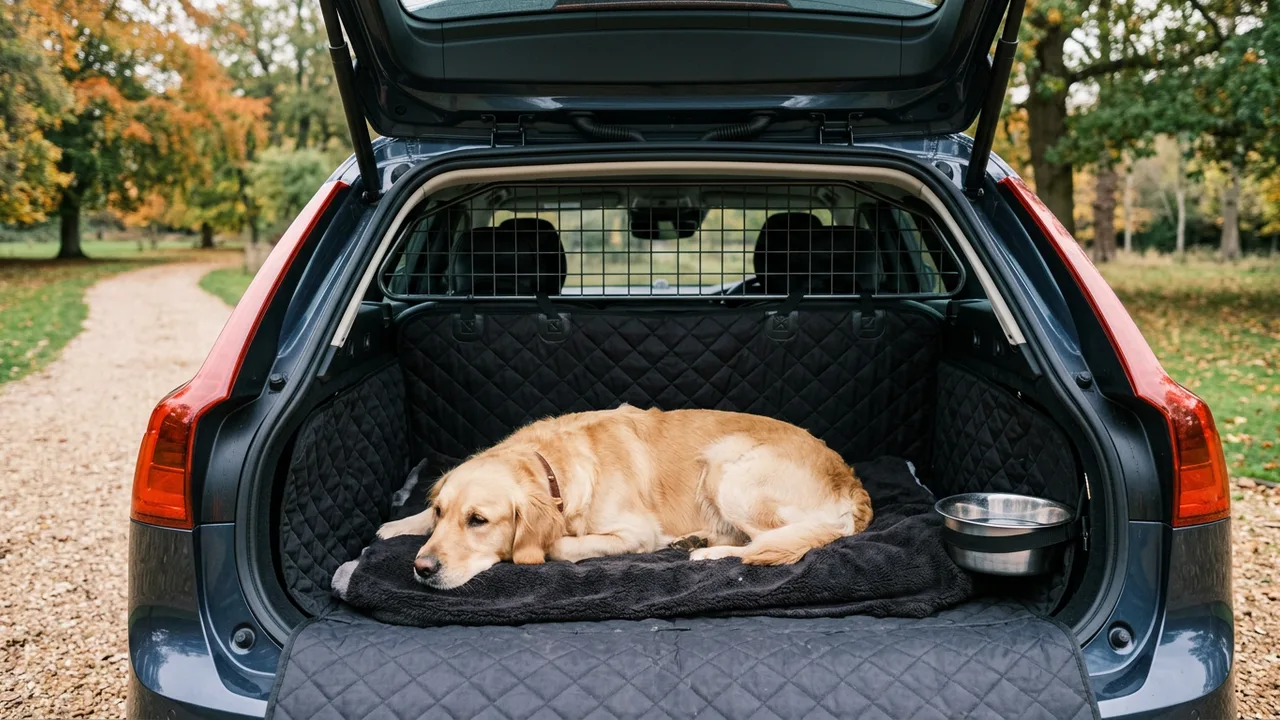
A crash-tested crate secured properly. Generally regarded as the safest option, and it also protects the interior.
A boot guard or dog guard, which prevents the dog entering the cabin.
A properly fitted harness attached to a seat belt anchor — specifically a crash-tested one, not a walking harness with a clip.
⚠️ Note: not all products sold for this purpose are crash-tested. Look for products that have been.
The practical additions
A boot liner — protects the surface and makes cleaning straightforward.
A ramp, for older dogs or high boots. Genuinely valuable, and increasingly common.
Window shades, for parked-in-shade situations and reducing heat build-up while driving.
A spare towel and water, always.
⭐ Which cars suit
From our testing, the relevant qualities are shape rather than badge:
Estates and MPVs generally beat SUVs for this specific job — a low, long, square load area is exactly what a dog needs, and estates deliver it better than a raised body with a sloping tailgate.
As our sedan and MPV coverage argued, these body styles are undervalued because of fashion — which makes them good value used, per our used-car column.
Among vehicles we've tested:
Dacia Duster (8.5/10) — winner of our budget SUV comparison on genuine capability, with the honest ruggedness that suits muddy dogs and rough tracks. Hard-wearing materials rather than delicate trim.
Ford Puma (8.5/10) — ⭐ the MegaBox is genuinely relevant here: a deep, drained, cleanable under-floor well. You can hose it out, which for a wet dog is a real advantage — and exactly the kind of feature quoted litres miss.
Kia Sportage (8.5/10) — class-leading space among Britain's best-sellers, with a 7-year warranty that helps if the interior takes punishment.
⚠️ Avoid coupe-SUVs if you carry a large dog — the aperture and headroom compromises are daily costs.
⚠️ What we haven't tested
Several estates and MPVs that would be genuinely excellent for this purpose aren't here because we haven't driven them — and for dog owners specifically, the estate segment deserves more attention than our coverage has given it.
The bottom line
⚠️ Never leave a dog in a parked car in warm weather. That matters more than everything else on this page.
⭐ Prioritise a flat, low, square boot floor with a low load lip — it's what your dog uses thousands of times, and quoted litres tell you nothing about it.
Restrain the dog properly, with a crash-tested crate, guard or harness — and check that the product actually is crash-tested, because many aren't.
Check that rear ventilation reaches the load area.
And consider an estate rather than an SUV. For this specific job, a low square load area beats ride height — and as our used coverage argued, estates are undervalued because of fashion, which makes them good value.
Key takeaways
- ⚠️ Never leave a dog in a parked car in warm weather — interiors heat far faster than expected, even in shade with windows cracked
- ⭐ A flat, low, square boot floor with a LOW LOAD LIP matters most — a high lip is genuinely hard on an older dog's joints
- Restrain the dog properly with a crash-tested crate, guard or harness — and check the product actually is crash-tested; many aren't
- Coupe-SUVs suffer badly — sloping rooflines restrict aperture height and usable space, which is a daily cost with a large dog
- ⭐ Estates generally beat SUVs for this job — and they're undervalued because of fashion, which makes them good value used