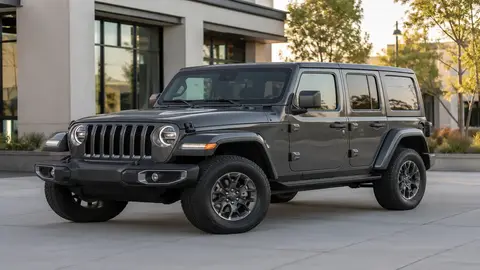
When your insurer declares your car a total loss (write-off), they will offer you its actual cash value (ACV) minus your deductible. You do not have to accept the first offer. Negotiate by submitting comparable vehicle listings and your service history. Decide whether to accept, buy the car back at salvage value, or invoke the appraisal clause. Do not sign the title transfer or cash the settlement cheque until you are satisfied with the amount.
True Motion Auto collects and presents information from official and primary sources (regulators, government bodies, lenders and insurers' published terms). This is general information, not personalised financial advice — check figures with the provider or a qualified adviser before acting. Jurisdiction: General — check your jurisdiction. Last checked: August 2026.
Editorial oversight: Vasudha Gupta, Editor.
After a write-off: your options and timeline
| Step | Your option | Timeframe |
|---|---|---|
| 1 — Review the offer | Request full written valuation; do not accept verbally | Immediately on receiving offer |
| 2 — Negotiate | Submit comparables + service history as counter-evidence | Within 7–14 days |
| 3 — Salvage buyback | Buy back vehicle at salvage value; insurer deducts it from payout | Before signing title |
| 4 — Appraisal clause | Invoke if insurer and you cannot agree on ACV | Parallel to negotiation |
| 5 — Sign and settle | Once satisfied, sign title transfer and receive payment | After agreement |
| 6 — Replace vehicle | Arrange replacement; confirm gap insurance if applicable | Post-settlement |
Understanding the write-off decision
When repair costs exceed the insurer's threshold — typically 65–80% of your vehicle's ACV in the US, or when the car falls into UK categories A, B, S or N — the insurer declares total loss. This is an economic decision, not a safety judgment in every case. Category S and N vehicles in the UK can be repaired and returned to the road; US salvage-title vehicles can receive a rebuilt title after inspection.
Step 1: Get the valuation in writing before responding
Ask your insurer for the full written valuation report. It should show: the comparable vehicles used to establish ACV, their sources (dealer, private, auction), mileage and specification adjustments, and any condition deductions. In the US, this often comes from CCC One, Mitchell or Audatex. You are entitled to review it — and you should.
Look for: comparables that do not match your trim level; vehicles from out-of-market locations with different price levels; condition grades that seem lower than your vehicle's actual state; missing options or recent improvements.
Step 2: Research your own comparables
Find 3–5 vehicles genuinely equivalent to yours — same make, model, year, trim, similar mileage — currently listed for sale in your region. Use Autotrader, Cars.com, CarGurus, or local dealer sites. Print or screenshot them with listing dates, prices and specifications. These become the foundation of your counter-offer.
Step 3: Document your car's condition and value
- Full service history (especially recent work: timing belt, tyres, battery)
- Any recent improvements: new alloys, upgraded stereo, new upholstery
- Pre-accident photos showing condition
- MOT history (UK) or emissions records showing the car was well maintained
Insurers often grade condition as 'fair' by default. A documented full service history and recent repairs justify an 'excellent' or 'good' grading — which directly increases ACV. Get your receipts together.
Step 4: Submit your counter-offer in writing
Write to the claims manager (not just the adjuster) with your comparable listings, your condition evidence, and the specific ACV figure you are claiming. Ask for a written response within 14 days. Be specific — 'I am seeking a revised ACV of $X based on the following three comparable vehicles' is far more effective than 'I think this is too low.'
Step 5: Invoke the appraisal clause if needed
If your negotiation stalls, most US auto policies include an appraisal clause. You appoint a licensed appraiser, your insurer appoints one, and they agree on an umpire. The majority decision on ACV is binding. This typically costs $300–$600 total in appraisal fees but resolves in 4–8 weeks without litigation.
Step 6: Decide whether to keep the vehicle (salvage buyback)
In most US states, you can purchase your written-off vehicle back from the insurer at its salvage value — the value of the car as scrap or parts. The insurer deducts this from your settlement. You receive: ACV − deductible − salvage value. The vehicle then receives a salvage title. You can repair and re-register it, but this is only sensible if:
- The damage is genuinely repairable and you have the means to do it
- You understand a salvage title reduces future resale value and limits insurance options
- You have obtained quotes confirming the repair cost is worthwhile
Gap insurance: critical if you financed
If your outstanding loan or lease balance exceeds the ACV payout, you owe the lender the difference. Gap insurance covers this shortfall. Without it, you could receive a settlement cheque from your insurer and simultaneously owe thousands to a finance company. Confirm your gap position before accepting the settlement.
UK-specific steps
In the UK, the insurer notifies the DVLA of the write-off and the V5C is updated. If you buy back a Cat S or N vehicle, you must inform the DVLA and re-register it after repair. Cat A and B vehicles cannot be kept under any circumstances — the body shell must be destroyed. For any valuation dispute, the Financial Ombudsman Service (FOS) is the escalation route after 8 weeks of no resolution.
Frequently asked questions
Can I refuse to accept the write-off and demand repair instead?
How long do I have to negotiate before signing?
What happens to my plates and registration?
Will the write-off affect my ability to get insurance on my next car?
What if I owe more than the insurer is offering and I have no gap insurance?
Sources & further reading
Figures, prices and policy details were current at the last-updated date above. Automotive pricing, incentives and regulations change frequently — verify time-sensitive details with the linked primary sources. Read our editorial policy and fact-checking standards.