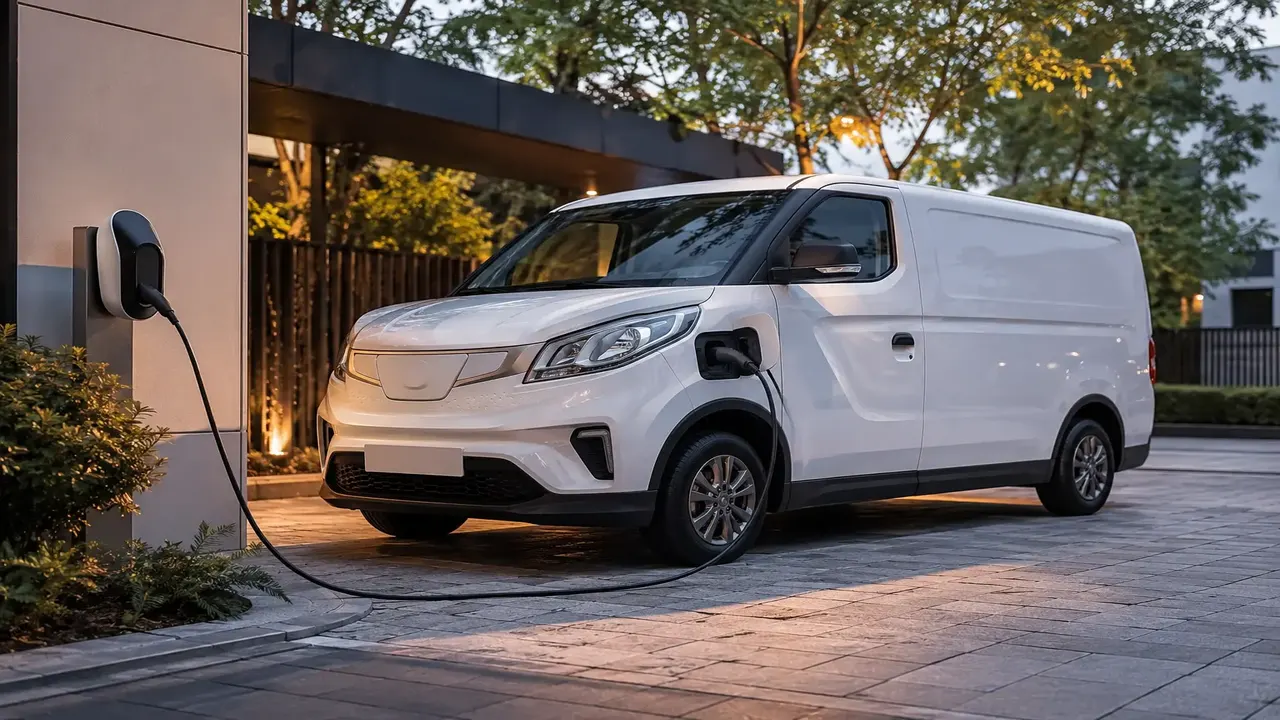
Charge time is estimated from battery size (kWh), charger power (kW), and the vehicle's maximum charging rate, then applies a taper curve because charging slows above roughly 80% state of charge. As a rule of thumb, Level 1 home charging adds about 3-5 miles of range per hour, Level 2 adds 20-30 miles per hour, and DC fast charging can add 150-250+ miles in 20-30 minutes on capable vehicles — but the vehicle's own charging limit, not just the charger's rating, sets the real ceiling.
At a glance: EV charging time comparison
| Charging level | Typical power | Typical range added per hour |
|---|---|---|
| Level 1 (standard outlet) | 1.2-1.8 kW | 3-5 miles |
| Level 2 (home/public) | 7-11 kW | 20-30 miles |
| DC fast charging | 50-250+ kW | 150-250+ miles in 20-30 min |
What the calculation actually models
The calculation takes three core inputs — battery capacity in kWh, charger output in kW, and the vehicle's peak DC charging rate — and estimates time to reach a target state of charge. It's not a straight-line calculation, because lithium-ion batteries accept charge fastest between roughly 10% and 80%, then taper sharply to protect battery health, which is why fast chargers advertise "10-80% in X minutes" rather than 0-100%.
Why real-world results vary from the estimate
- Battery temperature — cold batteries charge slower until they warm up, especially noticeable on DC fast charging in winter.
- Charger sharing — some public fast-charging stations split power across multiple stalls when several vehicles charge at once.
- Vehicle charging curve — every EV model has its own curve; some hold peak charging speed longer than others even with the same peak kW rating.
- State of charge at arrival — starting a fast-charge session already above 50% takes proportionally longer per mile added, since you're deeper into the taper zone.
- Charger vs. vehicle mismatch — plugging a 150 kW-capable car into a 50 kW charger caps the session at 50 kW regardless of the car's rating.
Level 1 vs. Level 2 vs. DC fast charging
Level 1 (120V household outlet)
The slowest and simplest option — just a standard outlet. It suits drivers with short daily commutes who can charge overnight, adding roughly 3-5 miles of range per hour, or 30-50 miles over a full night.
Level 2 (240V home or public charger)
The most common home setup and workplace/public option, adding roughly 20-30 miles per hour — enough to fully recharge most daily-driven EVs overnight or during a workday.
DC fast charging
Used mainly for road trips and quick top-ups, not daily home charging. Depending on the vehicle and charger, it can add 150-250+ miles in 20-30 minutes, though charging past 80% slows enough that most drivers stop there rather than waiting for a full charge.
How to use these numbers when comparing EVs
- Compare the DC fast-charge 10-80% time across models — it's the most road-trip-relevant figure.
- Check the vehicle's peak charging rate against the chargers you'll actually use — a high peak rate is wasted on a lower-powered charger.
- For home charging, focus on Level 2 miles-per-hour against your daily mileage, not the peak DC number.
- Treat all estimates as best-case; add a buffer for cold weather or shared-station charging.
A manufacturer's headline fast-charging time is almost always a best-case 10-80% figure under ideal temperature. Expect real-world sessions to run longer, especially in cold weather or on an older, degraded battery.
Common mistakes when comparing charge times
The most common error is comparing a vehicle's peak DC charging kW rating as if it applies to home charging — home Level 2 charging is limited by the home charger's output, not the car's DC fast-charge capability. The second is ignoring the taper curve and assuming a linear charge rate all the way to 100%, which overstates how fast the last 20% will actually charge.
Frequently asked questions
How long does it really take to charge an EV from empty?
Why does charging slow down after 80%?
Does cold weather really slow down charging?
Can I use any DC fast charger with any EV?
Is it bad to fast-charge an EV every day?
Sources & further reading
- U.S. Department of Energy — Charging at Home
- U.S. Department of Energy — AFDC Charging Time Calculator
- SAE International — EV Charging Standards Overview
Figures, prices and policy details were current at the last-updated date above. Automotive pricing, incentives and regulations change frequently — verify time-sensitive details with the linked primary sources. Read our editorial policy and fact-checking standards.