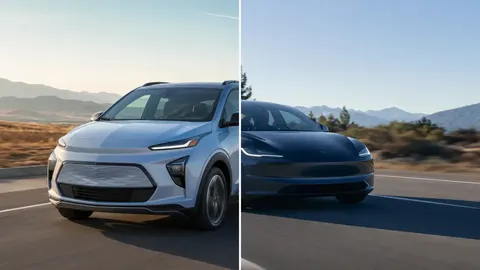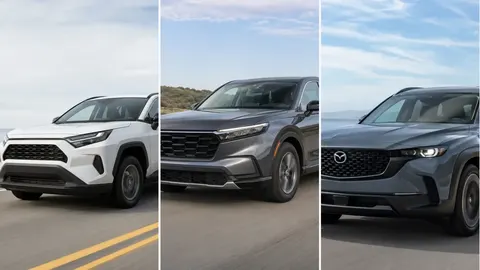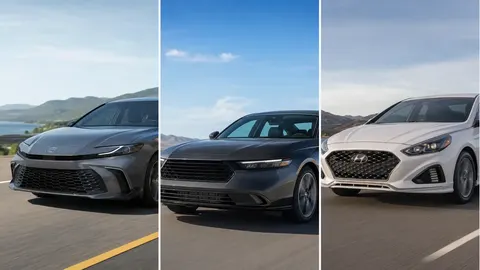
🏆 THE RESULT — but read the caveat first
1st — Hybrid · the fewest compromises for the most people, right now
2nd — EV · the best experience and lowest running costs, if you can charge at home
3rd — Petrol · still the right answer for specific, legitimate situations
⚠️ The honest caveat: this ranking is for the "average" buyer, who doesn't exist. The correct answer depends on four things about your life, set out below. For a large minority, the EV wins outright.
The only comparison that matters
Most comparison tests pit different cars against each other, where badge, styling and brand cloud the judgement. This one strips that away: the same vehicle, three powertrains, so the only variable is how the wheels are driven.
It's the question underlying almost every car purchase in 2026, and the honest answer is more conditional than either evangelists or sceptics admit.
The four questions that determine your answer
Before any ranking, establish these. They matter more than anything else in this article:
1. Can you charge at home? This is the single most decisive factor. Home charging transforms EV ownership from a chore into a genuine convenience — you leave every morning full, and never visit a fuel station. Without it, as our Indian apartment charging test detailed, EV ownership becomes substantially harder. If you cannot charge where you park, the EV drops sharply.
2. What's your typical daily distance? Under ~50 miles/80 km daily, an EV is comfortably within range and a PHEV runs mostly electric. Regular 300-mile days change the calculation considerably.
3. How often do you drive long distances? Occasional long trips are manageable in any EV with decent charging. Weekly 400-mile journeys favour rapid-charging EVs or combustion.
4. What's your climate? As our winter range testing found, cold weather costs EVs 15–35% of range, with heat-pump equipped cars at the better end. Extreme heat, as our India testing showed, brings its own demands.
The comparison
| EV | Hybrid | Petrol | |
|---|---|---|---|
| Purchase price | highest | mid | lowest |
| Running cost | lowest (home charging) | low | highest |
| Refuelling time | 10–30 min (rapid) | 5 min | 5 min |
| Infrastructure need | charging essential | none | none |
| Driving experience | quietest, smoothest, instant torque | smooth, refined | familiar, characterful |
| Cold-weather penalty | 15–35% range | minimal | minimal |
| Maintenance | least | moderate | most |
| Long-trip convenience | requires planning | effortless | effortless |
| Emissions (tailpipe) | zero | reduced | highest |
3rd place — Petrol
Still the right answer for specific, legitimate situations — and dismissing it would be dishonest.
When petrol genuinely wins:
- You can't charge at home and don't want to depend on public infrastructure. This is the most common legitimate case.
- You cover very high annual mileage on long routes where charging stops meaningfully cost you time.
- You need the lowest possible purchase price — petrol cars remain cheapest to buy, and for budget-constrained buyers that's decisive.
- You live somewhere with sparse charging infrastructure — much of rural India, parts of rural America and Britain.
- You tow regularly over long distances, where EV range collapses (see our Ram Ramcharger analysis).
- You keep cars a very long time and value proven, serviceable, repairable simplicity.
Why it finishes third: running costs are highest, maintenance is most involved, and both hybrid and EV alternatives now deliver meaningfully better efficiency without significant compromise for most buyers.
2nd place — EV
The best driving experience and the lowest running costs — held back only by the charging question.
Where the EV genuinely wins:
- The driving experience is simply better. Silent, smooth, instant torque, one-pedal driving. Having lived with EVs, going back to a combustion car feels agricultural. This is underrated in purchase decisions and it's the thing owners most consistently report enjoying.
- The lowest running costs, by a wide margin, if you charge at home on a domestic tariff.
- The least maintenance — no oil changes, no exhaust, far less brake wear thanks to regeneration.
- Home charging is genuinely more convenient than fuel stations once you have it. You never make a special trip.
- Zero tailpipe emissions, which matters both environmentally and increasingly for urban access regulations.
- In congested traffic, EVs excel — as our India range testing found, stop-start driving helps EV range (no idling draw, regenerative recovery, minimal drag) while destroying petrol economy.
Why it doesn't win outright:
- Everything depends on charging access. With home charging, the EV is the clear winner for most buyers. Without it, it's frequently the worst choice.
- Higher purchase price, though total cost of ownership often favours it.
- Cold-weather range loss of 15–35%.
- Long trips require planning, though 400 kW charging (see our BMW i3 analysis — 249 miles in 10 minutes) is rapidly eroding this.
Buy an EV if: you can charge at home, your daily driving is comfortably within range, and long trips are occasional rather than routine. For this large group — and it is large — the EV wins outright and this ranking understates it.
🏆 1st place — Hybrid
It wins because it has the fewest compromises for the most people, right now.
Why it takes the win:
1. It requires nothing of you. No charging infrastructure, no home wallbox, no housing-society negotiation, no route planning. You simply drive it and refuel in five minutes anywhere. For the enormous number of buyers who can't charge at home — apartment dwellers, street parkers, renters — this is decisive.
2. Substantial real efficiency gains, reliably delivered. As our hybrid economy testing found, full hybrids generally deliver close to their official figures, particularly in urban driving where regeneration and electric low-speed running help most. That's a genuine, dependable saving.
3. Some of the EV experience. Electric low-speed running, smooth torque fill and quiet operation deliver a meaningful share of what makes EVs pleasant, without the infrastructure requirement.
4. No range or cold-weather anxiety. Long trips are effortless; winter costs you little.
5. It's the pragmatic middle, and pragmatism is what most buyers actually need.
Important distinction — not all hybrids are equal. As our testing established:
- Full hybrids (HEV) deliver reliable gains and are what wins here
- Mild hybrids (MHEV) offer modest, honest improvements
- Plug-in hybrids (PHEV) are only efficient if you actually plug them in — an uncharged PHEV is worse than the equivalent petrol car, carrying hundreds of kilograms of dead weight for no benefit
EV vs hybrid vs petrol: the bottom line
The hybrid wins because it asks nothing of you and delivers reliable efficiency gains — the fewest compromises for the most people, today.
But the honest framing matters more than the podium. If you can charge at home and your driving is mostly local, the EV is better in almost every way that matters day to day — cheaper to run, nicer to drive, less maintenance, more convenient. For that group, buy the EV and don't look back.
If you can't charge at home, buy the hybrid. It's the sensible answer, and there's no compromise in choosing it.
If you're on a tight budget, tow regularly, or live somewhere with no infrastructure, petrol remains legitimate and we won't pretend otherwise.
Answer the four questions honestly — charging access, daily distance, long-trip frequency, climate — and the right powertrain becomes obvious. It just isn't the same one for everybody, and any article claiming otherwise is selling you something.
Key takeaways
- Winner: hybrid — it requires no infrastructure, refuels in five minutes anywhere, and delivers reliable real-world efficiency gains
- EV (2nd) wins outright for the large group who can charge at home — lower running costs, better driving experience, less maintenance
- Charging access is the single most decisive factor; without home charging, EV ownership becomes substantially harder
- Petrol (3rd) remains legitimate for tight budgets, regular long-distance towing, and areas with sparse infrastructure
- Not all hybrids are equal: full hybrids deliver reliably, while an uncharged PHEV is worse than the equivalent petrol car
Sources & further reading
- True Motion Auto instrumented testing
- hybrid and EV efficiency data
- charging infrastructure analysis. Verified July 2026.
Figures, prices and policy details were current at the last-updated date above. Automotive pricing, incentives and regulations change frequently — verify time-sensitive details against the primary sources listed below. Read our editorial policy and fact-checking standards.