Note: costs mentioned below are given in US dollars as a general point of reference — actual prices vary by country, currency, and local market.
Budget hatchbacks (roughly $16,000-$20,000 in the US, lower new-car price bands in India) prioritize low running costs and simple, reliable mechanicals over features. Mid-range hatchbacks (roughly $20,000-$28,000 in the US) add stronger safety tech, better infotainment and often a hybrid or turbocharged option. Premium/hot hatchbacks (roughly $28,000-$40,000+) bring performance-tuned suspension, more powerful engines, and near-luxury interior finishes. Segment lines blur by market — the same nameplate can sit in different bands in the US, UK and India due to differing tax and pricing structures.
At a glance: hatchbacks by price segment
| Segment | Typical US price band | Focus |
|---|---|---|
| Budget | ~$16,000-$20,000 | Low running cost, simple reliability |
| Mid-range | ~$20,000-$28,000 | Safety tech, infotainment, efficiency |
| Premium/hot hatch | ~$28,000-$40,000+ | Performance, near-luxury interior |
What separates the three price tiers
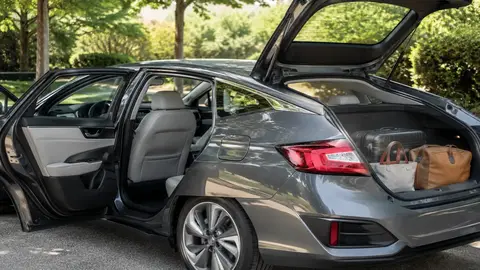
The hatchback body style — a shorter overall length with a rear liftgate for cargo access — spans everything from bare-bones commuter cars to genuinely quick performance models, so price segment matters more for hatchbacks than for most other body styles when comparing what you actually get.
Budget hatchbacks
At the low end, buyers get a smaller engine, fewer standard driver-assistance features, and simpler infotainment (sometimes still with a smaller touchscreen or phone-mirroring-only setup), but generally strong fuel economy and low insurance/maintenance costs. This segment remains especially strong in India, where hatchbacks make up a large share of new-car sales and mainstream brands compete hard on price and running cost.
Mid-range hatchbacks
Stepping up typically buys a larger standard touchscreen, more advanced driver-assistance features (adaptive cruise, lane-keep assist) as standard rather than optional, better sound insulation, and often a more efficient turbocharged or hybrid powertrain option. This is usually the segment with the best overall value-per-dollar for buyers who want a genuinely well-equipped daily car without stepping into premium pricing.
Premium and 'hot' hatchbacks
At the top, hatchbacks split into two types: near-luxury hatchbacks with upscale interior materials and refined ride quality, and performance-tuned 'hot hatches' (Volkswagen GTI/Golf R-class, Honda Civic Type R-class) with meaningfully more power, stiffer sport-tuned suspension, and upgraded brakes. Both types cost significantly more than mid-range hatchbacks but for different reasons — one for comfort/prestige, one for outright performance.
| Segment | You gain | You typically give up |
|---|---|---|
| Budget | Low cost to buy/run/insure | Fewer standard features, smaller engine |
| Mid-range | Stronger safety tech, better efficiency options | Higher price than budget tier |
| Premium/hot hatch | Performance or near-luxury refinement | Higher purchase price, often higher insurance |
A hatchback considered 'budget' in one country can be positioned as 'mid-range' in another due to different tax structures, import duties, and local pricing strategy — always compare against local competitors, not global price expectations.
Choosing the right tier for you
- Choose budget if minimizing purchase price and running cost is the top priority.
- Choose mid-range for the best all-around value — most buyers land here.
- Choose premium/hot hatch only if near-luxury comfort or genuine performance matters enough to justify the price step.
Frequently asked questions
What is the difference between a hatchback and a sedan?
Are hot hatchbacks practical daily cars?
Why are hatchbacks more popular in some countries than others?
Do premium hatchbacks hold their value well?
Sources & further reading
Figures, prices and policy details were current at the last-updated date above. Automotive pricing, incentives and regulations change frequently — verify time-sensitive details with the linked primary sources. Read our editorial policy and fact-checking standards.