Note: costs mentioned below are given in US dollars as a general point of reference — actual prices vary by country, currency, and local market.
A fully loaded mainstream car (think a top-trim midsize sedan or SUV) can match or beat an entry-level luxury model on infotainment, driver-assist tech, and even interior materials in some cases, often for $10,000-$20,000 less. What you generally don't get from the mainstream brand is the same badge prestige, the depth of standard performance/handling tuning, resale-value protection at the luxury tier, and sometimes the ownership perks (loaner cars, concierge service) that luxury dealers bundle in. The right pick depends on whether you value features-per-dollar or the brand experience and refinement that luxury badges are built around.
At a glance: luxury brand vs fully loaded mainstream car
| Factor | Fully loaded mainstream | Entry luxury |
|---|---|---|
| Typical price premium | Baseline | +$10,000-$20,000 for comparable size/segment |
| Feature parity | Very close on tech/safety features in top trims | Often marginal feature gain over top mainstream trim |
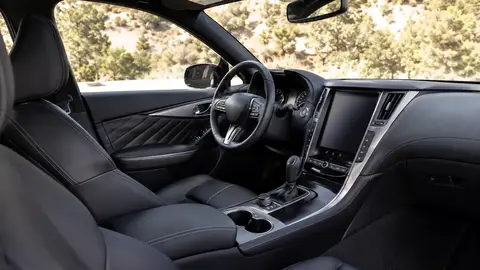
| Interior materials | Good synthetic/leatherette, some real leather | More real leather, wood/metal trim, sound deadening |
| Resale value | Depreciates faster in percentage terms typically | Can hold value better if brand demand is strong, but luxury depreciation varies widely by model |
| Dealer perks | Standard warranty service | Often loaner cars, pickup/drop-off, concierge features |
| Performance tuning | Competent, comfort-focused | Often more refined ride/handling balance and NVH control |
The feature-parity argument
Top trims of mainstream midsize sedans and SUVs today routinely include leather-trimmed seats, heated and ventilated front seats, panoramic sunroofs, premium audio systems, adaptive cruise control, lane-centering, and large touchscreen infotainment — features that used to be luxury-exclusive a decade ago. This is the strongest case for buying loaded-mainstream over entry-luxury: you can often get 90% of the feature list for meaningfully less money.
Where luxury still separates itself
The gap shows up in details that don't fit neatly on a spec sheet: cabin sound insulation and noise/vibration/harshness (NVH) control, the depth and consistency of interior material quality across every touchpoint (not just the seats), suspension tuning that balances comfort and control more precisely, and badge-driven resale demand in certain markets. Luxury brands also tend to refresh technology and styling faster, and many bundle real ownership perks — scheduled maintenance included, loaner vehicles during service, and sometimes pickup/drop-off for repairs.
Total cost of ownership
A loaded mainstream car is almost always cheaper to insure, maintain, and repair than an equivalent luxury model — parts and specialized labor cost more at luxury dealers, and insurance premiums often track the vehicle's repair cost and theft profile upward. Depreciation is more nuanced: some mainstream vehicles hold value exceptionally well in percentage terms, while certain luxury models depreciate steeply after the first owner, which can actually make a lightly used luxury car a smarter buy than a new one of either type.
Resale and used-market dynamics
This is where research pays off model-by-model rather than brand-by-brand: some entry-luxury sedans lose a large share of their value in the first three years, which is bad news for the original buyer but can make a 2-3-year-old example a genuine bargain on the used market — often cheaper than a comparably aged, loaded mainstream car with similar mileage.
Mistakes to avoid
- Assuming 'luxury badge' automatically means better reliability — reliability varies by specific model, not by badge alone.
- Ignoring insurance quotes before buying; luxury premiums can be surprisingly high even on 'entry' models.
- Comparing sticker price only, without factoring in maintenance packages, extended warranty costs, or included service that some luxury brands bundle in.
- Assuming a loaded mainstream trim is 'basically the same' — some genuine engineering and materials differences do exist, particularly in ride refinement.
Which buyer fits which choice
A fully loaded mainstream car suits buyers who want the practical feature set without the badge premium, and who plan to keep the car long enough that the mainstream brand's typically lower running costs pay off. An entry-luxury car suits buyers who value refinement, brand cachet, and often-included dealer perks, and who are comfortable with generally higher insurance and maintenance costs in exchange for that experience — or who buy used and let someone else absorb the steepest depreciation.
Frequently asked questions
Is a fully loaded mainstream car as good as an entry-level luxury car?
Do luxury cars really cost more to maintain?
Why do some luxury cars depreciate faster than mainstream cars?
Is it worth buying a used luxury car instead of a new mainstream car?
Which insures for less, a loaded mainstream car or an entry luxury car?
Sources & further reading
- Kelley Blue Book — cost to own and depreciation data
- Consumer Reports — reliability and ownership cost research
Figures, prices and policy details were current at the last-updated date above. Automotive pricing, incentives and regulations change frequently — verify time-sensitive details with the linked primary sources. Read our editorial policy and fact-checking standards.