Note: costs mentioned below are given in US dollars as a general point of reference — actual prices vary by country, currency, and local market.
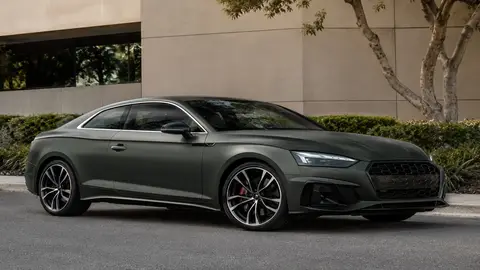
Compact sedans prioritize affordability and fuel economy, typically starting in the low-to-mid $20,000s with the best fuel economy of the three tiers. Midsize sedans add interior space, more powerful engine options, and a stronger feature set, generally starting in the high-$20,000s to low-$30,000s before climbing significantly with top trims. Premium/luxury sedans emphasize refinement, brand cachet, and the most advanced technology and materials, typically starting around $40,000 and climbing well past $60,000-$80,000 for larger flagship models.
At a glance
| Tier | Typical starting price (US) | Best suited to |
|---|---|---|
| Compact sedan | Low-to-mid $20,000s | Budget-conscious buyers, commuters, best fuel economy |
| Midsize sedan | High-$20,000s to low-$30,000s | Buyers wanting more space/power without luxury pricing |
| Premium/luxury sedan | ~$40,000+ (climbs well past $60,000-$80,000) | Buyers prioritizing refinement, tech, and brand prestige |
Compact sedans: value and efficiency first
Compact sedans remain some of the most affordable, fuel-efficient new cars available, aimed squarely at first-time buyers, commuters, and anyone prioritizing low purchase price and running costs over outright space or power. Feature sets on higher trims have improved substantially — many now include driver-assist tech and infotainment features once reserved for larger cars — but interior space and engine output remain the segment's practical ceiling.
Midsize sedans: the practical middle
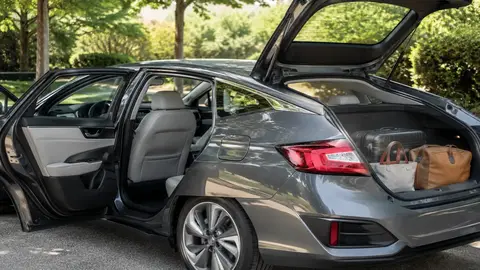
Midsize sedans add meaningful rear-seat legroom, trunk space, and often a choice of more powerful engines (including available V6, turbocharged four-cylinder, or hybrid powertrains on many models), positioning them as the practical family or long-commute choice without moving into luxury pricing. This tier has faced the most market pressure from crossover SUVs in the last decade, but remains competitive on ride comfort, fuel economy, and price relative to a similarly sized SUV.
What midsize buyers should watch for
Trim levels vary widely in what's actually included — some midsize sedans reserve meaningful safety tech (like adaptive cruise control or blind-spot monitoring) for mid-or-upper trims rather than making it standard, so it's worth checking the specific trim's feature list rather than assuming segment-wide parity.
Premium/luxury sedans: refinement and brand
Premium sedans compete less on any single spec and more on the overall experience: cabin material quality, noise/vibration/harshness (NVH) control, the latest driver-assist and infotainment technology, and the brand cachet that luxury badges carry. Pricing climbs quickly with options, and running costs (insurance, maintenance, parts) are meaningfully higher than compact or midsize sedans, even before factoring in the higher purchase price itself.
Cross-tier trade-offs to know
- A loaded compact sedan can match a base midsize sedan on features, but not on interior space or engine choice.
- A loaded midsize sedan can rival an entry premium sedan on tech features, but generally not on materials quality or brand resale value.
- Fuel economy generally declines from compact to midsize to premium as size, weight, and (often) engine power increase.
- Insurance and maintenance costs generally rise with each tier, independent of purchase price alone.
Which tier fits which buyer
Choose compact if budget and fuel economy are the top priorities and interior space needs are modest. Choose midsize if you need meaningfully more space and power without moving into luxury pricing and running costs. Choose premium if refinement, the latest technology, and brand experience matter enough to justify the higher purchase price and ongoing costs — and consider a lightly used premium sedan if you want that experience without paying the steepest new-car depreciation.
Frequently asked questions
What's the real difference between a compact and midsize sedan?
Is a loaded midsize sedan better value than an entry luxury sedan?
Which sedan tier has the best fuel economy?
Are sedans still a good choice compared to SUVs?
Do premium sedans cost much more to maintain than midsize sedans?
Sources & further reading
Figures, prices and policy details were current at the last-updated date above. Automotive pricing, incentives and regulations change frequently — verify time-sensitive details with the linked primary sources. Read our editorial policy and fact-checking standards.