The Camry and Accord both carry decades-long reputations for strong reliability and resale value, historically trading the top spot in midsize-sedan reliability and satisfaction surveys. The Sonata typically undercuts both on price for a comparable feature set and often includes more standard equipment at a given trim level, but has generally trailed the other two on long-run resale value. All three now commonly offer hybrid powertrain options in addition to standard gas engines, and typical starting prices across the segment sit in the mid-to-high $20,000s, climbing toward the mid-$30,000s for well-equipped or hybrid trims.
At a glance
| Factor | Toyota Camry | Honda Accord | Hyundai Sonata |
|---|---|---|---|
| Reputation | Strong long-run reliability, high resale value | Strong reliability, praised driving dynamics | Strong value, generous standard features |
| Typical starting price | Mid-to-high $20,000s | Mid-to-high $20,000s | Often the lowest of the three |
| Hybrid availability | Widely available across trims | Widely available across trims | Available on select trims |
| Resale value | Historically among the strongest in class | Historically very strong | Generally trails the other two |
| Warranty | Standard mainstream coverage | Standard mainstream coverage | Often longer standard warranty than rivals |
Reliability and resale: the traditional battleground
Camry and Accord have spent decades trading places at the top of midsize-sedan reliability and long-term durability rankings, and that reputation carries directly into resale value — both nameplates typically hold value better than most rivals in the segment. This reputation is a genuine asset for buyers planning to keep the car a long time or eventually sell/trade it, since strong resale reduces the effective cost of ownership.
Value and standard equipment
Hyundai has built the Sonata's competitive position around pricing and standard equipment — it frequently undercuts the Camry and Accord at a given trim level while including comparable or sometimes more standard features. Hyundai also often backs this with a longer standard warranty than Toyota or Honda typically offer, which can be a meaningful factor for buyers who value extended factory coverage over resale-value history.
Driving character differences
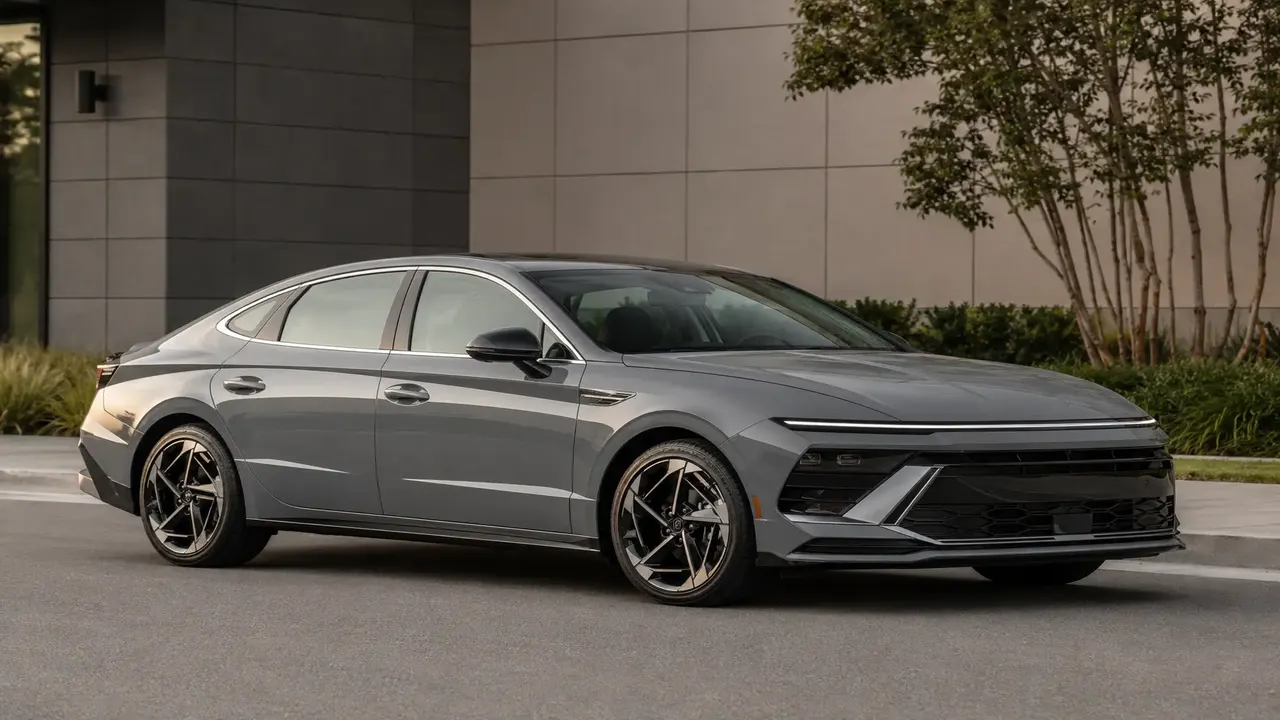
The Accord has generally been the enthusiast/reviewer favorite for driving dynamics among mainstream midsize sedans, with more communicative steering and a firmer, more controlled ride than many rivals. The Camry prioritizes a smoother, quieter, more comfort-oriented ride, aligning with Toyota's broader brand positioning. The Sonata sits between the two, with recent generations receiving praise for bold styling and a comfortable, well-equipped cabin, if generally less engaging to drive than the Accord.
Hybrid options across the three
All three nameplates offer hybrid powertrains as a way to boost fuel economy without moving to a plug-in or full EV, appealing to buyers who want lower running costs without charging infrastructure requirements. Toyota and Honda in particular have made hybrid trims widely available across much of their respective lineups, reflecting both brands' long-running hybrid engineering experience, while Hyundai's hybrid Sonata availability has varied more by model year and market.
Mistakes to avoid
- Assuming Camry or Accord reliability reputation automatically applies to every specific model year — check model-year-specific reliability data, since reputations can shift generation to generation.
- Ignoring the Sonata's longer standard warranty when comparing total ownership cost, not just resale value.
- Skipping a back-to-back test drive — the driving character differences between these three are real and noticeable, not just marketing.
- Overlooking hybrid trim availability and pricing, which can change the fuel-economy and value comparison significantly.
Which one fits which buyer
Choose the Camry if a smooth, comfort-oriented ride and historically strong resale value are top priorities. Choose the Accord if you want the most engaging driving experience among the three without sacrificing reliability reputation. Choose the Sonata if minimizing purchase price and maximizing standard features and warranty coverage matter more to you than the other two's resale-value edge.
Frequently asked questions
Which is more reliable, the Camry or the Accord?
Is the Hyundai Sonata as good as the Camry or Accord?
Do all three offer a hybrid version?
Which of the three has the longest warranty?
Which midsize sedan holds its value best?
Sources & further reading
- Consumer Reports — midsize sedan reliability rankings
- EPA fueleconomy.gov — midsize sedan fuel economy comparisons
Figures, prices and policy details were current at the last-updated date above. Automotive pricing, incentives and regulations change frequently — verify time-sensitive details with the linked primary sources. Read our editorial policy and fact-checking standards.