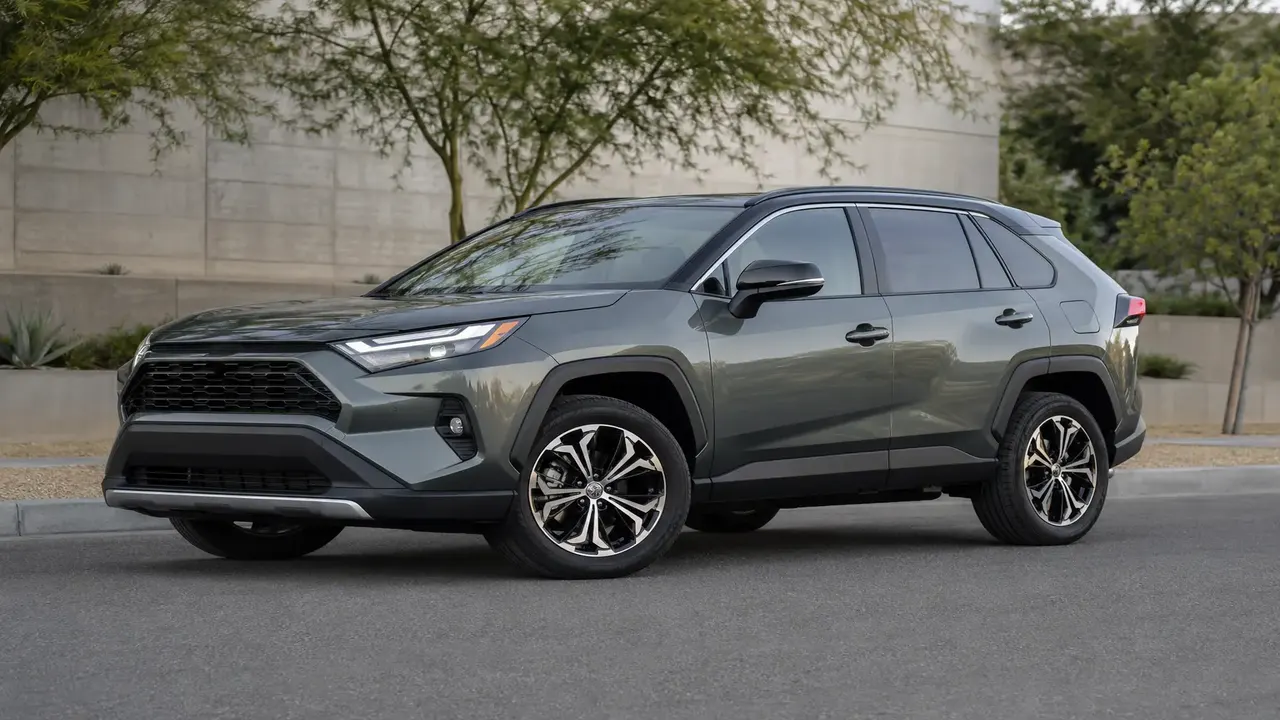
The RAV4 leads on hybrid availability and Toyota's strong reliability/resale reputation, with a hybrid variant available across much of its lineup and among the best fuel economy figures in the segment. The CR-V pairs Honda's own strong reliability reputation with generally the most usable interior and cargo space of the three, plus a widely praised, comparatively refined ride. The CX-5 stands apart on driving dynamics and interior design, offering a noticeably more upscale cabin feel and more engaging handling than most compact SUVs, at some cost to outright interior space and (on non-hybrid trims) fuel economy versus the RAV4.
At a glance
| Factor | Toyota RAV4 | Honda CR-V | Mazda CX-5 |
|---|---|---|---|
| Signature strength | Hybrid availability, fuel economy, resale value | Interior/cargo space, ride comfort | Driving dynamics, upscale interior feel |
| Hybrid option | Widely available, strong fuel economy | Available on select trims | Not typically offered (varies by market/generation) |
| Interior space | Competitive | Generally the most spacious of the three | Slightly less than RAV4/CR-V |
| Driving feel | Comfort-focused, capable | Comfortable, refined | Most engaging/sporty of the three |
| Reliability reputation | Very strong | Very strong | Strong, improving reputation |
Three best-sellers, three distinct personalities
The RAV4, CR-V, and CX-5 have been perennial best-sellers in the compact-SUV segment for years, and while they compete directly on size and price, each has carved out a genuinely distinct identity rather than converging into identical vehicles — a rarity in such a crowded segment.
Fuel economy and hybrid availability
Toyota has made hybrid powertrains widely available across much of the RAV4 lineup, delivering some of the best fuel economy figures in the compact-SUV class and a strong selling point for buyers prioritizing running costs. Honda offers a hybrid CR-V variant on select trims, competitive but generally with somewhat less lineup-wide availability than Toyota's approach. Mazda has historically not offered a hybrid CX-5 in most markets (availability varies by generation and region), relying instead on efficient conventional and turbocharged engines — meaning CX-5 buyers prioritizing outright fuel economy should cross-check current offerings carefully.
Interior space and practicality
The CR-V is generally regarded as offering the most usable interior and cargo space of the three, a long-standing Honda strength in this segment thanks to efficient packaging. The RAV4 is competitive on space and often edges ahead on ground clearance and a slightly more rugged stance, appealing to buyers wanting a more SUV-like feel. The CX-5 typically trails the other two slightly on outright interior volume, a trade-off for its more style-focused, coupe-influenced roofline and upscale cabin design.
Driving dynamics and interior feel
The CX-5 stands out for driving engagement and interior presentation — reviewers consistently note its more premium-feeling cabin materials and more communicative steering and handling than typical compact-SUV rivals, arguably punching above its price point against some entry-luxury competitors. The RAV4 and CR-V both prioritize comfort and ease of use over outright driving engagement, consistent with their brands' broader positioning, though both are competent and easy to live with day to day.
Mistakes to avoid
- Assuming all three offer a hybrid — CX-5 hybrid availability varies significantly by market and generation, so verify current offerings.
- Overlooking cargo space differences if hauling capacity matters — the CR-V's advantage here is real and consistently noted.
- Judging driving dynamics from a spec sheet alone — the CX-5's driving-feel advantage is best experienced in a back-to-back test drive.
- Ignoring trim-level feature differences — advanced driver-assist tech availability varies by trim across all three, not just by brand.
Which one fits which buyer
Choose the RAV4 if hybrid fuel economy, resale value, and Toyota's reliability reputation are top priorities. Choose the CR-V if maximizing interior and cargo space while keeping Honda's strong reliability reputation matters most. Choose the CX-5 if driving engagement and a more upscale interior feel matter more to you than the last inch of cargo space or a hybrid powertrain option.
Frequently asked questions
Which compact SUV has the best fuel economy, RAV4, CR-V, or CX-5?
Which has the most cargo space, the RAV4, CR-V, or CX-5?
Is the Mazda CX-5 more fun to drive than the RAV4 or CR-V?
Does the Mazda CX-5 come as a hybrid?
Which of the three holds its resale value best?
Sources & further reading
Figures, prices and policy details were current at the last-updated date above. Automotive pricing, incentives and regulations change frequently — verify time-sensitive details with the linked primary sources. Read our editorial policy and fact-checking standards.