The affordable-EV fight Britain wanted
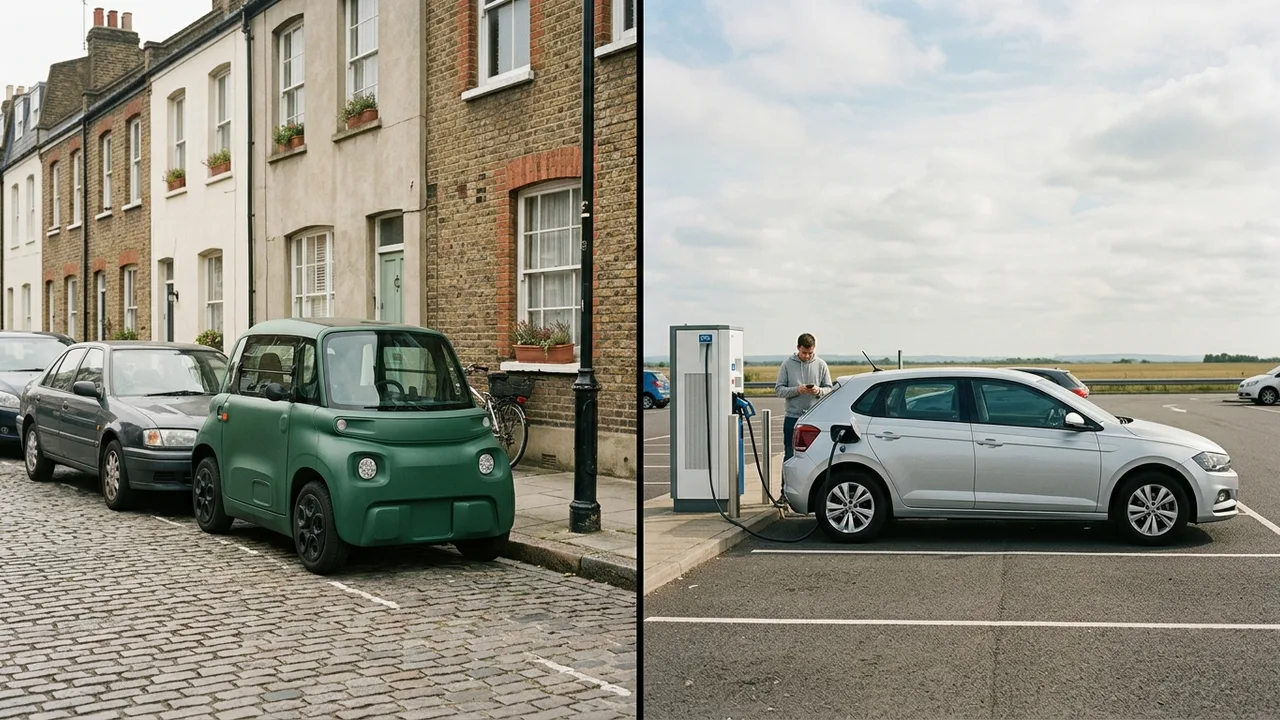
Two of Europe's biggest names have finally brought electric prices down to where most buyers actually shop — and they've done it with different classes of car. Renault's Twingo E-Tech is a city car targeting under £20,000. Volkswagen's ID. Polo is a full supermini from £23,945. The four-figure gap between them buys real differences, and choosing well means being honest about your journeys.
This is an on-paper comparison: the ID. Polo is orderable now with September deliveries; the Twingo's UK order books open late 2026 for early-2027 delivery.
Size and purpose
The Twingo is the smaller, lighter concept — a four-seat city specialist with a 9.8-metre turning circle built for streets where a supermini feels wide. The ID. Polo is the familiar all-rounder: five doors, five seats, supermini boot, and the footprint Britain's roads were priced around for decades. If your car lives in town, the Twingo's dimensions are a feature; if it commutes on A-roads, the Polo's substance is.
Battery and range
- Twingo: 27.5 kWh, 82 hp, up to 163 miles claimed — with outstanding urban efficiency (~6 mi/kWh reported)
- ID. Polo: two batteries, 116–211 PS, up to 281 miles WLTP; the 52 kWh version qualifies for the £1,500 grant
There is no contest on paper: the VW's bigger battery buys nearly 120 extra claimed miles and genuine motorway capability. The Renault's counter is philosophical — for city duty, hauling a big battery is dead weight and dead money. Both are right, for different owners.
Money
- Twingo: under £20,000 targeted; potentially below £17,000 with the full £3,750 grant
- ID. Polo: from £23,945; effectively £22,445 for grant-eligible versions
Configured comparably, expect roughly £4,000–£6,000 between them — a substantial gap at this end of the market, and enough to fund years of charging.
Twingo vs. ID. Polo: early verdict
Buy the Twingo if: your driving is genuinely urban, parking is a daily negotiation, and the price gap matters. It is the cheaper, cleverer city tool — and, on early drives, the more charming object.
Buy the ID. Polo if: this is your only car. The range, space and five-seat practicality make it the one that never needs excuses — and it is deliverable months earlier.
The honest footnote: neither has UK owner data yet. The Renault leans on the 5's excellent early record; the VW on a nameplate promise its ID software history hasn't always kept. Our verdicts will follow the road tests.
The questions buyers actually ask
Is the Twingo's 163 miles limiting? In town, no. For regular motorway runs, yes — that's the Polo's brief, or the Renault 5's.
Which is the better second car? The Twingo, comfortably: cheaper, smaller, and its limits don't matter when a household has a long-distance option.
Should I wait for the Twingo before ordering the VW? Only if delivery in 2027 suits you. Needing a car this year decides the question by itself.
Key takeaways
- Different classes: sub-£20k city car vs £23,945 supermini — a real £4k–£6k gap configured
- Range: 163 miles (Twingo) vs up to 281 (ID. Polo); the VW is the only-car choice
- Twingo's 9.8m turning circle and efficiency make it the sharper city tool
- Timing splits them: ID. Polo delivers from September 2026; Twingo early 2027
- Both are launch products — no UK reliability record yet on either
Sources & further reading
- Renault and Volkswagen UK announcements
- UK first-drive and pricing coverage
- electric car grant scheme documentation, 2026
Figures, prices and policy details were current at the last-updated date above. Automotive pricing, incentives and regulations change frequently — verify time-sensitive details against the primary sources listed below. Read our editorial policy and fact-checking standards.