True Motion Auto has not independently road-tested this vehicle. Specifications, pricing and performance figures are compiled from manufacturer technical data and published independent tests, and are attributed where quoted. Read how we review cars.
Research verdict: The VF3 is a genuinely characterful micro-EV that attacks India's entry market on price — a boxy, likeable, easy-to-drive urban runabout at a point where almost nothing else exists. Its limitations (range, size, brand unfamiliarity) are real and obvious. But as affordable urban electric transport with actual personality, it makes a case few rivals can match on price alone.
India pricing and specifications provisional; confirm before purchase.
Attacking from below
While most manufacturers chase the profitable ₹15–25 lakh EV segment, VinFast — Vietnam's ambitious EV maker — is attacking Indian electrification from a completely different direction: the bottom.
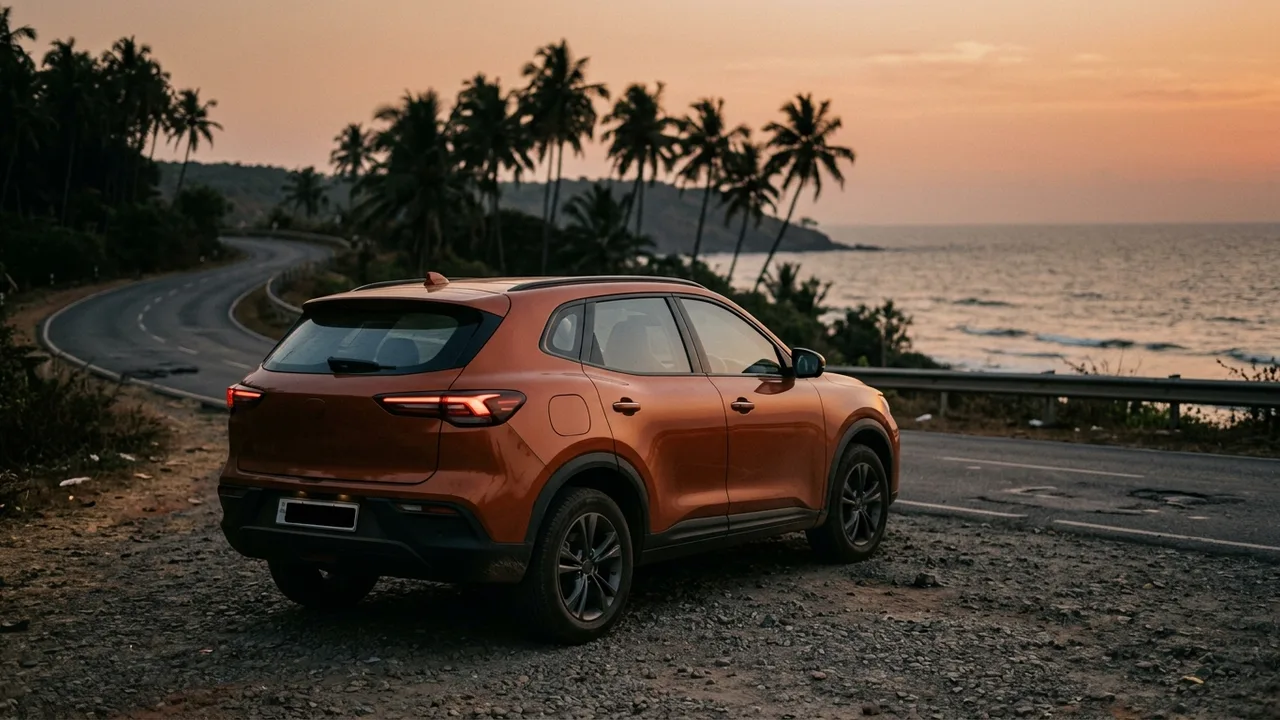
The VF3 is a tiny, boxy, deliberately characterful electric SUV pitched at a price point (around ₹8 lakh) where genuine electric alternatives barely exist. As we noted in our earlier launch coverage, it's aimed at exactly the buyers electrification has so far failed to reach — people for whom a ₹15 lakh EV is simply out of the question, but who could stretch to something at Alto/Tiago money.
That's a genuinely important market. India's mass mobility happens well below ₹10 lakh, and if electrification is going to reach the majority rather than the affluent, cars like the VF3 have to work. On the numbers and the positioning, it is something likeable, limited and genuinely interesting.
What it is
1. Small and boxy — deliberately so. The VF3 is a micro-SUV with an upright, chunky, characterful shape. It looks like a scaled-down proper SUV rather than an apologetic city car, which is a big part of its appeal — it has genuine personality where most budget cars have none.
2. Priced to reach new buyers. At around ₹8 lakh, it sits where petrol hatchbacks live, not where EVs usually do. That's the entire proposition.
3. Built for urban use. Compact dimensions, tight turning, easy manoeuvrability and simple controls — designed for congested Indian cities rather than highway cruising.
4. Character as a feature. In a segment defined by grim practicality, the VF3's cheerful, distinctive design is a genuine differentiator. People smile at it.
The numbers
Provisional — confirm against VinFast India's specifications:
| Spec | VinFast VF3 (provisional) |
|---|---|
| Price | around ₹8 lakh (positioning) |
| Segment | Micro / entry electric SUV |
| Design | Boxy, upright, characterful |
| Use case | Urban commuting and city runabout |
| Rivals | MG Comet EV, Tata Tiago EV, Tata Punch EV (dearer), petrol hatchbacks |
| Proposition | Genuine electric transport at petrol-hatchback money |
What the proposition amounts to
It's genuinely charming. The VF3 has personality — the upright stance, the chunky detailing, the sense of a small vehicle with a big attitude. In a budget segment where cars are typically joyless, that matters more than spec sheets suggest.
It is built for the city. Compact dimensions, an upright seating position with good visibility and instant electric torque are the right ingredients for Indian urban traffic. Nipping through congestion is where the format makes complete sense.
Electric running costs are the real argument. At this price point, buyers are acutely cost-sensitive, and electric running costs (versus petrol) plus minimal servicing represent genuine, substantial monthly savings. That's a stronger argument than any performance figure.
The limitations are obvious and honest. It's small, so space is limited. Range is modest, suiting urban use rather than intercity travel. Highway performance and stability are not what a car of this size and power is built for. None of this is a criticism exactly — it is what it is, and it's honest about it.
The real challenges
Brand unfamiliarity is a serious obstacle. VinFast is a Vietnamese newcomer with no Indian track record. At the budget end, buyers are especially risk-averse — a ₹8 lakh purchase is an enormous commitment for the households this targets. Service network, parts availability, warranty support and resale confidence all matter enormously, and VinFast has to build them from nothing. This is the make-or-break issue, not the product.
Established rivals have deep trust. Tata and Maruti have earned decades of confidence in exactly this price bracket. Tata's Tiago EV and Punch EV, though dearer, come with a known name and vast service reach.
Charging access at this price point. Budget buyers are less likely to have dedicated home charging (apartment parking, shared facilities), which complicates EV ownership in ways affluent buyers don't face. This is an under-discussed barrier.
Residual values are unknown for a new brand in a price-sensitive market.
Who it's for
Consider the VF3 if: you want genuinely affordable electric urban transport with actual character, you drive mostly in the city, you have reliable charging access, and the running-cost savings matter to your monthly budget. For the urban buyer stretching into their first EV, it's a genuinely interesting option — and there's little else at this price.
Look elsewhere if: you need range for intercity travel, you need more space, you want the reassurance of an established brand and service network (Tata, Maruti), or you lack convenient home charging.
The bottom line
The VinFast VF3 attacks Indian electrification from the direction that matters most for genuine mass adoption: from below. At around ₹8 lakh, it offers real electric transport with genuine character at a price where almost nothing else electric exists — and for urban buyers with charging access, the running-cost savings are substantial and immediate. Its limitations (modest range, limited space, no highway pretensions) are honest and inherent to the format. The genuine obstacle isn't the car; it's the brand. VinFast must build service, parts, warranty confidence and resale trust from zero in the most risk-averse segment of the market. If it manages that, the VF3 could help electrification reach the majority of Indian buyers rather than just the affluent minority. That's a genuinely significant possibility — and it makes this small, cheerful little car more important than its size suggests.
Key takeaways
- The VinFast VF3 attacks India's entry EV market from below, at around ₹8 lakh — where petrol hatchbacks live, not EVs
- It's a small, boxy, genuinely characterful micro-SUV designed for congested urban use, with real personality in a joyless segment
- Electric running-cost savings versus petrol are the strongest argument for cost-sensitive buyers at this price point
- Limitations are honest and inherent: modest range, limited space, no highway pretensions — it's an urban tool
- The make-or-break challenge is brand trust: VinFast must build service, parts and resale confidence from zero in the most risk-averse segment
Sources & further reading
- VinFast materials
- India entry EV segment analysis
- full rated review to follow. Verified July 2026.
Figures, prices and policy details were current at the last-updated date above. Automotive pricing, incentives and regulations change frequently — verify time-sensitive details against the primary sources listed below. Read our editorial policy and fact-checking standards.