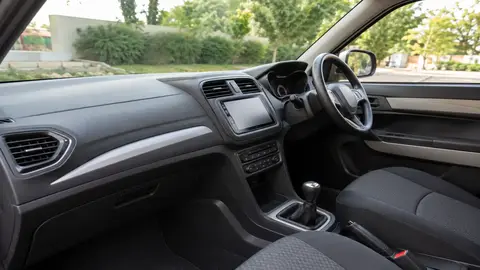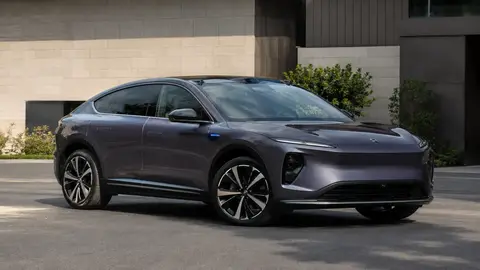
For most Indian families, a compact SUV in the ₹9–₹15 lakh (ex-showroom) range offers the best mix of safety, ground clearance and boot space. Prioritise a 4- or 5-star Global NCAP rating, rear AC vents, and ISOFIX child-seat mounts. Families needing 7 seats regularly (not just occasionally) are usually better served by a 3-row MPV than a compact SUV's cramped third row.
At a glance
| Body type | Best for |
|---|---|
| Hatchback (₹6–9 lakh) | Small families, city-first driving, tight parking |
| Compact SUV (₹9–15 lakh) | Most Indian families — ground clearance + safety + practicality |
| Sedan (₹9–16 lakh) | Highway comfort, boot space, slightly lower running cost than SUV |
| 3-row MPV (₹11–20 lakh) | Families who regularly carry 6–7 people, joint families |
| Safety benchmark | Look for 4–5 star Global NCAP/Bharat NCAP rating |
Start with safety, not features
Global NCAP and the newer Bharat NCAP now crash-test most mass-market Indian cars, and ratings vary widely even within the same price band. A 4- or 5-star adult-safety rating, along with standard dual airbags, ABS with EBD, and ISOFIX mounts for child seats, should be non-negotiable for a family car — these are no longer premium-only features and are available well within the ₹8–10 lakh segment.
Matching body type to how you actually use the car
Compact SUV: the default choice for most families
Higher ground clearance handles Indian roads, speed breakers and monsoon flooding better than a sedan or hatchback. Boot space (typically 350–450 litres) comfortably fits a family's luggage and a stroller or two. The trade-off is slightly higher fuel cost and price versus an equivalent hatchback.
Sedan: still worth considering
Sedans generally ride lower and handle better on highways, and boot space is often larger and better shaped than an SUV's. They've fallen out of fashion partly due to perception, not function — if you drive mostly highways and don't need extra ground clearance, a sedan can be the more comfortable, better-value choice.
3-row MPV or SUV: only if you need it weekly
A third row sounds useful, but in compact SUVs it's usually cramped and best for children or short trips. If you regularly travel with 6–7 adults — extended family visits, joint-family living — a dedicated MPV (with a proper 3-row layout) is far more usable than an SUV's occasional-use third row.
Fuel type for family use
- Petrol: lowest upfront cost, widest service network, best for under 1,000 km/month.
- CNG: running cost roughly a third of petrol, ideal for high-mileage city driving, but boot space shrinks with the cylinder and CNG stations are patchy outside major cities.
- Diesel: makes sense only above ~1,500–2,000 km/month given the price premium and rising diesel-vehicle restrictions in some cities (Delhi NCR's age-based bans, for example).
- Hybrid/EV: strong running-cost savings and increasingly good range, but check home-charging feasibility (for EVs) and service network reach in your city before committing.
Features that matter more than they look
- Rear AC vents — a genuine comfort difference on long drives with kids.
- Rear parking camera/sensors — most family cars are driven by more than one person in the household.
- Adequate low-end torque — matters more than outright power for a car often loaded with passengers and luggage.
- Service network density in your city, not just brand reputation — a common ownership pain point.
A large SUV that's hard to park daily creates more ownership friction than it solves. Match the car to your most frequent use case (daily city commute), not the occasional long family trip — you can always rent a bigger vehicle for that.
Budgeting realistically
Ex-showroom price is only the start. Add RTO road tax (roughly 7–15% of ex-showroom depending on state and fuel type), insurance, and extended warranty if you want one — together these commonly add 10–15% on top of the sticker price. Factor in fuel/running cost and service intervals for your specific model before finalising, not just the EMI.
Frequently asked questions
Which car segment is best for a family of 4 in India?
Is a 7-seater necessary for an Indian family?
Should I buy petrol, CNG or an EV for a family car in India?
How important is the NCAP safety rating when buying a family car?
What extra costs should I budget beyond the ex-showroom price?
Sources & further reading
- Global NCAP — crash test ratings
- Bharat NCAP — Ministry of Road Transport and Highways
- Parivahan Sewa — vehicle registration and road tax
Figures, prices and policy details were current at the last-updated date above. Automotive pricing, incentives and regulations change frequently — verify time-sensitive details with the linked primary sources. Read our editorial policy and fact-checking standards.