Most UK families outgrow a supermini once car seats and a pushchair enter the picture — look for 400+ litres of boot space, a 5-star Euro NCAP rating, and Isofix on at least two rear seats. Family-sized SUVs and estates typically cost £25,000-£40,000 new, but a 3-4 year old equivalent can be found for 40-50% less with most of the same safety kit.
At a glance
| Body style | Typical fit for families |
|---|---|
| Supermini (e.g. Corsa-sized) | 1 child + buggy, tight on boot space |
| Family hatchback (e.g. Focus-sized) | 2 children, moderate boot, easy to park |
| Estate | 2-3 children, largest boot for the money |
| Family SUV | 2-3 children, higher seating, easier to load |
| 7-seat SUV/MPV | 3+ children or regular extra passengers |
Start with how you actually use the car
Before looking at badges, list what has to fit: how many child seats, whether you need a pushchair and a weekly shop in the boot at the same time, and how often you'll carry grandparents or a dog. A family of four with one buggy is usually well served by a family hatchback or estate; two or more car seats plus regular long trips point toward a family SUV or 7-seater.
Safety: what actually matters
- Euro NCAP star rating (out of 5) is the standard reference — check the specific model year, as ratings can change between generations.
- Isofix mounting points on at least two rear seats are now standard on nearly all UK-market family cars.
- Autonomous emergency braking (AEB) and lane-keep assist are increasingly standard on cars from around 2020 onward, and are worth prioritising on older used cars if not fitted.
- Rear visibility and parking sensors matter more than they sound — loading children is easiest in cars with good all-round visibility and a low boot lip.
Boot space and practicality in real numbers
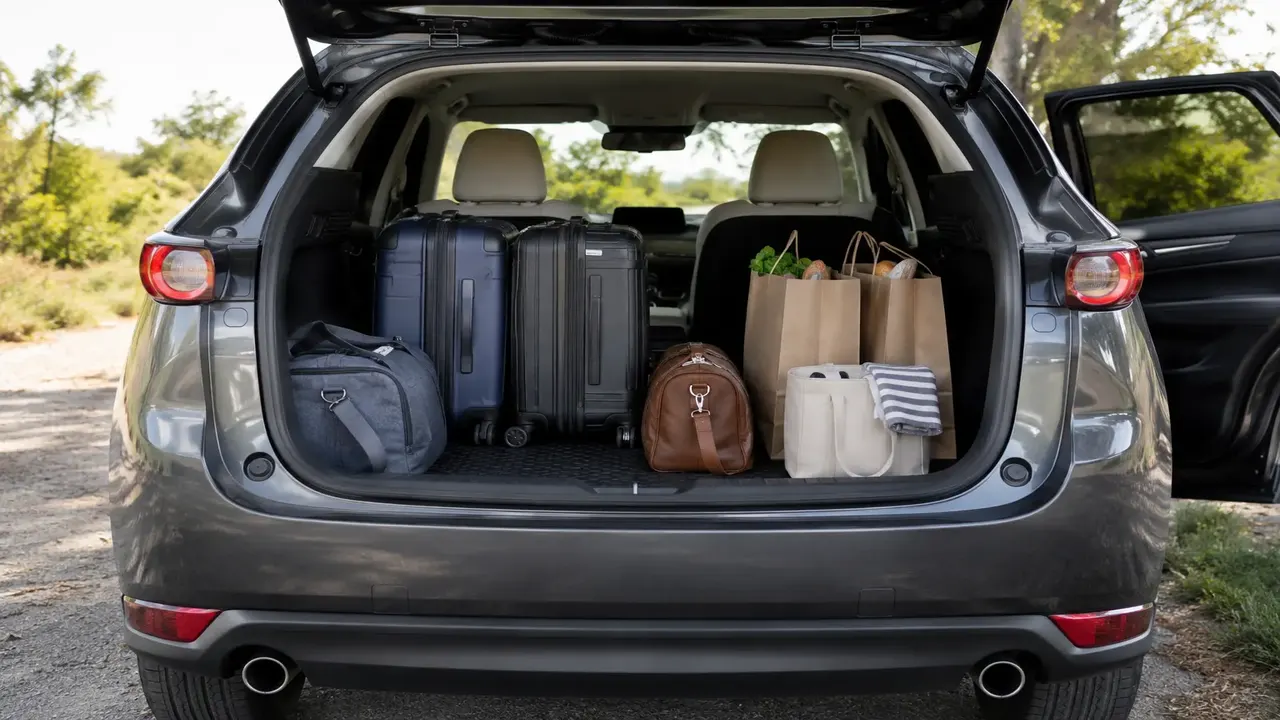
A typical family hatchback offers 350-400 litres, an estate 500-600 litres, and a mid-size family SUV 450-550 litres — enough for a folded pushchair and a supermarket shop side by side. Check boot dimensions (not just litres) if you need to fit a specific pushchair or wheelchair, since shape varies more than the headline figure suggests.
Running costs UK families should budget for
| Cost item | Typical annual UK figure |
|---|---|
| VED (road tax) | £20-£195 depending on emissions/age, more for cars over £40k list price |
| Insurance (family hatchback/SUV) | £400-£900, varies heavily by postcode and driver history |
| Fuel (petrol, ~10,000 miles/yr) | £1,300-£1,700 |
| Servicing | £150-£350 per service, once or twice a year |
New vs used for family buyers
New family SUVs commonly list at £25,000-£40,000, but a well-specified 3-4 year old equivalent with 30,000-50,000 miles can often be found for 40-50% less, while carrying most of the same safety kit as the current model. PCP finance makes new cars accessible on paper, but check the total cost over the agreement, not just the monthly figure, against a used-car cash or lower-finance alternative.
Don't judge boot space from spec sheets alone — visit a dealer or search marketplace listings for real photos with a pushchair or child seat already fitted, since folded-seat and load-height differences aren't obvious from numbers alone.
Frequently asked questions
What is the best type of car for a family of four in the UK?
How much boot space do I need for a family car?
Is a used family SUV a good alternative to buying new?
Do I need a 7-seater if I only have two children?
How important is the Euro NCAP rating when buying a family car?
Sources & further reading
Figures, prices and policy details were current at the last-updated date above. Automotive pricing, incentives and regulations change frequently — verify time-sensitive details with the linked primary sources. Read our editorial policy and fact-checking standards.