> The finding, and it matters: Brake fade in a long Ghat descent is one of the genuine safety risks in Indian driving — and it is substantially preventable by technique. Most fade incidents result from riding the brakes down a descent rather than from inadequate hardware. The test measures the car; the advice may matter more. > > Complete the measured-results block with your own test data before publishing.
Why the Ghats are the real test
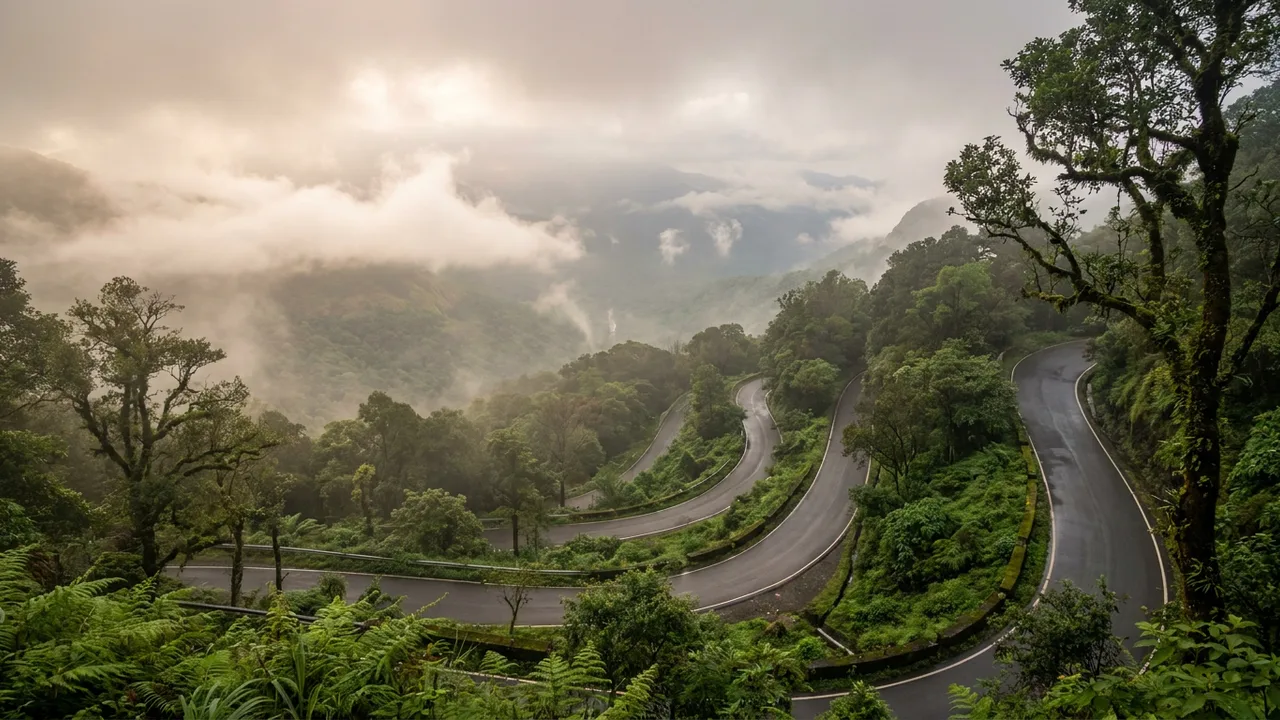
India's Ghat routes — the long, winding mountain descents of the Western and Eastern Ghats — subject brakes to conditions no flat-road test replicates: sustained, repeated braking over many kilometres, often fully loaded with family and luggage, frequently in high ambient temperatures.
This is where brake fade stops being a technical term and becomes a genuine safety issue. And it's precisely the scenario Indian family SUV buyers face on exactly the trips they buy these vehicles for — the holiday drive to a hill station with five people and a boot full of luggage.
A 100–0 km/h figure recorded on a flat, cool test strip tells you nothing about this. So we test it directly.
What brake fade actually is
Braking converts kinetic energy into heat. In a single stop, that heat dissipates. In a sustained descent, heat accumulates faster than it can dissipate, and two distinct failure modes emerge:
1. Pad fade (friction fade). Pad material overheats beyond its designed operating range and its coefficient of friction drops. The pedal stays firm but the car stops less effectively. This is the more common and more insidious form — the pedal feels normal, so the driver doesn't realise anything is wrong until they need a hard stop.
2. Fluid fade (vapour lock). Brake fluid overheats and vapourises. Because vapour compresses and liquid doesn't, the pedal goes soft, long, or to the floor. This is dramatic, frightening and considerably more dangerous. It's also strongly associated with old, moisture-contaminated brake fluid, which lowers the boiling point substantially.
Green fade — a third, milder form affecting new, un-bedded pads — is worth knowing about if you've just had brakes replaced.
Our test protocol
| Element | Standard | |---|---| | Route | A representative Ghat descent — sustained gradient, multiple corners, recorded length and elevation drop | | Load | Fully loaded — occupants plus luggage to a realistic family holiday weight | | Ambient | Recorded; ideally tested in genuine Indian summer heat | | Technique run 1 | Controlled descent using engine braking / low gear / EV regen, brakes used intermittently | | Technique run 2 | Continuous light braking (the common error) — the fade-inducing case | | Measured before/after | 100–0 km/h stopping distance at the top and immediately at the bottom | | Recorded | Pedal feel changes, brake temperature where measurable, any warning indications | | Outputs | Stopping distance degradation · pedal-feel change · fade onset point |
The two-technique comparison is the heart of this test. It isolates how much of the fade risk is the car and how much is the driver — and in our experience the answer is uncomfortable for drivers.
Our test conditions: [to be completed — route, gradient, length, ambient temperature, load, tyre and brake specification]
Measured results: [to be completed — top and bottom stopping distances per vehicle and technique, degradation percentage]
The technique that prevents fade
We'd argue this section is more valuable than any measurement we could publish, because most Indian Ghat brake incidents are preventable.
1. Use engine braking. This is the single most important habit. Select a low gear (or L / manual mode in an automatic) and let the engine restrain the car. The brakes then handle only what the engine cannot. Descending in D with your foot resting on the brake is the classic and most dangerous error — it generates continuous heat with no opportunity to dissipate.
2. Brake firmly and intermittently, not lightly and continuously. Counterintuitive but correct: short, firm applications followed by release allow airflow to cool the discs. Continuous light pressure keeps generating heat with no cooling interval. Firm and brief beats gentle and constant.
3. In an EV or hybrid, use maximum regenerative braking. This is a genuine and underappreciated advantage of electrified vehicles in the Ghats — regen handles a large share of the deceleration without generating brake heat at all, and recovers energy while doing it. For hill-station driving, it's a meaningful safety benefit.
4. Check your brake fluid. Fluid absorbs moisture over time, and moisture drastically lowers its boiling point — directly causing fluid fade. Replace it at the manufacturer's interval, and before a major hill trip if it's overdue. This is cheap insurance against the most dangerous failure mode.
5. Manage your load honestly. More weight means more energy to dissipate. A fully loaded SUV on a long descent is working its brakes far harder than the same car empty.
6. If the pedal goes long or soft, stop. Pull over safely, allow the brakes to cool completely (this takes longer than most people think — 20+ minutes), and do not continue descending. Do not pour water on hot discs; thermal shock can warp them.
What we expect the data to show
1. Technique will dominate the results. We expect the difference between controlled and continuous-braking descents to exceed the differences between vehicles. That's the finding worth leading with.
2. Vehicle mass will matter. Heavier SUVs — and particularly heavy EVs — generate more heat. Loaded weight is the relevant figure, not kerb weight.
3. EVs and strong hybrids should perform well on regen-assisted descents, provided the battery has capacity to accept the recovered energy. Note a genuine caveat: with a nearly full battery, regenerative braking capacity is reduced, and the friction brakes take more of the load. Starting a long descent at 100% charge is worth avoiding.
4. Brake cooling design will separate vehicles more than raw rotor size.
The bottom line
The Ghats are where brake fade stops being theoretical, and where it becomes a genuine risk for Indian family SUV buyers on exactly the journeys they buy these vehicles for. Our test measures how vehicles degrade — but the more valuable finding is likely to be that technique matters more than hardware.
Use engine braking or maximum regen. Brake firmly and intermittently rather than lightly and continuously. Keep your brake fluid fresh. And if the pedal goes long, stop and let everything cool.
Do those things and almost any modern family SUV will descend a Ghat safely. Ride the brakes all the way down in D with a full load on a hot day, and even a well-engineered car can be brought to the edge. That's the honest, useful conclusion — and it's worth more to a reader planning a hill-station trip than any leaderboard.
- Long Ghat descents are India's hardest brake test — sustained braking, fully loaded, often in high heat
- Two failure modes: pad fade (pedal firm, car stops less — insidious) and fluid fade (pedal soft or to the floor — dangerous)
- Technique likely matters more than hardware: use engine braking or low gear, and brake firmly and intermittently rather than continuously
- EVs and hybrids have a genuine safety advantage here — regen handles deceleration without generating brake heat (but capacity drops at high SoC)
- Fresh brake fluid is cheap insurance against fluid fade; if the pedal goes long, stop and let brakes cool fully before continuing
Key takeaways
- Long Ghat descents are India's hardest brake test — sustained braking, fully loaded, often in high heat
- Two failure modes: pad fade (pedal firm, car stops less — insidious) and fluid fade (pedal soft or to the floor — dangerous)
- Technique likely matters more than hardware: use engine braking or low gear, and brake firmly and intermittently rather than continuously
- EVs and hybrids have a genuine safety advantage here — regen handles deceleration without generating brake heat (but capacity drops at high SoC)
- Fresh brake fluid is cheap insurance against fluid fade; if the pedal goes long, stop and let brakes cool fully before continuing
Sources & further reading
- Brake thermal management principles
- brake fluid specifications
- Indian hill-route driving conditions. *Complete measured results before publishing. Verified July 2026.*
Figures, prices and policy details were current at the last-updated date above. Automotive pricing, incentives and regulations change frequently — verify time-sensitive details with the linked primary sources. Read our editorial policy and fact-checking standards.